
Integrated Work Permit Classify Applicants into Three Categories
Click "HC Team" above ↑↑↑ to follow us.
Starting Nov. 1, the government will begin sorting foreigners into three categories: A, B and C. It is part of a new nationwide work permit system that aims to build an innovation-driven economy by “encouraging the top, controlling the middle and limiting the bottom” of foreigners in China, the state news media reported.
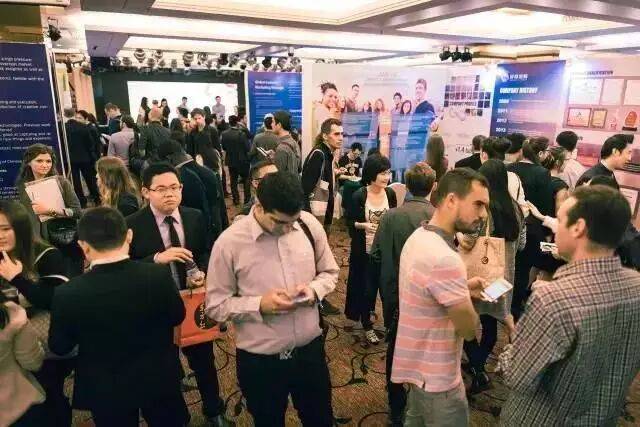
number of foreigners working in China grows by 10% each year since 2000. Photo: GuideinChina
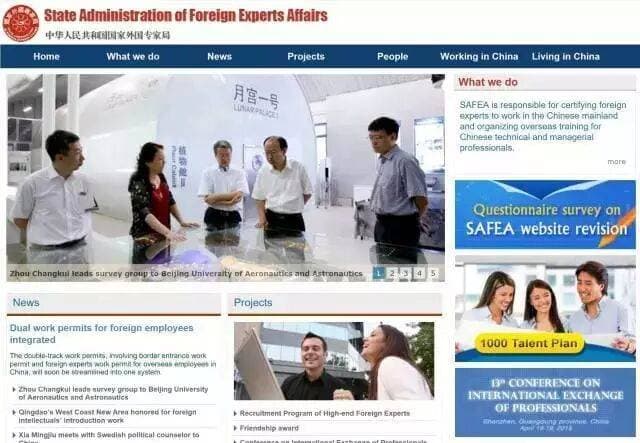
"It aims to better serve overseas talent coming to work in China," said Mr Zhang Jianguo, leader of the State Administration of Foreign Experts, which will run the system that is to go nationwide on April 1 after being tested in nine cities and provinces, including Beijing and Shanghai.
Under the current system, there are two types of work permit: An employment licence for foreign employees issued by the Ministry of Human Resources and Social Security, and a foreign expert work permit issued by the State Administration of Foreign Experts Affairs.
"Legally, it is pretty hard to tell which category an applicant belongs to," Professor Liu Guofu, an expert on immigration law at the Beijing Institute of Technology, told the China Daily newspaper.
"For example, if a foreign specialist from Microsoft applies for a work permit in China, is he an expert or not?" Prof Liu said, adding that the current system can be confusing for foreigners.
The new unified work permit will classify applicants into categories A, B and C.
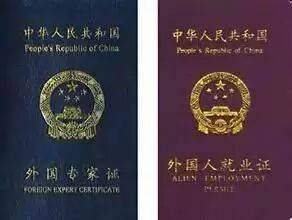
Under the current system, there are two types of work permit; the new unified work permit will classify applicants into categories A, B and C. Photo: guajob.com
James, a former high school instructor in Wyoming who now teaches at a kindergarten in Beijing, wondered how teachers would be defined. He asked to be identified only by his first name to avoid drawing negative attention from his employer.
"They haven't released how the scoring system is going to work," he said. "That is a worry to me. I would like to know how I can become an asset to China and exactly where I stand."
Teachers would probably be classified as Bs, said Mr Liu, who has studied the sparse information available on the scheme.
James agreed. "Initially, I had a very negative reaction to being Class B," he said. He likened the feeling to "now I am just a Class B foreign worker".
Still, the new system, which will be computerised and linked with a photo ID and number for each worker - the old system was mostly paper-based - could bring benefits.
"If it is going to create more transparency and accountability, I think it is going to be a good thing," James said.
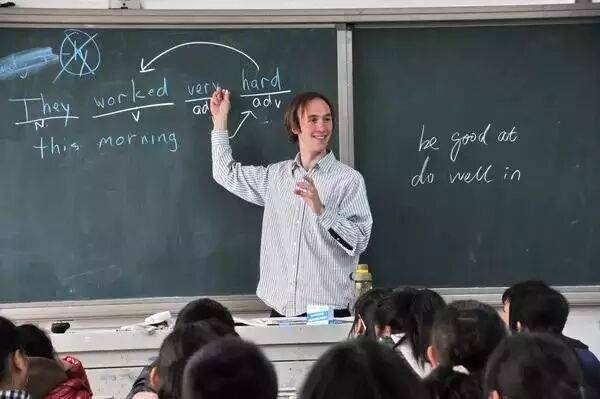
Will teachers be listed as Class B? There is still no clear answer yet. Photo: zz7z.zzedu.net.cn
The China Organization Personnel Newspaper, a publication under the Ministry of Human Resources and Social Services, gave a few more details than most.
Class A will include top professional, innovative and creative talent, the newspaper said, without offering concrete examples.
Class B will include other professionals who fit with China’s economic development plans and could fill short-term gaps, especially in management and technical areas, it said. There will be limits in international trade, sports, culture and education.
Class C will include unskilled or service industry workers. These should be “strictly limited,” the paper said.
Points will be assigned according to salary, education level, Chinese-language skills and age, among other things, with at least 85 points needed to qualify as an A, at least 60 for B and fewer than 60 for C, the paper said.
The new policy will be explained on the website of State Administration of Foreign Experts Affairs later. Photo: en.safea.gov.cn
According to the State Administration of Foreign Experts Affairs, the administration will issue new work permit cards equipped with contactless chips of RFID technology, carrying foreigners' names, photos, visa numbers, the duration and expiry date of permitted stay, and the workplaces.
The integrated work permit, under the concerted efforts of the Ministry of Human Resources and Social Security, the Ministry of Foreign Affairs and the Ministry of Public Security, will be widely recognized by the government authorities across the country where the information is expected to be shared.
Categorized into A, B and C groups, the work permits will identify the status of the holders, respectively high-end personnel, professional personnel and the temporary and seasonal personnel in service or non-technical sectors in response to market demand. There are various perks also emerging to facilitate the lives of foreign employees. In Tianjin, the municipality has launched an online hospital registration system on Wechat (a social networking platform in China) for the visits of foreigners who will be accompanied during their visits to doctors through easy access.
Competition in the international human resource arena is becoming increasingly ferocious, which drives China to break the shackles of fossilized personnel mechanism to attract more high-end talents for their efforts in building the innovation-driven society.
For years, GuideinChina concentrated on improving our service and keeping track of the national policy for foreigners working in China, it is our honor and responsibility to share our profession and resources with all the candidates who will attend our job fair on October 29th.
Press on to join our job fair For FREE!
GuideinChina will invite experts and overseas lawyers to attend the career forums during the job fair on October 29th. Our guest lecturers will analyse this new policy and discuss the effect coming with its enaction. Press on the QR code to register for free!
More Information, click "Read more" below