
For electrical engineers, China offers booming careers in EV, energy storage, smart grid & automation. Learn about in-demand roles and how to navigate the job market.
Introduction
In the context of profound transformations in the global economic and industrial landscape, professionals in many traditional industrial fields, including electrical engineers, may be facing uncertainties and challenges in their career development, such as waves of layoffs or tight job markets overseas. However, crisis often breeds opportunity. For electrical engineers worldwide, China in the East is demonstrating unprecedented, systematic career development opportunities. This is not only due to its massive market scale but also stems from its full-force advancement of strategies for energy revolution, industrial upgrading, and technological self-reliance—all arenas where electrical engineers can shine. This article provides an in-depth analysis of why, at this current juncture, China has become an ideal destination for global electrical engineers seeking breakthrough and revival.
The Foundation of the China Opportunity – National Strategy and a Trillion-Dollar Market
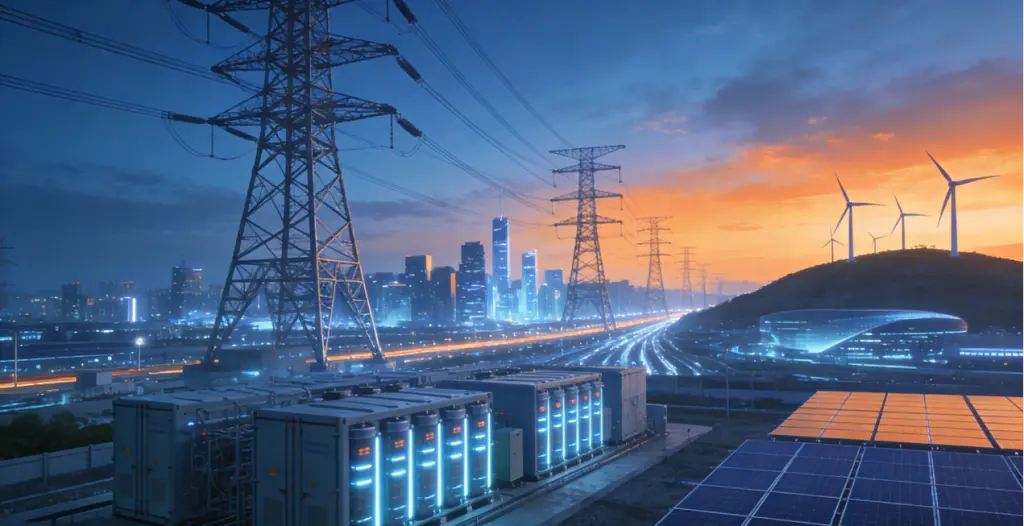
To understand the opportunities China offers electrical engineers, one must first grasp its top-level design and macro blueprint. China’s “14th Five-Year Plan,” the Long-Range Objectives Through 2035, and the “Dual Carbon” goals (peak carbon emissions by 2030, carbon neutrality by 2060) together form a clear and resolute development framework. The core of this framework aligns perfectly with the key application areas of an electrical engineer’s expertise.
An Epic Energy Structure Transition: China is the world’s largest energy consumer and producer. To fulfill its “Dual Carbon” commitment, it is developing renewable energy at an unprecedented speed and scale. This includes the world’s leading photovoltaic (PV) power industry, massive plans for onshore and offshore wind power installation, and the steady advancement of hydropower and nuclear power. Every PV power plant, every wind turbine, and every nuclear power plant requires the deep involvement of numerous electrical engineers from the design and construction stages to grid connection and smart operation and maintenance. The entire process, from primary energy conversion to stable power output, relies on the professional skills of electrical engineers in power electronics, motor control, relay protection, and high-voltage technology.
Building a New-Type Power System: With the rapid increase in the share of intermittent renewable energy, traditional grid systems face enormous challenges. China is taking the lead in constructing a “new-type power system” with new energy sources as the mainstay. This includes:
- Ultra-High Voltage (UHV) Transmission Networks: Building the world’s most advanced and extensive hybrid AC/DC UHV grid to facilitate power transmission from the west to the east and from the north to the south, addressing the geographical mismatch between energy resources and load centers. UHV technology involves extremely complex aspects of high-voltage insulation, electromagnetic fields, and power system stability analysis, making it a field for top-tier electrical engineers.
- Smart Grids and Digitalization: Utilizing IoT, big data, and AI technologies to achieve intelligent monitoring, warning, dispatch, and control of the power grid. Electrical engineers need to collaborate with IT experts to develop smart sensors, advanced metering infrastructure (AMI), distribution automation systems, and grid digital twin models.
- Large-Scale Energy Storage Systems: The planning, design, and integration of pumped hydro storage and electrochemical storage (e.g., lithium-ion batteries, flow batteries) power stations require electrical engineers to solve critical issues like grid-connected inversion, power conditioning, and the coordination between Battery Management Systems (BMS) and Energy Management Systems (EMS).
Comprehensive Electrification and Intelligence at the Consumption End:
- The Electric Vehicle (EV) Revolution: China is the world’s largest EV market and producer. The entire EV industry chain, from the R&D and manufacturing of the “three electric systems” (battery, motor, electronic control), to the construction of a nationwide charging/swapping infrastructure network, and the exploration of Vehicle-to-Grid (V2G) technology, creates a massive number of positions for electrical engineers. Roles like Motor Drive Engineer, Battery Pack Engineer, and Charging Pile System Engineer are in consistently high demand.
- Industrial Automation and Robotics: Chinese manufacturing is transitioning towards high-end, intelligent, and green production. The “Made in China 2025” strategy has spawned huge demand for industrial robots, high-end CNC machine tools, and automated production lines. Electrical engineers are at the core of designing and implementing these automation systems, responsible for PLC programming, servo drives, motion control, factory power distribution, and energy efficiency management.
- Smart Buildings and Smart Cities: The construction of green buildings, intelligent buildings, smart campuses, and smart cities is inseparable from intelligent power distribution, lighting control, HVAC system optimization, distributed energy integration, and comprehensive energy management. These are precisely the domains of building electrical and intelligent electrical engineers.
Analysis of Specific Sectors and High-Demand Roles
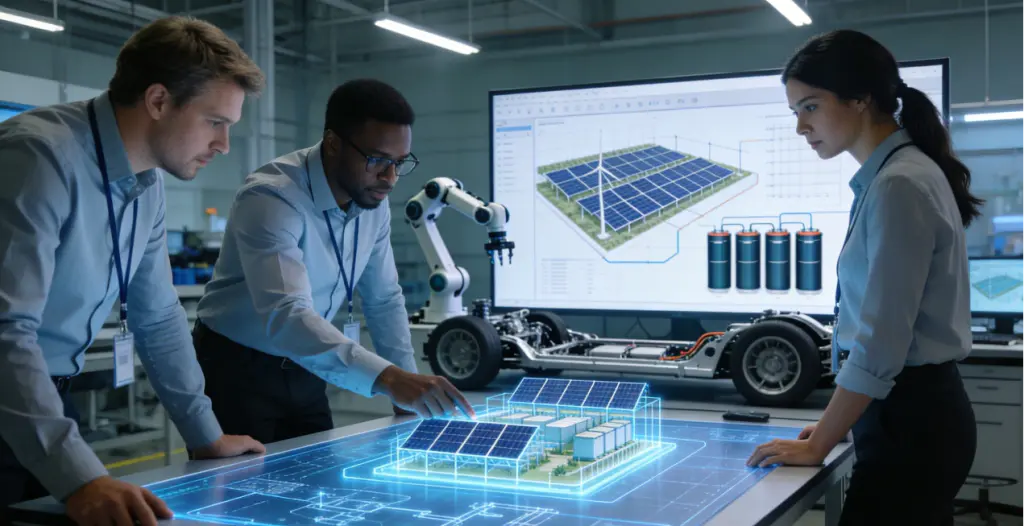
Under these macro trends, several specific sectors are experiencing explosive growth in demand for electrical engineers.
Renewable Energy Industry:
- PV System Engineer: Responsible for the electrical system design, equipment selection, grid-connection solution formulation, and performance optimization for large-scale ground-mounted power stations or distributed PV projects.
- Wind Power Engineer (Electrical Focus): Specializes in the electrical control systems, converters, pitch systems of wind turbines, and the design and O&M of wind farm collector lines and booster stations.
- Energy Storage Engineer: This is currently one of the most sought-after positions. Responsible for the electrical primary/secondary system design of energy storage power stations, Power Conversion System (PCS) application, system integration, and safety standard development.
Power Equipment and Transmission & Distribution Industry:
- High-Voltage Electrical Design Engineer: Engaged in the R&D and design of key equipment like GIS, transformers, circuit breakers, and high-voltage cables.
- Power Systems Engineer: Works in power design institutes, grid companies, or new energy enterprises to conduct grid planning, load flow analysis, short-circuit analysis, and stability and reliability assessments.
- Protection & Control (Relay) Engineer: A core role ensuring grid safety, responsible for protection device setting calculation, configuration, testing, and fault analysis.
New Energy Vehicle and Charging Infrastructure Industry:
- E-Drive System Engineer: Researches and develops high-performance, high-power-density motors and their controllers.
- On-Board Power Supply Engineer: Responsible for developing components like On-Board Chargers (OBC) and DC-DC converters.
- Charging Infrastructure Engineer: Designs the electrical architecture and charging modules for high-power fast-charging piles and battery swap stations.
Industry and Smart Manufacturing Sector:
- Automation Engineer: An expert in the electrical design and debugging of non-standard automated equipment or production lines.
- Controls Engineer: Proficient in advanced control algorithms (e.g., Model Predictive Control) applied to complex industrial processes.
- Robotics Application Engineer: Responsible for the electrical integration, programming, and peripheral equipment debugging of industrial robots.
Unique Advantages of the Chinese Market and Job Search Advice
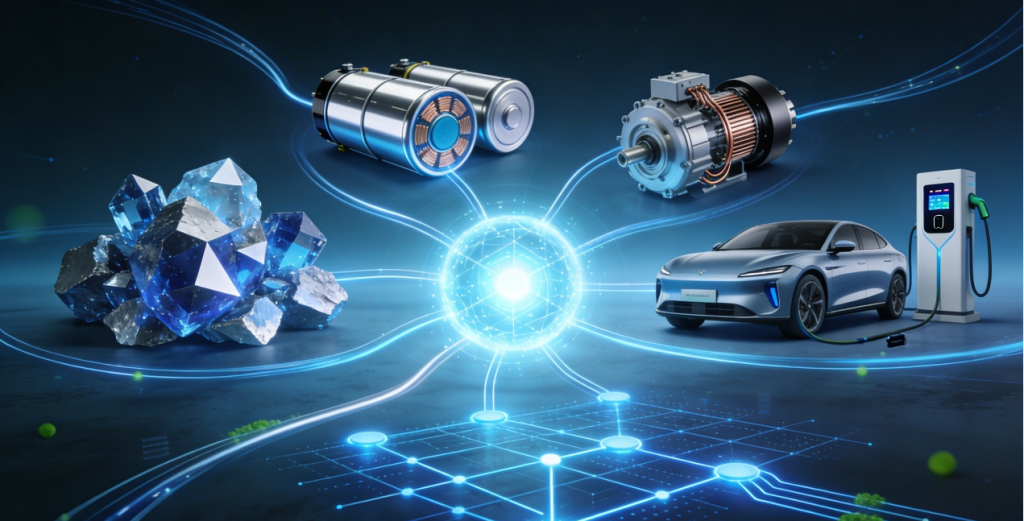
Beyond the enormous market demand, China also offers some unique advantages for overseas electrical engineers.
- Complete Industrial Clusters and Innovation Ecosystem: From upstream raw materials and midstream core component manufacturing to downstream system integration and application, China has formed the world’s most complete new energy and EV industry chains. This means electrical engineers can be exposed to the entire process from R&D to mass production, gaining more comprehensive experience. Simultaneously, a large number of startups and high-tech enterprises provide a dynamic innovation environment.
- Open Policies for International Talent: Many Chinese cities offer visa facilitation, tax incentives, housing subsidies, and other policies for foreign high-level talent. Policies are particularly favorable in Free Trade Zones and High-Tech Industrial Development Zones.
- Competitive Compensation and Career Growth Space: In hot sectors, the salary levels for experienced electrical engineers are internationally competitive, sometimes even more attractive. Due to the industry’s high-growth phase, career advancement channels are also faster and broader.
Key Recommendations for Interested Overseas Electrical Engineers:
Skill Alignment and Enhancement: Conduct in-depth research on relevant Chinese industry technical standards and norms (e.g., GB standards, NB/T standards from the National Energy Administration, corporate standards from grid companies). Bridge knowledge gaps in areas like new energy, energy storage, power electronics, and digitalization (e.g., using Python for data analysis, AI fundamentals).
Language and Cultural Preparation: Learning basic Mandarin will significantly improve convenience in work and daily life. Understanding Chinese business culture and workplace communication styles is also crucial.
Utilize Targeted Job Search Channels:
- Leverage Professional Platforms: In addition to international platforms, actively use Chinese professional networking platforms (like LinkedIn China) and job websites (such as Liepin, BOSS Zhipin).
- Follow Industry Leaders: Directly monitor the global recruitment pages of industry giants like State Grid, China Southern Power Grid, CGN, Goldwind, CATL, BYD, Huawei Digital Power, and Sungrow Power Supply.
- Engage with Recruiter Networks: Many high-end recruitment firms in China specialize in the engineering and technical fields. Building connections with them is an efficient approach.
Highlight Core Value Proposition: During your job search, in addition to emphasizing a solid foundation in electrical engineering, focus on showcasing project experience in specific application areas (e.g., HVDC transmission, large-scale energy storage system integration, motor vector control), problem-solving abilities, and the capacity to learn and adapt in a fast-changing environment.
Addressing Challenges and Long-Term Outlook
Of course, choosing to develop a career in China also requires acknowledging challenges, such as a potentially fast-paced work rhythm and initial cultural adaptation. However, for electrical engineers pursuing technological frontiers and eager to participate in grand projects reshaping the global energy and industrial landscape, these challenges are worth confronting.
In the long term, China’s “Dual Carbon” journey will continue for decades, the evolution of smart grids and electric vehicles is still in its early stages, and the Industry 4.0 transformation continues to deepen. This indicates that the demand for high-caliber electrical engineers is not a short-term spike but a long-term structural trend. Whether from Europe, North America, or other regions, electrical engineers can find a unique path in China that aligns personal professional aspirations with national and even global sustainable development goals.
Conclusion
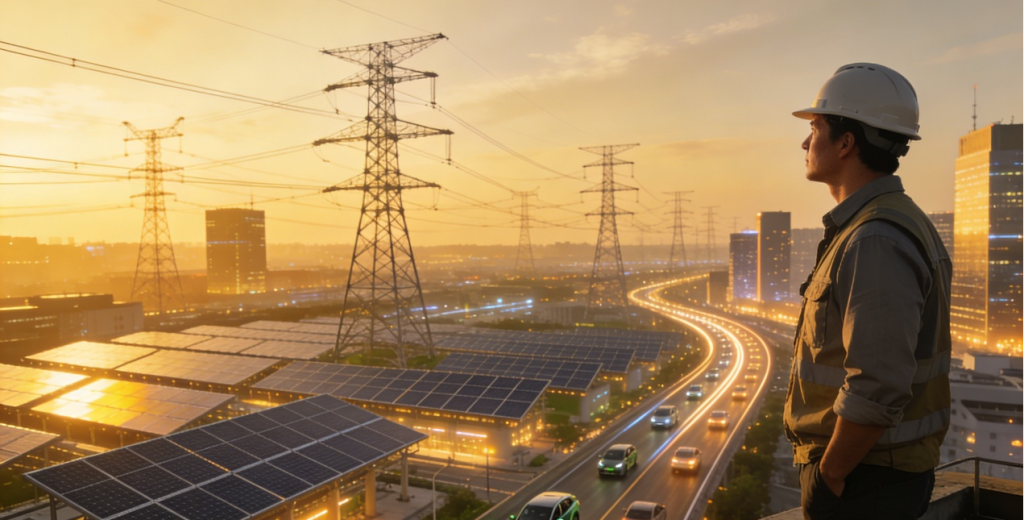
In summary, for electrical engineers seeking a career breakthrough overseas or experiencing temporary setbacks, China is far from just an alternative option; it is a strategic destination full of certainty and vast potential. The energy and industrial revolution unfolding here is rare in the world in its depth, breadth, and speed, systematically and comprehensively creating a golden era for electrical engineers. From the towering pylons of UHV lines to the blue expanse of distributed PV, from the smart production lines of EVs to the vast arrays of energy storage power stations, behind every major project lies an urgent need for the professional expertise and practical experience of global electrical engineers. Seizing the China opportunity is not just about securing a high-value position; it is about standing at the crest of a wave of our time, personally participating in the extraordinary journey of defining the future global energy and industrial landscape. For visionary and skilled electrical engineers, the time to act is now.