
Seeking Embodied Intelligence Large Model Researchers. The 2025 International Talent Recruitment Fair in Qianhai connects global AI talent with pioneering research and development roles in the GBA.
Introduction: Embodied Intelligence Large Models – Ushering in a New Era of Artificial General Intelligence
In today’s rapidly evolving artificial intelligence landscape, the Embodied Intelligence Large Model Researcher position represents the most forward-looking research direction in the field. Embodied intelligence large models are not merely a technical concept; they are a critical breakthrough enabling deep interaction between machines and the physical world. These researchers are dedicated to developing intelligent systems capable of perceiving, reasoning, and interacting with 3D environments, merging the cognitive capabilities of large language models with the physical actuation capabilities of robotics. The 2025 Guangdong-Hong Kong-Macao Greater Bay Area (Shenzhen’s Qianhai) International Talent Recruitment Fair will provide a unique career development platform for the world’s top Embodied Intelligence Large Model Researcher talent, connecting world-class research resources with industrial application scenarios.
The Technological Revolution and Research Challenges of Embodied Intelligence Large Models
Technical Framework and Core Components
Embodied intelligence large model research fundamentally reimagines the architecture of AI systems. Unlike traditional single-modality AI systems, the Embodied Intelligence Large Model Researcher must construct a multi-modal fusion cognitive framework integrating visual perception, language understanding, physical reasoning, and motion planning. Such systems typically comprise three core modules: an environment perception and understanding module responsible for parsing 3D spatial information; a cognition and reasoning engine for contextualized decision-making based on large model technology; and a physical interaction and execution system for precise motion control.
The primary technical challenges faced by an Embodied Intelligence Large Model Researcher include knowledge transfer from large-scale pre-trained models to specific physical tasks, designing efficient simulation-to-reality (Sim2Real) transfer methods, and building adaptive systems capable of continuous learning. These challenges require researchers to be proficient not only in deep learning, reinforcement learning, and computer vision but also to have a deep understanding of robotics, cognitive science, and physical modeling. At the upcoming International Talent Recruitment Fair, leading AI companies and research institutions will showcase their groundbreaking progress in these key technological areas.
Interdisciplinary Research Methodology
The development of embodied intelligence large models is inherently an interdisciplinary endeavor, requiring the Embodied Intelligence Large Model Researcher to possess a rare combination of skills. This includes, but is not limited to: multi-modal representation learning to enable unified processing of visual, linguistic, and physical signals; world model construction to create environmental models that can predict action outcomes; and embodied decision-making to develop algorithms for robust decision-making in uncertain physical environments.
A successful Embodied Intelligence Large Model Researcher often has deep expertise across multiple domains: they understand the latest advances in Transformer architectures within natural language processing, master 3D scene understanding techniques in computer vision, grasp the principles of motion planning and control in robotics, and comprehend the developmental mechanisms of human intelligence from cognitive science. This interdisciplinary nature makes embodied intelligence large model research one of the most challenging and promising directions in the current AI field.
The 2025 GBA (Qianhai) International Talent Recruitment Fair: A Global Confluence for AI Elites
Platform Advantages and Global Influence
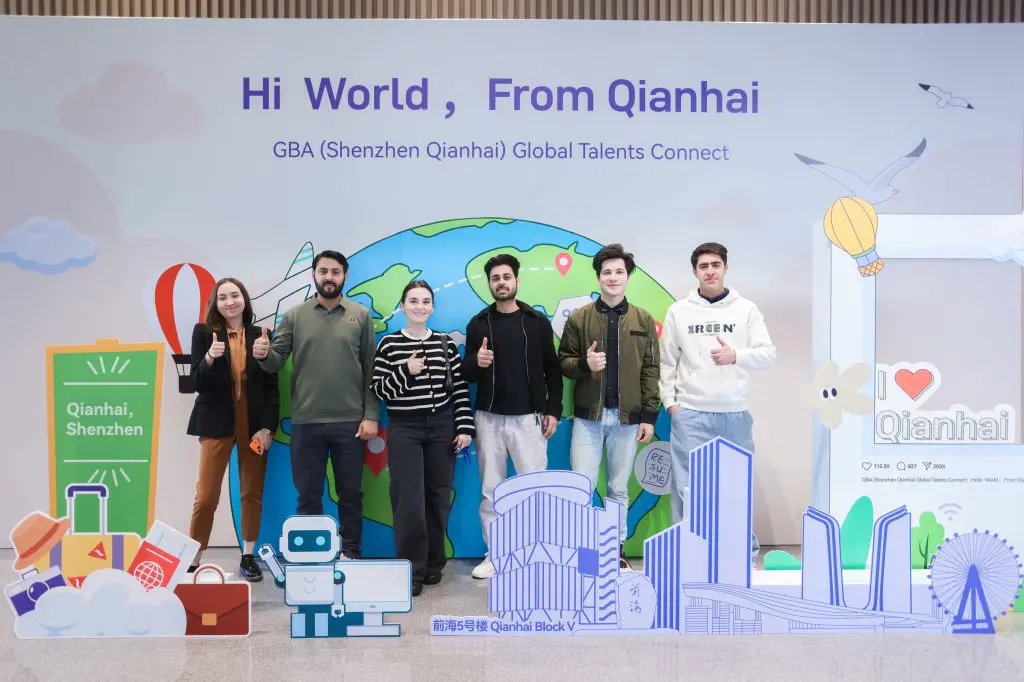
The 2025 Guangdong-Hong Kong-Macao Greater Bay Area (Shenzhen Qianhai) International Talent Recruitment Fair is an international-level exchange platform designed specifically for high-end technology talent. Unlike ordinary recruitment events, this fair focuses on top-tier talent in frontier technology fields, especially highly sought-after (or: in-demand, scarce) professionals like the Embodied Intelligence Large Model Researcher. The organizers have integrated government resources, industry demands, and academic research strength to create a full-chain service system covering talent assessment, job matching, and policy support.
The most distinctive feature of this International Talent Recruitment Fair is its deep integration model of “research-industry-application.” Participating organizations include not only R&D departments of tech giants like Huawei, Tencent, and DJI but also top research institutions like the Shenzhen Research Institute of Tsinghua University and the Peng Cheng Laboratory, along with a series of innovative enterprises specializing in AI and robotics technology. This diversified participant structure ensures that an Embodied Intelligence Large Model Researcher can find the most suitable career development path, whether oriented towards basic research, technology development, or industrial application.
The Greater Bay Area’s Unique Innovation Ecosystem
As one of China’s most open and economically vibrant regions, the Guangdong-Hong Kong-Macao Greater Bay Area provides an unparalleled environment for embodied intelligence large model research. It boasts a complete hardware manufacturing supply chain, rich application scenario data, and world-class computational infrastructure. For the Embodied Intelligence Large Model Researcher, this means a complete support system spanning from algorithm development to system integration, and from simulation testing to real-world deployment.
The Qianhai Shenzhen-Hong Kong Modern Service Industry Cooperation Zone is the core innovation engine of this region, offering a series of policy supports for high-end research talent, including tax incentives, research funding subsidies, and an international living environment. During the International Talent Recruitment Fair, these policy advantages will be introduced in detail, helping global Embodied Intelligence Large Model Researcher professionals fully understand the practical conditions and development prospects of working and living in Qianhai.

Responsibilities and Career Prospects for an Embodied Intelligence Large Model Researcher
Detailed Explanation of Core Position Responsibilities
The core responsibilities of an Embodied Intelligence Large Model Researcher revolve around building intelligent systems capable of autonomous learning and executing complex tasks in the physical world. Specific tasks include: designing and developing novel embodied intelligence large model architectures that integrate visual-language-action multi-modal data; creating large-scale embodied learning datasets and efficient training methodologies; developing embodied agents that perform robustly in both simulated and real-world environments; and exploring the application of large models in fields such as robotic control, autonomous driving, and smart interactive devices.
An outstanding Embodied Intelligence Large Model Researcher must address not only fundamental algorithmic problems but also consider system scalability, safety, and ethical implications. They frequently need to collaborate closely with robotics engineers, hardware specialists, product managers, and domain experts to translate cutting-edge research into practical technological solutions. At the International Talent Recruitment Fair, participating organizations will elaborate on their specific expectations and technical requirements for this role.
Career Development Pathways and Industry Demand
Globally, Embodied Intelligence Large Model Researcher talent is in extremely short supply. With the rapid development of fields like robotics, autonomous driving, augmented reality, and smart homes, the value of professionals who can bridge digital intelligence and the physical world continues to rise. According to industry analysis, global demand for Embodied Intelligence Large Model Researcher expertise is predicted to grow by over 300% in the next five years, with compensation levels at the top tier of AI-related positions.
In terms of career development, an Embodied Intelligence Large Model Researcher can choose multiple paths: pursuing breakthrough basic research in academia to advance the field’s frontier; leading product innovation in industry to transform the latest research into world-changing products; or pioneering entirely new research directions at interdisciplinary intersections, such as the integration of embodied intelligence with brain-computer interfaces or the fusion of embodied learning with the metaverse. Attending the International Talent Recruitment Fair will provide researchers with the opportunity to engage directly with various potential employers, aiding in planning the most suitable career trajectory.

Unique Advantages for Embodied Intelligence Research in the Greater Bay Area
Industry Synergy and Data Resources
The Guangdong-Hong Kong-Macao Greater Bay Area possesses the world’s most complete electronics manufacturing ecosystem and robotics application scenarios, providing an unparalleled practical environment for embodied intelligence large model research. From industrial robots to service robots, from smart vehicles to home assistants, diverse application scenarios generate rich, high-quality interaction data—a precious resource for training and validating systems developed by the Embodied Intelligence Large Model Researcher.
Shenzhen and its surrounding areas are home to globally leading hardware manufacturers and innovative technology companies, facilitating rapid prototyping and iteration of embodied intelligence systems. Researchers can easily access customized sensor modules, actuator components, and computing platforms, significantly shortening the cycle from algorithm design to system integration. This high-speed “idea-prototype-testing” loop is an advantage difficult to replicate elsewhere.
Policy Support and Innovation Environment
The Qianhai Cooperation Zone offers a series of groundbreaking policy supports for high-end research talent, including streamlined procedures for introducing overseas talent, internationally competitive compensation packages, and an intellectual property protection system aligned with international standards. For the Embodied Intelligence Large Model Researcher, these policies translate to a freer research environment, more ample resource support, and smoother channels for international collaboration.
Furthermore, the Greater Bay Area is constructing several large-scale AI research infrastructures, including ultra-large-scale computing clusters, simulation platforms designed specifically for robotic learning, and real-world testing grounds. These public research platforms will be open to qualified Embodied Intelligence Large Model Researcher professionals, helping them reduce research costs and accelerate innovation.

How to Prepare for the 2025 International Talent Recruitment Fair
Technical Competence and Showcasing Achievements
Embodied Intelligence Large Model Researcher professionals intending to participate in the 2025 Guangdong-Hong Kong-Macao Greater Bay Area (Shenzhen Qianhai) International Talent Recruitment Fair should prepare to showcase their expertise in advance. This includes compiling research achievements in relevant fields, such as published papers, open-source projects, and technical patents; preparing project cases that demonstrate technical depth, especially those showcasing multi-modal fusion, physical reasoning, or robotic control capabilities; and articulating clear insights and research plans regarding the future development of embodied intelligence large models.
Given the interdisciplinary nature of embodied intelligence, it is particularly important to demonstrate knowledge and experience across multiple sub-fields like computer vision, natural language processing, and robotics. Concurrently, having deep reflections on industry-concerned issues like model efficiency, safety ethics, and explainability is crucial. These preparations will help the Embodied Intelligence Large Model Researcher engage in efficient, in-depth discussions with potential employers at the International Talent Recruitment Fair.
Career Planning and Opportunity Assessment
Before attending the International Talent Recruitment Fair, an Embodied Intelligence Large Model Researcher should systematically evaluate the various opportunities the Greater Bay Area offers. This involves researching the technical directions and cultural characteristics of different institutions, understanding the long-term development plans for AI and robotics in the Greater Bay Area, and comparing the living environments and support policies of different cities.
A wise strategy is to engage with academia, industry, and research institutions simultaneously to understand the pros and cons of various career paths. For example, corporate R&D departments may offer richer computing resources and application scenarios closer to products, while universities and public research institutions may provide greater freedom for exploration and long-term academic collaboration networks. By interacting with multiple potential employers, the Embodied Intelligence Large Model Researcher can make choices best suited to their career goals and lifestyle.
Conclusion: Join the Greater Bay Area, Shape the Future of AI
The 2025 Guangdong-Hong Kong-Macao Greater Bay Area (Shenzhen Qianhai) International Talent Recruitment Fair is more than just a recruitment event; it is a platform for global AI elites to exchange ideas, explore collaboration, and co-create the future. For the Embodied Intelligence Large Model Researcher, this is a rare opportunity to join a world-class innovation ecosystem and tackle the most challenging problems in artificial intelligence alongside top peers.
Embodied intelligence large models represent the next frontier in AI development, a key bridge extending digital intelligence into the physical world. As the technology matures, the work of the Embodied Intelligence Large Model Researcher will profoundly change how humans and machines interact, reshaping numerous fields such as manufacturing, services, healthcare, and education/entertainment. In the dynamic innovation hotspot of the Greater Bay Area, these research outcomes will be translated into practical applications that improve human life at an astonishing pace.
Whether you are a rising researcher who has just completed a PhD in a related field or a seasoned expert with years of experience in embodied intelligence, the 2025 International Talent Recruitment Fair deserves your close attention. Here, you will find not only career opportunities but also the possibility to participate in shaping the future intelligent world. Begin your preparations now to join this global gathering of technological minds and collectively open a new chapter in embodied intelligence large model research.