
Explore career opportunities in China for automotive engineers: high-growth prospects, competitive salaries, and top companies in EV and autonomous driving.
Introduction: China – The New Epicenter of Global Automotive Transformation
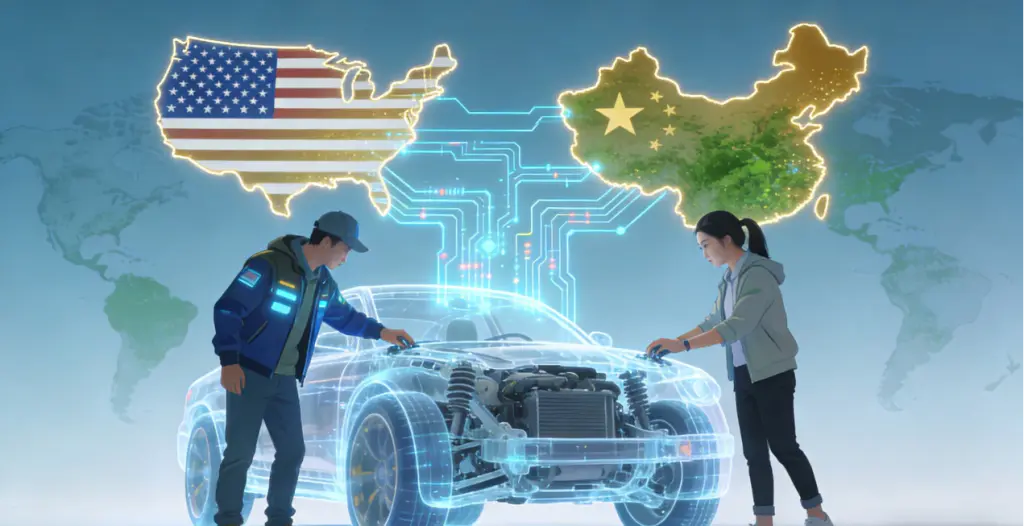
For automotive engineers worldwide, the professional landscape is undergoing a profound and exciting reshuffle. Traditionally, the United States, Germany, and Japan have been regarded as the hallowed halls of the automotive industry. However, over the past decade, a silent yet unstoppable shift has propelled China to center stage. Today, China is not only the world’s largest automobile market but has also become the frontier for the research, development, and application of automotive technologies, especially in electrification, intelligence, and connectivity. For American automotive engineers with solid technical backgrounds and professional experience, this represents a vast new continent of opportunity opening up. This guide aims to provide a comprehensive, in-depth, and practical roadmap for American automotive engineering professionals interested in exploring career opportunities in China. We will systematically analyze the prospects of China’s auto industry, decode compensation structures and levels, and recommend top-tier employers to help you strategically position yourself and achieve a leap forward in your career amidst this industrial revolution.
In-Depth Analysis of Career Prospects for Automotive Engineers in China
Dual Drivers of Policy and Market: An Unprecedented Historic Opportunity
The explosive growth of China’s automotive industry is no accident; it is the result of combined national strategy and market forces. From “Made in China 2025” listing new energy vehicles (NEVs) and intelligent connected vehicles (ICVs) as strategic priorities to the “Dual Carbon” goals (carbon peak, carbon neutrality) injecting powerful policy impetus into the industry’s green transition, top-level design has laid tracks for rapid development. For automotive engineers, this translates into massive R&D investment and project opportunities. The Chinese government and local authorities invest tens of billions annually in subsidies for related technology R&D, infrastructure (like charging networks), and consumer purchase incentives. This all-around support directly translates into corporate hunger for R&D talent, especially engineers with international vision and practical experience.
In terms of market scale, China has remained the world’s largest automotive producer and consumer for over a decade. More crucially, the penetration rate of new energy vehicles is increasing at a staggering pace. This means the market’s driving force is shifting from traditional engines and transmissions to entirely new fields like “three-electric systems” (battery, motor, electronic control), autonomous driving chips, sensors, and connected vehicle software. This structural transformation has created a multitude of new positions not available—or already saturated—in traditional automotive countries.
For veteran automotive engineers skilled in internal combustion technology, transitioning is a challenge, but the significant R&D demand for hybrid (including range-extender) technologies in the Chinese market provides a buffer for a smooth shift. For engineers already focused on electrification and intelligence, this is undoubtedly the “promised land” to realize their technical ambitions.
Soaring Demand for Talent in Core Technical Fields
The automotive engineer job market in China shows a highly segmented and specialized trend. Gaps are particularly significant in the following areas, with compensation rising accordingly:
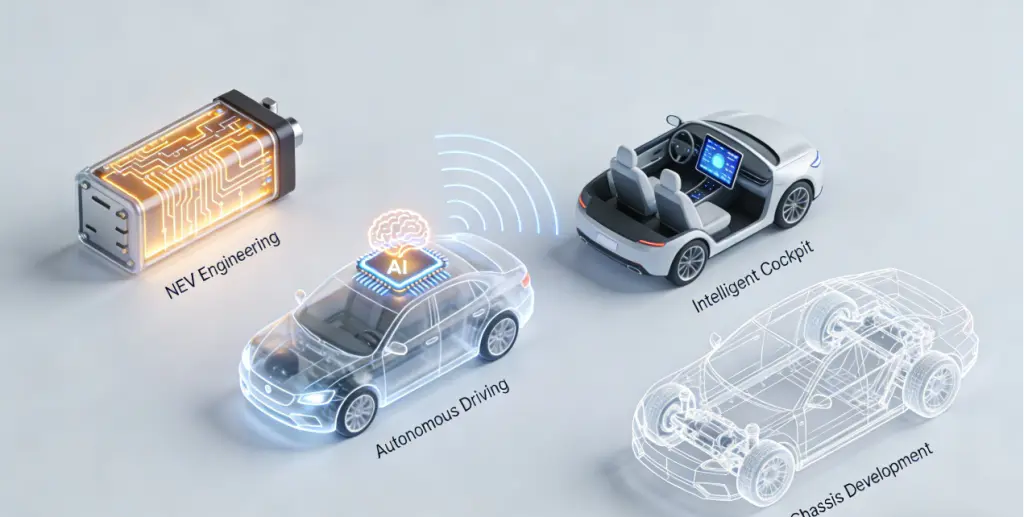
- New Energy Vehicle (NEV) Engineering: This is the most high-demand “main track.” Specific areas include:
- Battery Systems Engineer: Responsible for cell selection, battery pack design, thermal management, safety protection (BMS), etc. China has the world’s most complete battery supply chain, and giants like CATL and BYD, along with numerous innovators, are competing for top talent.
- E-Drive System Engineer: Focuses on motor design, power electronics, and the integration and optimization of reducers.
- Vehicle Control & Energy Management Engineer: Develops VCU (Vehicle Control Unit) strategies to achieve the best balance between range, performance, and efficiency.
- Autonomous Driving & Intelligent Connected Vehicle (ICV) Field: This is the hottest zone of technological competition and an area where American engineers hold a significant advantage.
- Autonomous Driving Algorithm Engineer: Involves perception (computer vision, sensor fusion), localization (SLAM), decision-making, planning, and control. Engineers with experience in Silicon Valley or top U.S. tech firms are highly sought after.
- Vehicle Software & Operating System Engineer: As vehicles evolve from mechanical products to “wheeled smart devices,” engineers specializing in underlying OS (like Huawei HarmonyOS, AliOS), middleware, functional safety (ISO 26262), and cybersecurity become critical.
- Intelligent Cockpit Engineer: Responsible for integrating instrumentation, infotainment systems, HUDs, voice interaction, and entertainment systems to create a human-centric digital in-car experience.
- Upgrading and Convergence of Traditional Fields:
- Chassis & Electronic Architecture Engineer: The evolution towards by-wire chassis (braking, steering), domain controllers, and centralized Vehicle Electrical/Electronic Architecture (EEA) requires compound talent skilled in both traditional mechanics and electronics.
- Lightweighting & Materials Engineer: Strong demand for the application of new materials like high-strength steel, aluminum alloy, carbon fiber, and structural design to improve EV range.
The Value of International Experience: Why Chinese Companies Need American
Automotive Engineers
Chinese domestic automakers, whether traditional giants or new players, commonly face a shortage of high-end, leadership talent during rapid expansion. The value brought by American automotive engineers is multidimensional:
Cutting-Edge Technical Vision & Practical Experience: Especially in fields like autonomous driving, advanced sensors, chip application, and software-defined vehicles, the U.S. remains globally leading. Engineers with first-hand experience can help companies avoid pitfalls and quickly build technological moats.
Systematic Engineering Methods & Process Frameworks: The rigorous development processes (like the V-model), quality management systems (like Six Sigma), and validation standards formed over a century of U.S. automotive history are precisely the shortcomings many fast-growing Chinese automakers seek to address. The automotive engineer is not just an implementer but also a disseminator of optimized processes and methodologies.
Global Project Collaboration Skills: As Chinese automakers expand overseas (into Europe, Southeast Asia, etc.), engineers with cross-cultural communication experience and an understanding of international standards and regulations become key enablers of global strategy.
Innovation Culture & Critical Thinking: This can energize local teams and foster a more open, technology-driven R&D culture.
Therefore, for American automotive engineers, pursuing a career in China is not just about finding a job; it’s about playing the role of a “technical bridge” and “key contributor,” often with a sense of professional achievement and impact that exceeds expectations.
Compensation, Benefits, and Cost Analysis
Overall Compensation Levels: Competitiveness and Growth Potential
The total compensation package for American automotive engineers in China is highly competitive. Overall levels are now on par with developed markets in Europe and the U.S., with premiums even possible in hot fields (like high-level autonomous driving). Compensation consists of several parts:
- Base Monthly Salary: The foundation of the package. The range is extremely broad based on experience, position, and technical field.
- Junior Engineer (<3 years experience): Annual salary typically ranges from RMB 300,000 to 500,000 (approx. $42,000 to $70,000 USD).
- Mid-Level Engineer/Technical Expert (5-10 years experience): This is the most in-demand group, with an annual salary range of RMB 600,000 to 1.2 million (approximately $84,000 to $168,000 USD). Those with scarce skills in autonomous driving, high-performance computing chips, or full-stack software easily breach the upper limit
- Senior Expert/Chief Engineer/R&D Director (10+ years experience): Annual salary usually starts from RMB 1.5 million, with no strict upper limit, potentially reaching RMB 3 million or even 5 million+ (approx. $210,000 to $700,000+ USD), coupled with substantial stock options.
- Annual Bonus: Usually equivalent to 2-6 months of base salary, heavily tied to company and individual performance. New automakers or fast-growing tech companies may offer higher bonus proportions.
- Long-Term Incentives: The part of the package with the greatest potential, especially for core talent joining startups or pre-IPO companies.
- Stock Options/RSUs (Restricted Stock Units): Standard for attracting top talent at listed companies like NIO, XPeng, Li Auto, or pre-IPO stars (like Xiaomi Auto, Huawei’s Intelligent Automotive Solution BU). Their value can far exceed cash compensation.
Key Factors Influencing Compensation
Location: Significant “location premium” exists. Shanghai, Beijing, and Shenzhen are the three high-cost, high-salary hubs due to concentrated headquarters and R&D centers. Cities like Hangzhou (intelligent cockpit), Hefei (NEVs), and Guangzhou (Japanese JVs & local brands) also offer excellent packages. Some companies have R&D centers in lower-cost cities like Suzhou, Nanjing, or Wuhan but still maintain competitive salaries.
Company Type:
- Domestic New Automakers & Top Tech Companies (e.g., NIO, Li Auto, Xiaomi, Huawei): Typically offer the most attractive total packages: high cash components and generous equity, but with a fast pace and high pressure.
- Chinese Traditional Automotive Giants (e.g., BYD, Geely, SAIC): Offer more stable salary structures, comprehensive benefits, higher job security, and opportunities to work on massive, full-industry-chain projects.
- Foreign/Joint Venture Enterprises (e.g., Tesla China, Volkswagen China R&D Center, GM PATAC): Salaries align with international systems, and the work culture is closer to that of foreign companies, making them a choice for a smoother transition, though salary ceilings may be less aggressive than top domestic firms.
- Top-Tier Supply Chain Companies (e.g., CATL, Horizon Robotics, Hesai): These “hidden champions” in niche fields offer compensation rivaling OEMs for engineers working on core technologies.
Specific Technical Expertise: As mentioned, experts in frontier fields like full-stack autonomous driving, AI algorithms, lidar, high-performance computing chips, automotive-grade semiconductors, and solid-state batteries command the highest premiums.
Benefits, Taxes, and Cost of Living
- Standard Benefits: The “Five Social Insurances and One Housing Fund” are mandatory by law (pension, medical, unemployment, work-injury, maternity insurance, and housing provident fund). Excellent employers offer supplementary commercial insurance, annual health checks, paid annual leave, and training budgets.
- Expatriate-Specific Benefits: To attract international talent, companies often provide:
- Housing Allowance/Subsidy: One of the most common benefits to offset high rental costs in Tier-1 cities.
- Children’s Education Allowance: Helps cover the high tuition fees of international schools.
- Home Leave Flight Tickets: 1-2 round-trip tickets to the home country per year.
- Relocation & Settling-In Allowance: Covers initial transition costs upon arrival.
- Tax Advisory Services: Assists with navigating complex Chinese Individual Income Tax (IIT) filing.
- Personal Income Tax (IIT): China adopts a progressive individual income tax (IIT) rate, with a top bracket of 45%. However, for qualified high-end and in-demand talents, some regions (such as the Greater Bay Area and Lingang in Shanghai) offer preferential IIT subsidy policies, capping the effective tax rate at a maximum of 15%, significantly reducing the tax burden.
- Cost of Living Considerations: While property prices in city centers are extremely high, renting is the primary option for expatriates. Rental costs in Shanghai still compare somewhat favorably to those in New York or San Francisco. Daily consumption (dining, transportation, entertainment) varies greatly, and overall quality of life can be very high.
Top Company Recommendations and Recruitment Channels
New Automakers & Tech Giants (The Innovation Vanguard)
These companies are the birthplace of technological and business model innovation, suitable for automotive engineers craving rapid growth and embracing change.
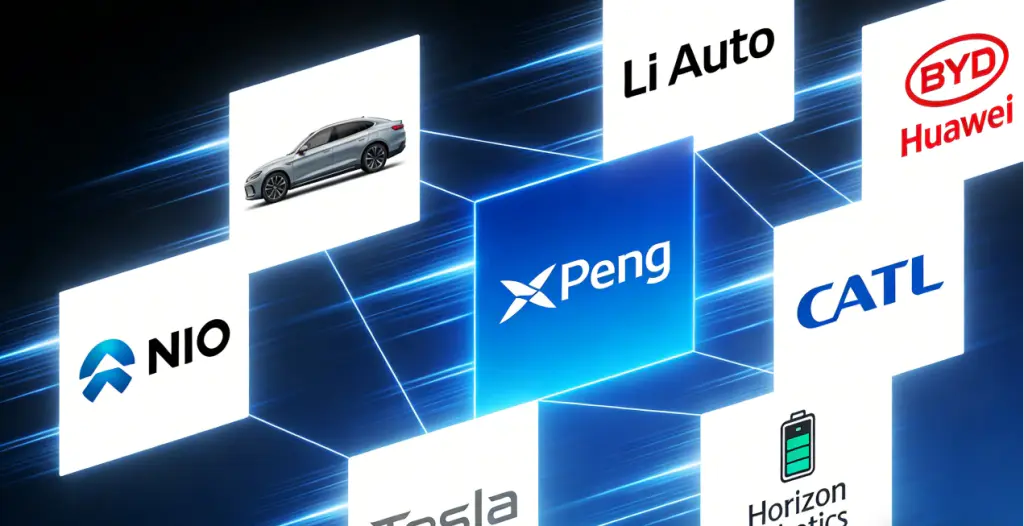
NIO: Known for its user community, battery swap technology, and premium positioning. Strong demand for talent in battery management, swap mechanisms, intelligent cockpit (NOMI), and full-stack autonomous driving (NAD).
Li Auto: Successfully captured the market with extended-range technology, now fully investing in BEV development. Continually hiring for e-drive systems, high-voltage platforms, and intelligent space (large screens & interaction).
XPeng Motors: Core identity is its full-stack in-house intelligent driving tech (XNGP). Intense demand for top engineers in autonomous driving algorithms, AI, big data, and embedded software.
Huawei Intelligent Automotive Solution BU (Huawei Inside / HarmonyOS Cockpit): While not manufacturing cars, it provides a full suite of incremental components. Its hiring bar is exceptionally high, seeking architects and experts with a global vision in intelligent driving, vehicle control, cockpit, cloud, and optical fields.
Xiaomi Auto: Entering the arena with massive capital and ecosystem advantages. Hiring aggressively across all areas: vehicle integration, three-electric systems, smart manufacturing, and software architecture.
Chinese Traditional Automotive Giants (The Comprehensive Transformers)
These large-scale, well-funded enterprises are undergoing a comprehensive transition to new energy and connectivity, offering stable and platform-broad career opportunities.
BYD: The global NEV sales champion with a vertically integrated supply chain (battery, motor, electronic control, semiconductors). Voracious demand for engineers in three-electric tech, semiconductors (IGBT, SiC), and vehicle development.
Geely Holding Group: Multiple brands (Geely, Lynk & Co., Zeekr, Lotus, etc.) and a globalized R&D system. Numerous positions in modular architectures (SEA), high-performance EVs, and flying cars.
SAIC Motor: China’s largest automobile group, boasting premium NEV brands such as IM Motors and Rising Auto. It has a deep presence in areas like fuel cells and its software company, Z-ONE
Foreign Enterprise R&D Centers in China (The Transition Platform)
An ideal starting point for foreign engineers looking to adapt to the Chinese environment first.
Tesla China R&D Center (Giga Shanghai): Not just a Gigafactory but expanding into a significant global R&D center for Tesla, focusing on vehicle software, localization, and factory automation.
Volkswagen Group China R&D Center & CARIAD China: The core of VW’s electrification strategy in China, focused on localized vehicle development, especially software and ICV features.
General Motors China Advanced Technical Center (PATAC): Has long been committed to local R&D, with continuous investment in electrification, intelligent driving, and connectivity.
Top Supply Chain & Core Technology Companies (The Specialist Path)
At these companies, you can dive deep into a specific core technology and become a world-class expert.
CATL (Contemporary Amperex Technology Co. Limited): The global leader in power batteries. Its engineers help define next-gen battery tech (Qilin Battery, Sodium-ion, solid-state).
Horizon Robotics: A leading Chinese provider of automotive-grade AI chips. Hiring extensively for chip architecture, toolchain, and autonomous driving algorithm optimization engineers.
Hesai Technology: A global leader in automotive lidar. Needs multidisciplinary engineers skilled in optics, mechanics, electronics, and algorithms.
Effective Job Search Channels and Networking
Professional Job Platforms:
- LinkedIn: The core recruitment platform for foreign-invested enterprises and Chinese companies seeking international talent in China. Ensure your profile is optimized, highlighting any China-related experience (language skills, project work).
- Liepin: A leading Chinese mid-to-high-end recruitment website with high-quality listings.
- BOSS Zhipin: Known for direct communication with hiring managers/founders, offering quick feedback.
Corporate Career Portals: Monitor the “Join Us” or “Careers” section on the official websites of target companies.
Networking: Connect through alumni associations, industry groups (SAE International has active chapters in China), and tech conferences (World New Energy Vehicle Congress, CES Asia). Employee referrals are one of the most efficient methods.
Executive Search Firms: International firms like Michael Page, Robert Walters, Hays, and specialized local boutiques focused on automotive are key channels for high-level positions.
Key Steps and Advice for a Successful Career Move to China
Pre-Job Search Preparation: Bridging Culture and Qualifications
Visa & Work Permit: The core is obtaining the Foreigner’s Work Permit and the Work-Type Residence Permit. The process heavily relies on employer sponsorship. The Z Visa (Work Visa) is required for entry. China has introduced more convenient “Talent (Category A)” work permit channels in recent years, with faster approval and looser criteria. Qualified automotive engineers should strive to apply under this category.
Language Skills: Fluency in English is sufficient for technical roles in large enterprises and R&D centers. However, basic Mandarin skills will greatly enhance daily life convenience, cultural integration, and influence in cross-departmental collaboration. Companies often provide Chinese lessons as a benefit.
Credential Recognition & Cultural Adaptation: The Chinese automotive industry widely recognizes international engineering experience. Understanding China’s automotive technical standards (GB standards), industry trends, and business culture (communication styles, decision-making processes) is crucial. Maintain an open, flexible, and learning-oriented mindset.
Resume and Interview Strategy
- Resume: Highlight project experience aligned with international standards, technical achievements (patents, publications), and problem-solving capabilities. Quantify your accomplishments (e.g., “improved system efficiency by X%,” “reduced development cycle by Y%”). Mention any experience working with the Chinese market, suppliers, or teams.
- Interview: Typically involves multiple rounds: technical, HR, and final interviews with management. Technical interviews can be very deep, involving specific technical solutions, algorithm whiteboarding, and system design. Be prepared to demonstrate your technical depth, learning ability, and cross-cultural teamwork experience. In-depth research on the target company’s products, technology roadmap, and competitors is a significant advantage.

Long-Term Career Development and Life Integration
Once you secure a position and move to China, long-term planning is equally important:
- Career Path: Clarify whether your goal is to become a deep technical expert (Individual Contributor) or a technical manager (People Manager). Chinese companies offer clear promotion paths for both.
- Continuous Learning: The pace of technological iteration in China’s auto sector is extremely fast. Stay updated by attending industry conferences and tracking the latest trends (e.g., city NOA, 800V platforms, skateboard chassis).
- Build a Local Network: Actively participate in industry communities and tech forums. This aids career development and enriches your life in China.
- Explore and Enjoy: Take the opportunity to explore China’s long history, diverse landscapes, and rich culinary culture. This will make your overseas work experience more fulfilling and memorable.
Conclusion
For American automotive engineers, building a career in China is no longer a distant, uncertain choice but a clear, viable, and richly rewarding career development path. The booming new energy and intelligent connected vehicle industry in China offers a rare combination of scale, speed, and resource support unmatched globally. Whether you seek to break through on the technological frontier, participate in defining the industry’s future, or desire a broader professional platform for accelerated growth, the Chinese market provides a peerless stage.
The keys to seizing this opportunity lie in meticulous preparation, a positive mindset, and strategic choices. By deeply understanding the industry prospects, objectively assessing how your skills match market needs, rationally analyzing the compensation, benefits, and growth potential of different companies and roles, and effectively utilizing recruitment channels, you can find your place in the world’s most dynamic automotive market and open an exciting new chapter in your career. The door to China is wide open, and for visionary, skilled automotive engineers, now is the optimal time to set sail.