
Here’s something a lot of 3D modelers don’t realize. You can read a mesh’s silhouette in space. You know what the roughness value on a material ball means. You understand what happens when the Draw Call count gets too high. Those abilities matter just as much in another field—one where the supply of talent is even tighter. Real-time VFX jobs in China’s game industry.

This piece covers why the opportunity sits in China, what skills you need to fill the gaps, and where the career can take you over the long run.
Why China Needs VFX Artists
A Real Talent Shortage
Chinese game studios have matured their modeling and animation pipelines. Art schools across the country now turn out graduates with solid fundamentals in asset creation. The pipeline for those disciplines runs deep.
Real-time VFX artist jobs are a different story. Plenty of artists can handle pre-rendered effects and post-production compositing in After Effects or Houdini. Far fewer can step into Unreal Engine’s Niagara or Unity’s VFX Graph and build an effect that has rhythm, reads clearly in combat, and runs stable on a mid-range phone. That skill gap is real, and studios know it. Data from multiple overseas recruitment platforms points to VFX as one of the most frequently listed technical art roles in China’s cross-border game hiring. Among VFX jobs open to foreign applicants, real-time expertise is the common thread.
Global Releases Need Cross-Cultural Visual Instinct
Chinese game companies are shipping products worldwide at an accelerating pace. Visual effects are a core part of whether a player feels at home in a game or feels like something is slightly off. A local VFX artist used to domestic mobile titles might default to high saturation and dense particle stacks—great for readability on a small screen, but often read by Western players as noisy, illegible, or lacking weight.
As a foreign artist, you know when an effect lands and when it tips over into too much. That judgment isn’t something you pick up from reference photos. It’s accumulated over years of absorbing the visual language of the games and films you grew up with. Chinese studios making global titles need that instinct embedded in their teams. The 3D VFX talent pool with that cultural fluency is thin, and demand is rising faster than supply.

Where the Work Is
Shanghai
The highest concentration of globally-targeted game studios in China. Mobile, anime-style, sci-fi, and open-world projects dominate the landscape. VFX jobs in Shanghai outnumber every other city, and the variety of styles means you’re more likely to find a project that matches your reel.
Hangzhou
Dense with RPG projects. NetEase’s roots run deep here, and a cluster of mid-size studios build heavy, style-driven games. The demand leans toward stylized magic effects, ambient environmental VFX, and effects that support narrative tone rather than pure spectacle. A strong reel in stylized real-time effects will get attention fast.
Beijing
A growing share of console and cross-platform projects. Studios here are pushing closer to PC and console quality standards, which means VFX work that prioritizes physical simulation, restrained particle counts, and effects that hold up on a large screen. Fewer listings than Shanghai, but the roles tend to be senior and well-compensated.
Chengdu
The value play. Studios in Chengdu face less cost pressure than their coastal competitors and are often willing to offer competitive packages to attract overseas VFX artist jobs candidates who can operate independently. The city itself has a slower pace and a growing reputation as a development hub. If you want the salary-to-rent ratio to tilt sharply in your favor, this is where you look.
Project Types That Need You Most
Cross-platform RPGs and open-world titles burn through VFX talent faster than any other genre. Character skills, environmental interactions, cinematic sequences—every one of these needs original, performance-aware effects. These studios also tend to pay the most for senior 3D VFX artists. Anime and stylized action games are in a growth surge, needing artists who balance aesthetic flair with real-time performance awareness. Sci-fi and military shooters lean more realistic, demanding an eye for physical simulation and tight optimization.
Skills That Get You Hired
A Reel That Proves You Can Deliver
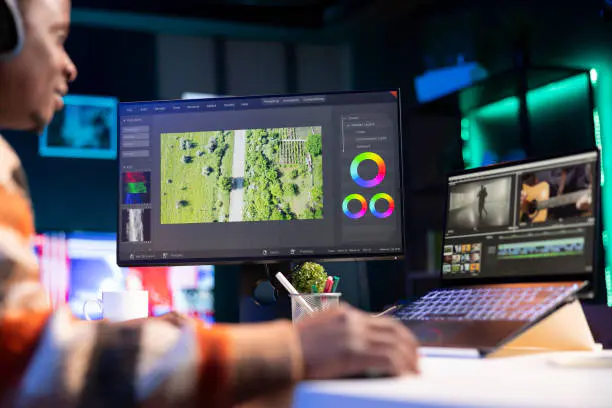
Hiring managers in China’s game industry care about your reel more than your resume or your degree. Everything else is secondary. Aim for about sixty seconds. Include at least three distinct types of effects: a realistic explosion or environmental effect, a stylized magic or ability effect, and one ambient or environmental piece. For every effect, show the breakdown: the texture sheet, the particle system setup, the final result running in-engine. The thinking behind the effect matters as much as the final render. A clean breakdown tells the lead you understand the craft, not just the output.
Fluency in at Least One Real-Time System
Niagara in Unreal Engine or VFX Graph in Unity. These two appear on nearly every VFX jobs listing in China. You don’t need both, but you need to be genuinely fluent in one. Houdini shows up more often in mid-to-senior level listings as a preferred skill. It’s not yet a hard requirement at most studios, but the trend line is clear. Studios want artists who can build tools and workflows, not just author effects one at a time.
Mobile Performance Awareness
Making an effect look good in the editor is the starting line. Making it run at a stable frame rate on a mid-range phone from three years ago is the finish line. Studios interviewing for VFX artist jobs will ask about particle budgets, texture resolution limits for VFX sheets, and how Draw Call and Overdraw affect frame rate. You need to be able to answer those questions with specifics, not generalities. Mobile is still the dominant platform, and mobile optimization punishes ignorance.
Comfort with Art Tests and Direct Feedback
Almost every Chinese game studio uses a skill test for VFX roles. Expect something like “create a fire spell with charge-up and impact” and a one-to-two-day window. The feedback that follows will be direct. A combat designer might say “the hit doesn’t feel heavy enough” and you’re expected to translate that into particle behavior and timing adjustments within hours. If you need a detailed creative brief for every iteration, the pace will grind you down. If you can take an abstract note and run with it, the iteration speed here outstrips most Western studios.
Style Range
A reel that only shows one aesthetic will cap your options fast. Chinese studios often run multiple projects simultaneously across realistic, anime, sci-fi, and fantasy styles. They want artists who can shift between them. Show range. One realistic piece. One stylized piece. The wider your bandwidth, the more doors open.
Career Trajectory of VFX Jobs
Fast Internal Promotion
Shipping a globally released title where your effects get noticed by players and the industry is the shortest path from mid-level to senior. China’s game industry still has a thin bench of senior VFX talent. Lead and director roles open up faster here than in Western AAA studios, where hierarchies move slowly and roles stay fixed for years. VFX jobs in China reward output and shipped results over tenure.
Returning West with a Global Credit
A commercially successful, globally released Chinese game now counts as a hard portfolio credential recognized across the industry. Foreign VFX artists who spend two to three years in China then return to Western studios often land at a higher seniority level with more negotiating room than peers who stayed in one market the whole time. The shipped title speaks for itself.
Building a Cross-Market Freelance Career
Some VFX artists combine client relationships built in China with existing Western networks and go independent. They take remote projects from studios in both markets, diversifying their income and controlling their schedule. It’s not the path for everyone, but the option is real once you’ve shipped work that both sides of the Pacific recognize. For visa and work permit details if you plan to relocate, refer to China’s official foreign work permit guidelines.
Conclusion
VFX jobs in China aren’t a massive hidden market. They’re a narrow, growing lane—fewer openings than modeling or animation, but fewer artists competing for each one. For a 3D modeler who already understands silhouette, materials, and real-time performance constraints, the leap into VFX means learning particle logic, rhythm, and a few new tools. The foundation is already there. Chinese studios shipping global titles don’t need more people who can build the world. They need people who can make it move. If that sounds like your kind of challenge, put together a reel and start looking. The studios are searching.