
Secure engineering jobs in China,Visa guide for foreign engineers in aerospace, infrastructure & automotive sectors. Explore high-demand opportunities and work permit strategies.
Introduction
As China relentlessly advances its ambitious technological and industrial strategies, the demand for top-tier engineering talent has reached unprecedented heights. The aerospace, infrastructure, and automotive sectors are at a critical juncture of technological upgrading and massive expansion, creating an urgent need for engineers with global perspectives and specialized skills. This opens remarkable career opportunities for foreign engineers worldwide. This comprehensive guide delves into the current landscape, future prospects, visa policies, and key strategies for successfully securing engineering roles in China.
Aerospace: Where China’s Ambition Meets Global Talent
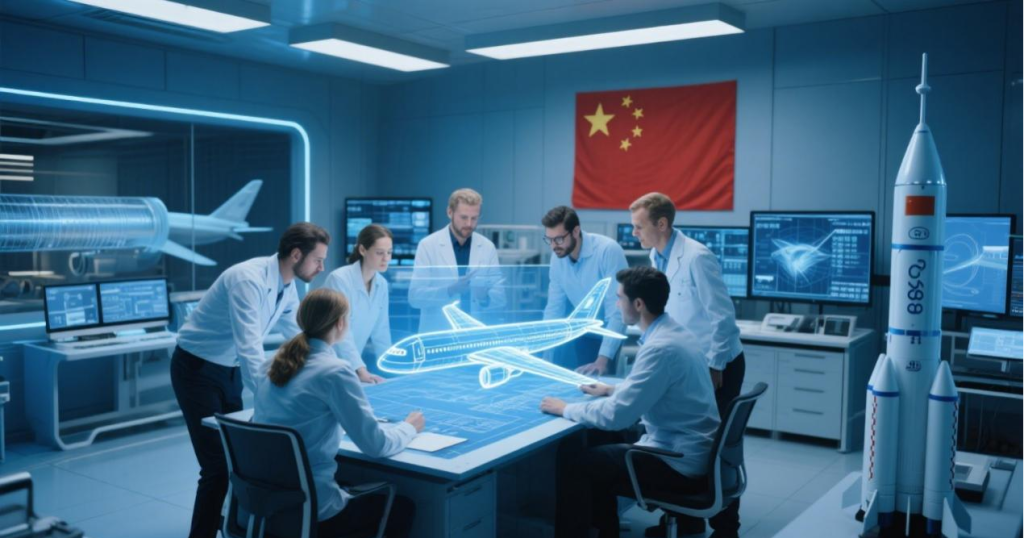
China’s aerospace industry is developing at a breakneck pace, solidifying its role as a pillar of national strategic technology. From the commercial rollout of the homegrown C919 airliner to the development of the Long March-9 heavy-lift rocket, from the completion of the BeiDou global navigation system to ambitious deep-space exploration (Chang’e lunar missions, Tianwen Mars probes), China’s space ambitions demand world-class talent.
Key Growth Areas & Skill Shortages:
- Commercial Aircraft: COMAC’s C919 program marks China’s entry into the global mainline passenger aircraft market. Foreign engineers play indispensable roles in critical areas: overall design, aerodynamic analysis, advanced composite materials application, airworthiness certification (aligning with FAA/EASA standards), avionics systems integration, flight controls, engine integration/testing, and supply chain management. Ongoing improvements to the ARJ21 regional jet and development of the future wide-body C929 also create strong demand.
- Aero Engines: Breaking through the high-performance aero engine bottleneck (e.g., the CJ-1000A Yangtze engine) is a national strategic priority. Demand for foreign engineers focuses on cutting-edge fields: high-temperature alloy materials, single-crystal turbine blade manufacturing, precision casting/forging, combustor design, compressor/turbine aerodynamic design, full engine integration/testing, and airworthiness validation. Experienced foreign engineers are vital to overcoming these technical hurdles.
- Space Technology: Dominated by CASC and CASIC, China’s space sector develops rockets, satellites, space stations, and deep-space probes. Foreign engineers bring unique value in areas like advanced propulsion (liquid oxygen methane engines), lightweight structure design, satellite payload development, space environment simulation/testing, high-precision guidance/navigation/control (GNC), and deep-space communications. The rise of commercial space startups (Landspace, iSpace, etc.) further intensifies the competition for international talent, especially innovative foreign engineers with commercialization experience.
- UAVs & eVTOL: China is the world’s largest drone producer (DJI). Demand for foreign engineers surges in large industrial UAVs, long-endurance UAVs, and particularly in the emerging eVTOL (electric Vertical Takeoff and Landing) sector, focusing on flight control algorithms, battery/e-propulsion system integration, airworthiness certification research, and UAM (Urban Air Mobility) system design.
Major Employers:
- Aviation Industry Corporation of China (AVIC)
- Commercial Aircraft Corporation of China (COMAC)
- Aero Engine Corporation of China (AECC)
- China Aerospace Science and Technology Corporation (CASC)
- China Aerospace Science and Industry Corporation (CASIC)
- Leading commercial space startups (Landspace, Galactic Energy, Space Pioneer, etc.)
- Major UAV/eVTOL manufacturers (EHang, AutoFlight, etc.)
- R&D centers/JVs of international aerospace giants in China (Airbus China Innovation Centre, Boeing R&D, GE Aviation, Safran, Honeywell, etc.)
Key Skills Sought: Deep expertise (Aerospace/Mechanical/Materials/Electrical Engineering, Controls), cutting-edge experience in niche areas (airworthiness certification, CFD/FEA analysis, systems integration, advanced manufacturing), innovative thinking, complex problem-solving, cross-cultural collaboration. English is essential; Mandarin is a significant advantage. Foreign engineers are typically expected to bring specific technical expertise or process knowledge not readily available domestically.
Infrastructure: Building the Engine of Modern China
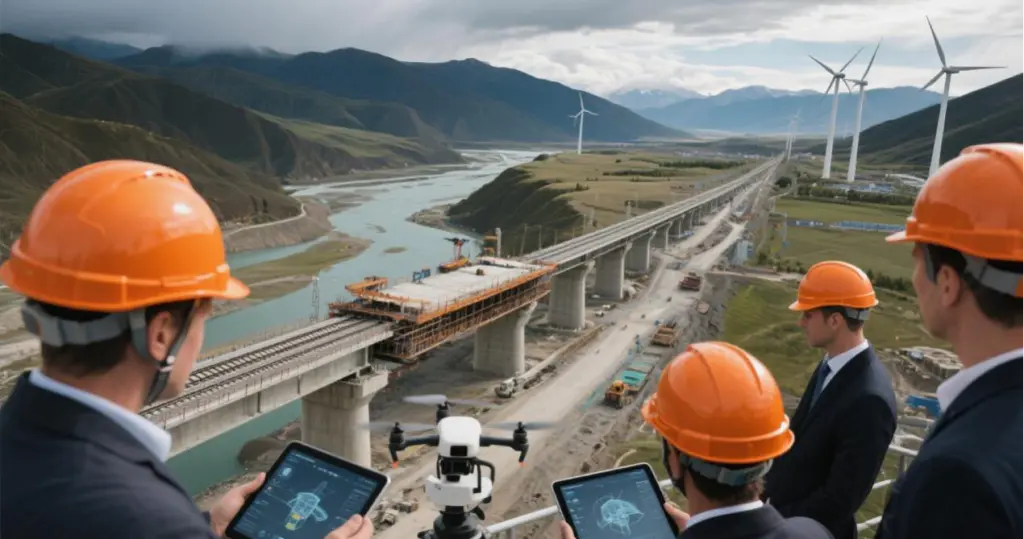
China continues massive investments in transportation, energy, water resources, and smart city infrastructure, driving high-quality development and regional coordination. These mega-projects require not just domestic expertise but also attract top international engineering talent.
Core Construction Areas & International Demand:
- Transportation Networks: Expansion and upgrades continue on the world’s longest high-speed rail network (e.g., Beijing-Shanghai Second Line, Sichuan-Tibet Railway), with smart rail tech (autonomous operation, intelligent maintenance) as a focus. Urban rail transit (subway, light rail) is booming in dozens of cities. Large international hub airports (Beijing Daxing, Chengdu Tianfu) and port automation/green upgrades need foreign engineers for: planning/design (introducing int’l best practices/standards), complex structural engineering (long-span bridges, deep tunnels), advanced BIM implementation, construction tech (TBM tunneling, prefabrication), intelligent transportation systems (ITS), green tech integration (e.g., geothermal for airports, shore power for ports), and project management (large int’l project experience).
- Energy Transition: Driven by “dual carbon” goals (peak emissions by 2030, carbon neutrality by 2060), China is the world’s largest renewable energy investor. Foreign engineers hold significant advantages in: large-scale offshore wind farm design/construction (complex geotech/hydro conditions), grid integration; advanced nuclear tech (Hualong One, SMRs) safety design, construction oversight, O&M optimization; new power systems (UHV transmission, smart grids, distributed energy, storage integration) planning, core equipment tech, and dispatch algorithms. Hydrogen infrastructure (production, storage, transport, refueling) also urgently needs international experience.
- Water Management: Large-scale water conservancy projects (flood control, power, irrigation), inter-basin water transfer (e.g., South-North Water Diversion), complex water environment remediation (polluted waterways, sponge cities), seawater desalination demand foreign engineers with expertise in hydraulic structure safety, hydrology modeling, advanced water treatment (membrane tech, advanced oxidation), geotechnical risk management, and mega-project management.
- Smart & Resilient Cities: 5G, IoT, Big Data, and AI-powered infrastructure are priorities. Foreign engineers with experience in master planning, smart building/campus systems integration, City Information Modeling (CIM) platforms, urban disaster resilience systems (extreme weather, earthquakes), sustainable drainage (SuDS), and utility tunnel construction/smart O&M are highly valued. Demand is strong for foreign engineers with hands-on international smart city project experience.
Major Employers:
- Large State-Owned Engineering Groups (China Communications Construction – CCCC, China Railway Construction – CRCC, China Railway Group – CREC, Power Construction Corporation of China – PowerChina, China Energy Engineering Corporation – Energy China, China State Construction Engineering – CSCEC, and their design institutes/engineering bureaus).
- Energy Giants (China Energy Investment Corp, State Power Investment Corp, China National Nuclear Corp, China General Nuclear Power Group).
- Provincial/Large Municipal Infrastructure Investment Platforms.
- China Offices of Global Engineering Consultants (AECOM, Jacobs, WSP, Arcadis, Arup).
- R&D Departments of Major Equipment Makers (Sany, XCMG, Zoomlion), especially in smart/electric technologies.
Key Skills Sought: Strong fundamentals in civil, structural, geotechnical, hydraulic, electrical, mechanical, environmental engineering; deep expertise or management experience in niche areas (BIM specialist, tunneling expert, wind energy engineer, nuclear safety specialist, smart city architect); familiarity with int’l standards (e.g., FIDIC) and Chinese codes; large-scale complex project management (PMP); solving on-site technical challenges; cross-cultural communication. Foreign engineers are often tasked with technical oversight, introducing int’l standards, solving complex problems, or coordinating int’l projects.
Automotive: An International Talent Hub in the EV & Smart Tech Wave
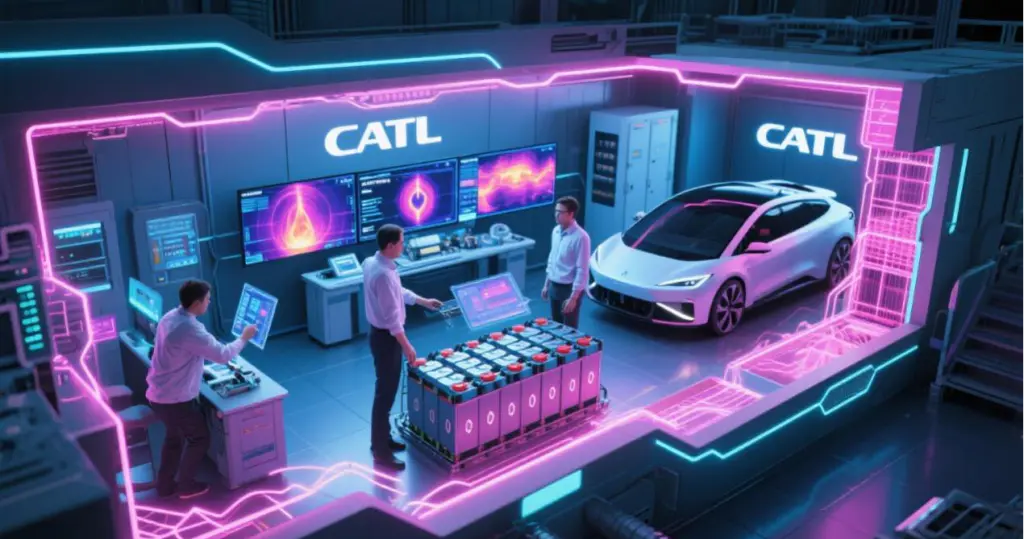
As the world’s largest auto market for over a decade, China is undergoing a profound transformation driven by electrification (EV) and smart technologies (autonomous driving, smart cabins). This attracts global attention and offers a massive stage for foreign engineers.
Transformation Focus & Talent War:
- New Energy Vehicles (NEVs): China is the world’s largest EV market and producer. Demand for foreign engineers is exploding in:
- Powertrain Systems (“Three Electrics”): High-energy-density/fast-charge battery R&D/manufacturing, BMS algorithms, high-performance motor design (PMSM, oil-cooling), motor controllers (SiC/GaN power semiconductors), e-drive unit integration/efficiency optimization. Foreign engineers with experience at top battery makers (CATL, BYD) or EV OEMs (Tesla) are highly sought.
- Vehicle Platforms & Architecture: Design/development of dedicated BEV platforms, skateboard chassis, lightweighting (multi-material bodies), thermal management (battery/cabin synergy). Foreign engineers bring advanced development processes and systems integration know-how.
- Intelligent Connected Vehicles (ICVs):
- Autonomous Driving (ADAS/AD): Perception (camera, LiDAR, radar) algorithms, sensor fusion, localization (SLAM), decision & planning, control algorithms, HD mapping, simulation/testing validation, data loop systems. Foreign engineers with experience at leaders like Waymo, Cruise, Tesla Autopilot (especially in algorithms, systems, testing) are in high demand.
- Smart Cabin: HMI design, infotainment (IVI), digital clusters, voice recognition/control, multi-modal interaction, vehicle OS, V2X. Need foreign engineers with UX design, software architecture, systems integration expertise.
- EE Architecture: Transitioning from distributed to domain control, towards central compute + zonal architecture. Requires foreign engineers with deep knowledge of SOA, automotive Ethernet, functional safety (ISO 26262), cybersecurity (ISO 21434).
- Software-Defined Vehicles: Cars are becoming “software-defined machines.” Demand surges for foreign engineers skilled in OS (QNX, Linux), middleware, AUTOSAR, vehicle-cloud synergy, OTA updates, and AI applications (CV, NLP). Foreign engineers with large-scale complex software systems experience are highly valued.
- Supply Chain Upgrading: China urgently needs breakthroughs in semiconductors (auto-grade MCUs, SoCs), advanced sensors, and power devices. Foreign engineers from leading global semiconductor/component firms are prized in R&D, process engineering, and quality management.
Major Employers:
- Leading Domestic OEMs: BYD, Geely (Zeekr, Lotus), Changan, Great Wall (Ora, Saloon), SAIC (IM Motors, Feifan), GAC Aion, NIO, XPeng, Li Auto, Xiaomi Auto.
- Global OEM R&D Centers in China: Tesla Shanghai R&D & Innovation Center, Volkswagen Group China R&D (incl. Audi, Porsche), GM Pan Asia Technical Center (PATAC), Mercedes-Benz R&D China, BMW China R&D.
- Top Battery Makers: CATL, BYD FinDreams Battery, CALB, Gotion High-tech, Sunwoda, EVE Energy.
- AD/ADAS Solution Providers: Baidu Apollo, Pony.ai, WeRide, Momenta, Horizon Robotics, Black Sesame Technologies, Huawei Intelligent Automotive Solution BU.
- Global Tier 1 Suppliers’ China R&D: Bosch, Continental, ZF, Denso, Valeo, Aptiv, Forvia.
- Automotive-focused Chip Firms (Horizon, Black Sesame, SemiDrive, etc.).
Key Skills Sought: Deep background in vehicle/electrical/electronic/computer science/software/mechanical engineering; cutting-edge skills in an EV/ICV sub-field (e.g., BMS algorithm expert, motor EM design specialist, perception lead, systems architect); agile development experience; mastery of functional safety (ISO 26262) and cybersecurity (ISO 21434); rapid learning; innovation. Fluent English is essential; Mandarin aids team integration/project management. Foreign engineers are often core to technical breakthroughs, introducing int’l best practices, or leading innovation.
Paving the Way: Visa Policy & Work Permit Details

Understanding and securing the proper work visa and residence permit is critical for foreign engineers seeking opportunities in China. The core system is the “Work Permit for Foreigners Working in China.”
Core Visa Type: Work Visa (Z Visa)
- Purpose: Allows entry and legal work in China.
- Pre-Requisite: Must obtain a “Notification Letter of Foreigner’s Work Permit” and the “Foreigner’s Work Permit” before applying for the Z Visa.
- Process Overview:
- Employer Application: The Chinese employer registers with the local Foreign Expert Bureau/STB system and submits the job application. They must justify the need for a foreign engineer and demonstrate alignment with talent priorities (usually Category B or A).
- Pre-Approval – Get Notification Letter: Upon approval, the employer receives the “Notification Letter of Foreigner’s Work Permit.”
- Z Visa Application Abroad: The foreign engineer applies for a Z Visa at the Chinese Embassy/Consulate in their home country using the Notification Letter, passport, application form, photos, health certificate (sometimes required).
- Enter China: Enter with the Z Visa.
- Get Work Permit & Residence Permit in China: Within 30 days of entry, the employer helps the applicant obtain the “Foreigner’s Work Permit” from the local Human Resources/Social Security Bureau/STB. Then, using this permit, apply for the Work-type Residence Permit (valid 1-5 years) at the local Public Security Bureau Exit-Entry Administration. This is the final document for legal work and residence.
Work Permit Categories:
- Category A (High-Level Foreign Talent): Encouraged. Most favorable for foreign engineers – “green channel” processing, fastest approval, permits up to 5 years. Typically requires meeting one of:
- Selected for national/regional talent programs.
- Internationally recognized achievements (awards, major academic roles).
- Senior Management/Technical Role (e.g., VP Engineering or equivalent technical expert).
- Salary ≥ 6x local average salary (common path for experienced foreign engineers).
- Points-based score ≥ 85.
- Category B (Professional Foreign Talent): Controlled. Most qualified foreign engineers fall here. Requires Bachelor’s degree + 2+ years relevant experience, or int’l vocational certificate. Salary ≥ 4x local average salary is common. Normal processing applies.
- Category C (Other Foreign Personnel): Restricted. Generally not applicable to foreign engineers.
Key Documents (Employer & Applicant):
- Employer: Business License, Commitment Letter, Employment Contract/Offer Letter (clearly stating position, duties, salary, benefits), Job Description (emphasizing need for a foreign engineer and required expertise).
- Applicant: Passport, Highest Degree Certificate & Authentication (usually by Chinese Embassy/Consulate or designated agency), Work Experience Proof (reference letters), Criminal Record Certificate (authenticated), Health Certificate (designated clinics), Photos, Resume. Category A may need extra proof (salary slips, awards, appointment letters).
Critical Considerations:
- Degree Authentication: Non-Chinese/English degrees need official translation and notarization/authentication (often 3-step: local notary, home country foreign ministry authentication, Chinese Embassy/Consulate authentication).
- Criminal Record Authentication: Same 3-step authentication required.
- Health Check: Required at designated clinics overseas (by Chinese Embassy) or in China after entry.
- Salary Threshold: Crucial, especially for Category B and A (via salary qualification). Must meet local minimums (4x or 6x avg salary) with supporting documents like tax records.
- Compliance: Apply legally through the employer. Working on a Tourist (L) or Business (M) visa is illegal. Foreign engineers must maintain legal visa status.
Strategies for Success in China’s Engineering Job Market
Securing the visa is step one. To succeed and grow in China’s aerospace, infrastructure, or automotive sectors, foreign engineers need proactive planning.
Targeted Job Search & Channels:
- Int’l Job Boards: LinkedIn, Indeed, Glassdoor. Search: “China Engineer Jobs Foreigner”, “Expat Engineering Jobs China“, “[Your Skill] Engineer China”.
- Chinese Job Sites: Zhaopin, 51job, Liepin – Create a Chinese resume (use professional translation) or find recruiters supporting English.
- Industry-Specific Sites/Forums: Sites focused on auto/aerospace talent might be more effective.
- Specialized Recruiters: International recruiters focused on China (Michael Page, Robert Walters, Hays, Morgan Philips) and top local firms are key for senior roles. Proactively contact recruiters in your field.
- Target Company Careers Pages: Regularly check “Join Us” pages of target companies (AVIC, COMAC, CATL, BYD, Tesla China, VW China R&D).
- Industry Events & Trade Shows: Airshow China (Zhuhai), Beijing/Shanghai Auto Shows, China International Import Expo (CIIE), industry summits (World New Energy Vehicle Congress) are great for networking and spotting opportunities.
- Networking: Guanxi (relationships) still matters. Leverage alumni networks, former colleagues, LinkedIn connections. Join expat professional groups (Chamber of Commerce events, InterNations).
Crafting Competitive Applications:
- Resume (CV): Optimize for China:
- Highlight core skills/experience highly relevant to the Chinese market (specific projects, niche expertise, scale managed).
- Quantify achievements! (Reduced cost by X%, shortened cycle by Y%, improved efficiency by Z%, managed $X budget/Y team).
- Show clear career progression.
- Prepare bilingual versions (EN & CN). Keep English CV concise (1-2 pages). Chinese CVs often include a photo and more personal details – ensure accurate translation.
- Cover Letter: Essential. Express strong interest in the specific company/role, clearly articulate your unique value (how your int’l experience/skills solve their problems), and show understanding of the China market and long-term commitment. Personalize rigorously – avoid templates.
- Portfolio/Project Summary (if applicable): Crucial for design/R&D roles – showcase relevant work.
Acing the Interview:
- Deep Research: Understand the target company (business, products, tech roadmap, news, culture), industry trends in China, and the specific role’s requirements. Know relevant national strategies (e.g., Made in China 2025/2035).
- Technical Depth: Be ready to dive deep into your expertise, project experience, and problem-solving abilities. Chinese employers highly value the technical prowess of foreign engineers.
- Cultural Fit: Interviewers assess adaptability. Demonstrate cross-cultural communication, flexibility, willingness to learn, and teamwork. Show respect for Chinese culture (even basic understanding).
- Motivation & Stability: Clearly articulate why China, why this company, and your long-term goals. Emphasize commitment and stability. Know and state your salary/benefit expectations clearly (Total Package: base salary, bonus, housing allowance, schooling, insurance, vacation).
- Language: Interviews are usually in English. Basic Mandarin or expressing willingness to learn is a plus. Technical interviews involve deep terminology.
- Interview Format: Expect multiple rounds (HR, Tech Manager, Dept Head, Execs), often starting online. Be prepared for technical tests or case studies.
Compensation & Benefits Negotiation:
- Market Rates: Research typical salary ranges for your field, level (Senior Engineer, Expert, Director), and location (Beijing/Shanghai/Shenzhen/Guangzhou highest). Senior foreign engineers typically command significantly higher salaries than local peers, especially in high-tech/shortage fields.
- Total Compensation Package (TCP): Negotiate the whole package:
- Pre-tax Monthly Base Salary
- Annual Bonus (often 1-6 months salary)
- Signing Bonus (possible)
- Housing Allowance (Very common & crucial, especially Tier 1 cities)
- Transportation Allowance
- Cost of Living Allowance (COLA)
- International School Tuition for Children
- Comprehensive Private Health Insurance (covering family)
- Annual Home Leave & Flight Allowance
- Pension Plan / Supplementary Housing Fund (possible)
- Tax Consultation (some companies offer)
- Negotiation Strategy: Negotiate based on your value, market data, and company budget. Clearly state your expectations and justification (skills, experience, market value). Understand China’s progressive income tax rates (up to 45%). Clarify all benefit specifics (e.g., housing allowance: fixed amount or capped reimbursement? School allowance coverage?).
- Total Compensation Package (TCP): Negotiate the whole package:
Working and Living in China: Challenges and Solutions
Despite huge opportunities, foreign engineers face unique challenges in China. Proactive management is key:
Cultural Adaptation:
- Work Culture: May experience more hierarchy, longer meetings, different decision-making, stronger emphasis on group harmony. Be patient, observe, communicate actively, respect local management styles.
- Communication Style: Can be indirect (“saving face”), relationship-oriented. Learn to read between the lines. Building trust is paramount. Communicate clearly and directly, but respectfully.
- Solutions: Learn basic Mandarin (Highly recommended!), take cross-cultural training, actively integrate (join team events/meals), find expat community support, maintain an open mind and sense of humor.
Language Barrier:
- While English may be the workplace language (especially in MNCs/R&D), daily life, admin tasks, and communication with some colleagues/vendors require Mandarin. Lack of Chinese limits integration and efficiency.
- Solutions: Systematically learn Chinese (company may offer classes), use translation apps (WeChat Translate, Youdao), encourage bilingual key meetings/docs, consider hiring an assistant if needed.
Living Environment:
- Air Quality & Environment: Air pollution can be an issue in some cities/seasons.
- Internet: Accessing some international sites/apps (Google, Facebook, WhatsApp, YouTube) requires a reliable VPN (ensure it’s legal/stable), impacting convenience.
- Daily Life: Tier 1 cities are highly international with good amenities (expat compounds, supermarkets, int’l hospitals/schools), but living costs (especially housing, int’l schooling) are very high. Tier 2/3 cities are cheaper but may lack expat infrastructure.
- Solutions: Research and choose suitable areas (often established expat communities), use quality air purifiers, set up a reliable VPN, plan family logistics carefully (especially schooling: int’l schools are expensive – confirm allowance coverage), master local life apps (WeChat Pay, Alipay, Meituan, Didi – massively improve convenience).
Long-Term Career & Integration:
- Strategize how to leverage China experience for global competitiveness.
- Build local professional networks.
- Understand China’s professional qualification system (if needed for deeper project involvement).
- Explore visa renewal and potential Permanent Residency (“China Green Card”) – requirements are high but possible for long-term residents.
Future Outlook: A Continuing Golden Window
Multiple factors will continue driving China’s demand for top foreign engineers:
- Ongoing National Strategies: The evolution from “Made in China 2025” to “Made in China 2035,” self-reliance in tech, transportation power goals, new urbanization, and carbon neutrality targets will fuel sustained growth in aerospace, infrastructure, and automotive.
- Urgent Need for Tech Upgrading: China still needs to import top global talent in critical areas like advanced semiconductors, cutting-edge aero engines, industrial software, basic research, and disruptive innovation (e.g., AI for Science). Foreign engineers remain vital as technical leaders and knowledge transfer agents.
- Global Competition & Collaboration: Despite geopolitical friction, deep technical cooperation and global talent mobility remain essential for industry progress. China’s vast market and R&D spending continue to attract global talent.
- Policy Optimization: Recognizing the need to attract international talent, China is expected to keep improving visa convenience, residence policies, tax incentives (e.g., in Greater Bay Area, Free Trade Zones), and living conditions for high-level foreign engineers.
Conclusion: Seize the China Opportunity, Deliver Global Value
China’s grand vision and unwavering commitment in aerospace, infrastructure, and the automotive revolution (electrification, smart tech) offer foreign engineers an unparalleled platform. It combines world-class projects, massive investment, and urgent talent needs. While challenges like cultural adaptation, language barriers, and visa processes exist, clear career planning, a deep understanding of visa rules, effective job search strategies, and a proactive attitude towards integration can empower skilled foreign engineers to successfully launch and build thriving careers in China.
Whether contributing to the ascent of homegrown airliners, weaving the national high-speed rail network, building the smart cities of tomorrow, or shaping the next generation of intelligent EVs, foreign engineers working in China aren’t just serving a fast-growing market – they are actively shaping the future of global engineering. It’s both a significant career leap and a unique life experience. For engineering professionals with genuine expertise, a willingness to embrace challenges, and a desire to make an impact at the forefront of technological waves, China’s doors are wide open. By deeply understanding your target sector (Aerospace / Infrastructure / Automotive), precisely positioning your value, and preparing thoroughly, you can become a vital bridge connecting global expertise with Chinese innovation, achieving remarkable personal and professional success.