
Explore new career opportunities for automation engineers seeking employment in China. Learn about high-demand sectors, competitive advantages for American engineers, visa processes, and practical steps to transition successfully into China’s booming automation industry.

Introduction: The Professional Crossroads in the Global Wave of Automation
In recent years, the rapid development of automation and smart manufacturing technologies is reshaping the global employment landscape. In the United States, while technological progress has created new opportunities, economic fluctuations, industrial restructuring, and increased competition have also led to employment uncertainty in some technical fields. Meanwhile, on the other side of the globe—China—is undergoing an unprecedented industrial transformation. As the core of the “Made in China 2025” and Industry 4.0 strategies, automation engineers have become one of the most sought-after talent resources in China. For American automation engineers facing career challenges, the Eastern market is revealing remarkable new opportunities. This article will explore in depth why China has become an ideal employment destination for automation engineers, how to successfully make the career transition, and the key factors to consider during this process.
The Explosive Growth of China’s Automation Industry and Talent Demand
The Intelligent Transformation of Chinese Manufacturing
China is no longer just the “world’s factory” but is rapidly transforming into the “world’s smart factory.” As the demographic dividend wanes and labor costs rise, Chinese manufacturing companies are investing heavily in automation, robotics, and smart manufacturing systems to maintain competitiveness and improve production efficiency. According to data from China’s Ministry of Industry and Information Technology, China’s annual installation of industrial robots has ranked first globally for many consecutive years, with the market scale exceeding $10 billion in 2022 and projected to grow by over 40% by 2025. This explosive growth has created a massive demand for automation engineers, far outpacing the rate at which local talent is being trained.

Policy-Driven Industry Development
The Chinese government has elevated smart manufacturing and automation technology to a national strategic level. The “Made in China 2025” plan clearly identifies ten key areas for development, including high-end numerical control machinery and robotics, advanced rail transportation equipment, and energy-saving/new energy vehicles, providing substantial subsidies, tax incentives, and policy support. Furthermore, various provinces and cities have introduced local talent recruitment programs, offering foreign experts housing subsidies, educational convenience for children, and visa facilitation. These policies collectively create an employment environment exceptionally friendly to automation engineers.
Opportunity Distribution Across Industry Segments
Opportunities for automation engineers in China are widespread across multiple high-growth sectors:
- Industrial Robot Integration and Application: Strong demand for automation transformation in automotive manufacturing, electronics assembly, logistics, warehousing, and more.
- Process Automation and Control: Surging demand for advanced process control systems in continuous production industries like chemicals, pharmaceuticals, and food processing.
- Smart Manufacturing System Integration: Design and implementation of digital factories, industrial internet platforms, and smart production lines.
- Machine Vision and Inspection Systems: Development and application of quality inspection, precision measurement, and intelligent recognition systems.
- Motion Control and Drive Systems: R&D for high-precision processing equipment, CNC machine tools, and specialized automation equipment.
Each sub-field offers rich career opportunities for automation engineers with different specializations, whether your focus is hardware design, software development, or system integration.
Why American Automation Engineers Possess Competitive Advantages in China
Technical Background and Experience Advantage
American automation engineers typically receive systematic engineering education and accumulate valuable practical experience in highly mature industrial environments. When Chinese companies pursue automation upgrades, they often need to introduce advanced international technical concepts and implementation methods. American engineers hold significant advantages in:
- Design and Integration Capabilities for Complex Systems: Systemic thinking and complex problem-solving skills cultivated in the US industrial environment.
- Experience with Cutting-Edge Technology Application: Familiarity with the latest automation technologies, software platforms, and industry standards.
- Project Management and Quality Control Philosophies: Experience with project management methodologies and quality assurance systems meeting international standards.
- Innovative Thinking and Problem-Solving Abilities: Practical experience in creating solutions under resource constraints.
Cultural Bridge and International Perspective
As Chinese companies increasingly participate in global competition, they urgently need technical talent with an international perspective. American automation engineers can not only bring technical expertise but also play a unique role in corporate internationalization, standards alignment, and cross-cultural communication. Many Chinese companies are establishing R&D centers and production bases overseas, making engineers with dual Sino-US experience valuable assets.
Salary and Career Development Prospects
While overall salary levels in China are still lower than in the US, compensation for in-demand positions like automation engineer is internationally competitive. In industrially developed regions like the Yangtze River Delta, Pearl River Delta, and Beijing-Tianjin-Hebei area, senior automation engineers can earn annual salaries ranging from 300,000 to 800,000 RMB (approximately $42,000 to $112,000), with top talent potentially exceeding 1 million RMB. Additionally, Chinese companies often offer more flexible career paths, where excellent foreign engineers have the opportunity for rapid promotion to technical management positions, overseeing larger-scale projects and teams.
Practical Considerations and Steps for Employment in China
Visa and Work Permit Process
Legal and administrative procedures are the first to address for employment in China. China has significantly streamlined the work visa process to attract foreign high-end talent:
- Z-Visa (Work Visa): The basic visa type for legal employment in China, requiring an employer-provided work permit notification.
- R-Visa (Talent Visa): A special category for high-level talents, offering longer validity and more convenient application conditions.
- Permanent Residence (Chinese Green Card): Applicable after meeting certain conditions (e.g., four consecutive years of work, residing in China for no less than six months each year).
The entire process typically takes 2-4 months; advance planning and negotiation with potential employers regarding visa support is advised.
Job Market Navigation and Search Strategies
Finding a position as an automation engineer in China can be done through various channels:
- International Recruitment Platforms: Increasing listings for Chinese positions on LinkedIn, Indeed, etc.
- Chinese Local Job Boards: Numerous automation-related positions on Zhaopin, 51job, BOSS Zhipin.
- Specialized Recruitment Agencies: Many Chinese headhunters focus on technical talent recruitment, especially foreign experts.
- Industry Exhibitions and Conferences: Excellent opportunities for networking and understanding industry trends at events like China International Industry Fair, World Robot Conference.
- Direct Applications to Companies: Many large Chinese enterprises (e.g., Huawei, BYD, Haier, Foxconn) and multinationals’ Chinese branches have English recruitment portals.
Cultural Adaptation and Language Preparation
Successful employment in China requires not only professional skills but also cultural adaptability:
- Language Factor: While English is the working language in many Chinese tech firms, learning basic Mandarin will greatly enhance daily convenience and career potential. Learning basic Chinese, especially profession-related terms, before arrival is recommended.
- Work Culture Differences: Chinese corporate culture may place more emphasis on hierarchy, collective decision-making, and long-term relationship building. Understanding these differences and adjusting communication styles accordingly will aid professional success.
- Life Adaptation: From housing and healthcare to food and transportation, lifestyle in China differs in many ways from the US. Maintaining an open mind and adaptability is key.
Key Sectors for Career Development of Automation Engineers in China
New Energy Vehicle and Battery Manufacturing Automation
China has become the world’s largest new energy vehicle market, accounting for over half of global sales. The explosive growth in this sector has driven huge demand for automated production lines, battery manufacturing equipment, and testing systems. Automation engineers can engage in:
- Design and optimization of electric vehicle powertrain assembly lines.
- Development of automation systems for lithium battery electrode manufacturing, cell assembly, and formation testing.
- Smart management and control systems for charging infrastructure.
- Welding, painting, and final assembly automation in vehicle manufacturing.
Semiconductor and Electronics Manufacturing Automation
Against the backdrop of Sino-US tech competition and domestic substitution, China is heavily investing in the semiconductor industry. Opportunities for automation engineers in this field include:
- Development of automated equipment for wafer fabrication, lithography, etching, and packaging/testing.
- Material handling and process control systems in cleanroom environments.
- Optimization of Surface Mount Technology (SMT) production lines for electronic components.
- Precision alignment and inspection systems in display panel manufacturing processes.
Biopharmaceutical and Medical Device Automation
In the post-pandemic era, China’s biopharmaceutical industry is experiencing rapid growth. Automation engineers can find unique opportunities here:
- Automated systems for batching, filling, and packaging in pharmaceutical processes.
- Laboratory automation and high-throughput screening equipment.
- Precision assembly and testing systems for medical devices.
- Smart manufacturing solutions compliant with GMP standards.
Warehousing, Logistics, and Supply Chain Automation
The booming e-commerce sector is driving an automation revolution in China’s logistics industry:
- Design and implementation of Automated Storage and Retrieval Systems (AS/RS).
- Application of AGV/AMR (Automated Guided Vehicles/Autonomous Mobile Robots).
- Intelligent sorting systems and parcel handling automation.
- Supply chain visualization and intelligent scheduling systems.
Success Stories and Experience Sharing
Case Study: From Detroit to Shanghai – John’s Career Transition
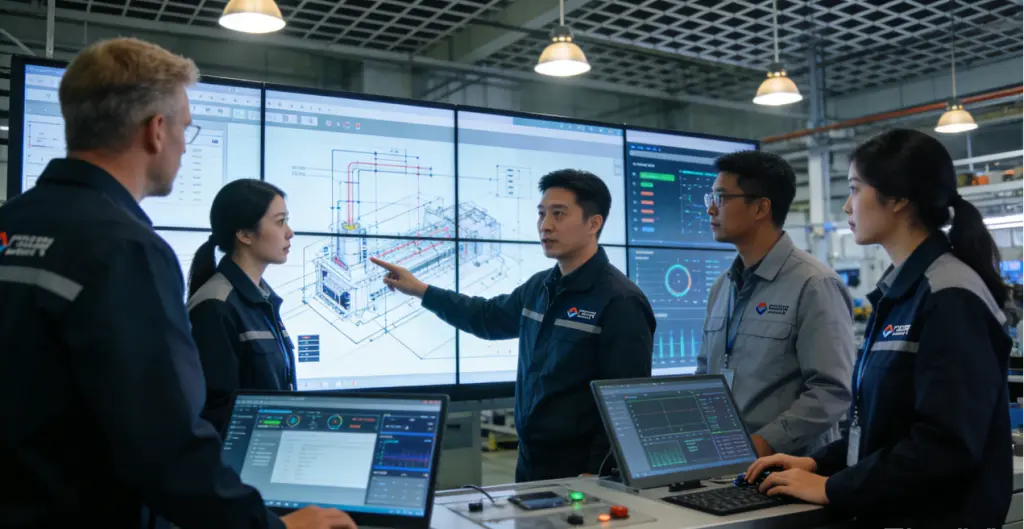
John, an American automation engineer with 15 years of experience in the automotive industry, was laid off in 2020 due to industry restructuring. Through LinkedIn, he connected with a German automation equipment manufacturer with an R&D center in Shanghai. After remote interviews and technical assessments, he secured a position at the Chinese branch, responsible for customizing automation solutions for Asian clients.
In his three years working in China, John not only received higher total compensation (considering lower living costs) than in the US but also led several large project teams, gaining rich multinational project management experience. He noted, “The scale and implementation speed of projects in the Chinese market are astounding. Here, I can participate in a complete project cycle from conceptual design to field commissioning within a year, which might take two to three years in the US.”
Industry Expert Insights
Interviews with several foreign automation engineers working in China revealed common experiences:
- Rapid Learning and Adaptability are Crucial: The pace of technological iteration in China is extremely fast; maintaining a willingness to learn new tools and methods is key to success.
- Build a Local Network: Attend industry events, technical seminars, and professional gatherings to build a network within China.
- Understand Local Needs: Chinese clients may have unique technical requirements and preferences; success often depends on providing solutions tailored to local market characteristics.
- Balance Work and Life: The work pace in China can be fast; learning to manage time and stress effectively is essential for long-term success.
Potential Challenges and Coping Strategies
Differences in Technical Standards and Regulations
China adopts technical standards and regulations different from those in Europe and America in certain industries. Automation engineers need to:
- Understand Chinese National Standards (GB), industry standards, and local regulations.
- Learn about major Chinese automation brands and ecosystems (e.g., domestic brands like Inovance, Huazhong CNC).
- Participate in local technical communities to understand best practices and common solutions.
Intellectual Property Protection Considerations
IP protection is a concern for many foreign professionals. It is advisable to:
- Collaborate with reputable companies that typically have robust compliance systems.
- Clearly understand IP clauses in employment contracts.
- Distinguish between proprietary company technology and general skills, developing one’s professional capabilities within compliance boundaries.
Planning Long-Term Career Development Paths
Working in China might be just one phase of a global career. Wise engineers will:
- Accumulate transferable international project experience.
- Maintain global professional certifications and qualifications (e.g., PE, PMP).
- Build a cross-border professional network.
- Regularly assess career goals and market trends, flexibly adjusting development strategies.

Conclusion: Embrace Change, Seize Eastern Opportunities
For American automation engineers facing career challenges, China is not just an employment destination but a career accelerator. It converges the world’s most dynamic manufacturing ecosystem, the fastest pace of innovation application, and the most abundant job opportunities. Automation engineers in China gain exposure to the large-scale application of cutting-edge technologies, participate in major projects impacting global supply chains, and acquire rare breadth and depth of experience in their careers.
Employment in China is a journey across technology and culture, requiring thorough preparation, an open mind, and flexible strategies. Yet the rewards are significant: rapid enhancement of professional capabilities, expansion of global perspective, and the unique experience of working at the forefront of a transformative industry. As automation technology reshapes the global industrial landscape today, China offers a land of opportunity for engineers daring to cross borders and embrace change.
Whether you are just considering this possibility or have already begun preparations, the key is to take action: update your resume to highlight international project experience, start building connections with Chinese companies, learn some basic Mandarin, and deeply understand the specific demands of China’s automation industry. The door to Eastern opportunities is open. Automation engineers ready to embrace the challenge, the world awaits your skills and talent.