
Struggling with China work visa hurdles? Discover the 2025 One-Stop Solution for foreign medical talent – streamlined process, faster approvals, and step-by-step success.
Introduction
As China’s demand for diverse healthcare services continues to grow, foreign medical talent has become essential for filling critical gaps and elevating overall service quality. However, the hurdle of obtaining a China work visa has deterred countless skilled international doctors, nurses, and researchers – with complex paperwork, lengthy procedures, and unclear policies forming the core obstacles. 2025 marks a pivotal turning point! Chinese authorities at all levels are collaborating to launch a systematic, one-stop solution designed to dismantle the final barriers for foreign medical talent securing their China work visas. This article provides a deep dive into the new policy’s key points and offers a clear roadmap for a smooth, compliant start to your medical career in China.

Understanding the Challenges: Why Were China Work Visas Daunting for Foreign Medical Talent?
In recent years, foreign medical professionals applying for Chinese work permits and residence permits (commonly referred to as work visas) consistently faced multiple hurdles:
High Barriers to Credential Recognition:
- The “Double Certification” Maze: Foreign medical degrees, physician licenses, or nursing licenses required rigorous authentication by the China Service Center for Scholarly Exchange (CSCSE) for the degree and strict evaluation by the National Health Commission (NHC) or its designated bodies for professional qualifications. This process was notoriously complex, time-consuming, and featured opaque, stringent documentation requirements.
- The “Black Box” of Clinical Skills Assessment: For doctors, especially clinicians, the lack of a clear, standardized, internationally recognized clinical skills assessment system often led to unpredictable results or significant delays. China work visa applications frequently stalled at this stage.
- Rigorous Language Requirements: Achieving a specific level (typically HSK 4 or 5, varying by position and province) on the Hanyu Shuiping Kaoshi (HSK) Chinese proficiency test was mandatory, posing a substantial challenge for non-Chinese speaking foreign medical talent, demanding considerable time and effort for preparation.
Navigating a Policy Information Fog:
- Fragmentation and Fluidity: Policies involved multiple departments (Ministry of Science and Technology (MOST), Ministry of Human Resources and Social Security (MOHRSS), National Immigration Administration (NIA), NHC, State Administration of Foreign Experts Affairs (SAFEA), etc.), with central and local regulations not always perfectly aligned and subject to frequent updates. Official information was scattered across various departmental websites, lacking a unified, authoritative, multilingual policy interpretation platform. This left foreign medical talent and their prospective employers confused and uncertain.
- The Challenge of “Unwritten Rules”: Actual application processes sometimes involved unofficial practices or regional implementation differences, adding further uncertainty and anxiety for foreign medical talent navigating the China work visa process.
The “Endurance Marathon” Application Process:
- Long, Sequential Steps: The journey involved numerous steps: securing an employer, signing a contract, obtaining the “Notification Letter of Foreigner’s Work Permit,” applying for a Z visa for entry, undergoing a medical exam, applying for the “Foreigner’s Work Permit,” and finally, applying for the work-type residence permit. These steps were mostly sequential – a delay at any single stage halted the entire process.
- The Burden of Duplicate Submissions: Different stages and different departments often required submitting identical or similar documents repeatedly, creating inefficiency, increasing the risk of errors, and severely impacting the processing timeline for foreign medical talent seeking a China work visa.
- Multiple Cross-Border Trips: Parts of the process required actions at Chinese embassies/consulates abroad (e.g., Z visa), while others needed completion within China after entry (e.g., work permit, residence permit), adding significant time and financial costs.
Varying Levels of Employer Support Capability:
- Not all Chinese healthcare institutions (especially smaller or regional ones) possessed robust HR departments or specialists well-versed in foreign employment regulations, making it difficult for them to provide efficient, professional, end-to-end visa application support for foreign medical talent.
These intertwined pain points created substantial “friction costs,” hindering the recruitment of top international medical professionals and slowing the pace and depth of Chinese healthcare institutions’ integration with global standards.
The Year of Transformation: Core Pillars of the 2025 One-Stop Solution
Addressing these challenges head-on, the 2025 systemic solution centers on “facilitating the introduction of foreign medical talent,” specifically targeting the China work visa process for comprehensive restructuring. It is built on four core pillars:
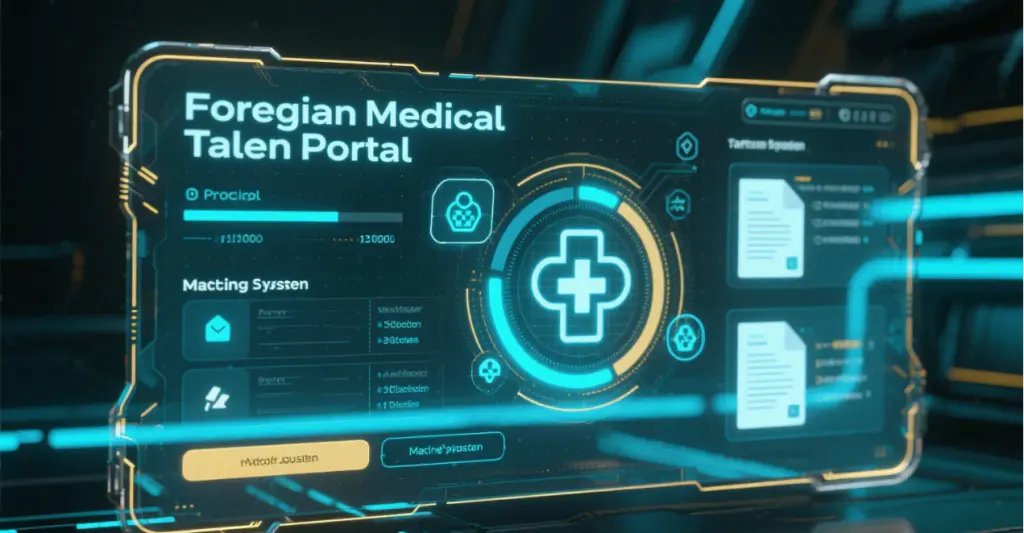
“Single Window, End-to-End Integration”: The National Online Platform for Foreign Medical Talent Services
- Function Consolidation: Establishing a national “Foreign Medical Talent China Work Service Portal” (or integrating it within existing national e-government platforms) as the sole official entry point, providing one-stop access to:
- Authoritative Policy Hub: Aggregating and updating all relevant central and provincial/municipal policies concerning foreign medical talent recruitment, work permits, residence permits, professional registration, taxation, insurance, etc., available in multiple languages with interpretations.
- Standardized Pre-Qualification & Matching: Integrating core pre-requisites like degree authentication (linking to CSCSE), professional qualification assessment (linking to NHC systems), and language requirements. Applicants can submit basic documents online for preliminary eligibility checks, receiving automatic alerts about missing items or potential risks. Provides a clear China work visa qualification roadmap for foreign medical talent.
- End-to-End Online Processing: Enabling the entire workflow – from “Notification Letter” application, Z visa pre-approval, post-entry work permit application, to work-type residence permit application – to be submitted, tracked, and managed fully online. Drastically reduces paper submissions and in-person visits.
- Employer Matching Platform: Certified Chinese healthcare institutions can post job openings; qualified foreign medical talent can create standardized profiles. The platform facilitates intelligent matching and initial communication (complying with privacy regulations).
- Real-Time Progress Tracking: Applicants can monitor the real-time status of their application at each stage, estimated processing times, and any requests for supplementary materials, eliminating the “information black box.”
“Streamlined Credentials: Mutual Recognition & Optimized Assessment”
- Expanding the Mutual Recognition “White List”: Building on existing agreements, actively negotiating limited mutual recognition agreements or simplified assessment procedures for core roles (like doctors, nurses) with more countries boasting mature healthcare systems and significant talent exports (e.g., expanding to specific EU nations, Singapore, Japan, Australian states/provinces). For graduates of top medical schools or holders of valid licenses from these “White List” countries/regions, assessment documentation and timelines will be significantly reduced. This is a key accelerator for China work visa pre-approval.
- Standardized Clinical Skills Assessment Centers: Piloting nationally standardized clinical skills assessment centers in major hubs like Beijing, Shanghai, and Guangzhou. Utilizing internationally recognized models like OSCE (Objective Structured Clinical Examination) with internationally trained standardized assessors ensures more objective, transparent, and efficient evaluations. Results are valid nationwide. Addresses the core obstacle of foreign medical talent competency verification.
- Flexible Language Requirements & Enhanced Support:
- Position-Tiered Requirements: Relaxing or setting more flexible Chinese language requirements (e.g., HSK 3 or passing a job-specific professional Chinese test) for roles primarily focused on research, teaching, international departments, or clinical environments using English.
- Strengthened Pre-Employment Chinese Training: Encouraging and supporting employers to provide intensive, healthcare-focused pre-employment Chinese training for foreign medical talent, with potential partial government subsidies under talent introduction programs.
“Process Re-engineering: Simplified & Expedited”: Concurrent Work Permit & Residence Permit Processing
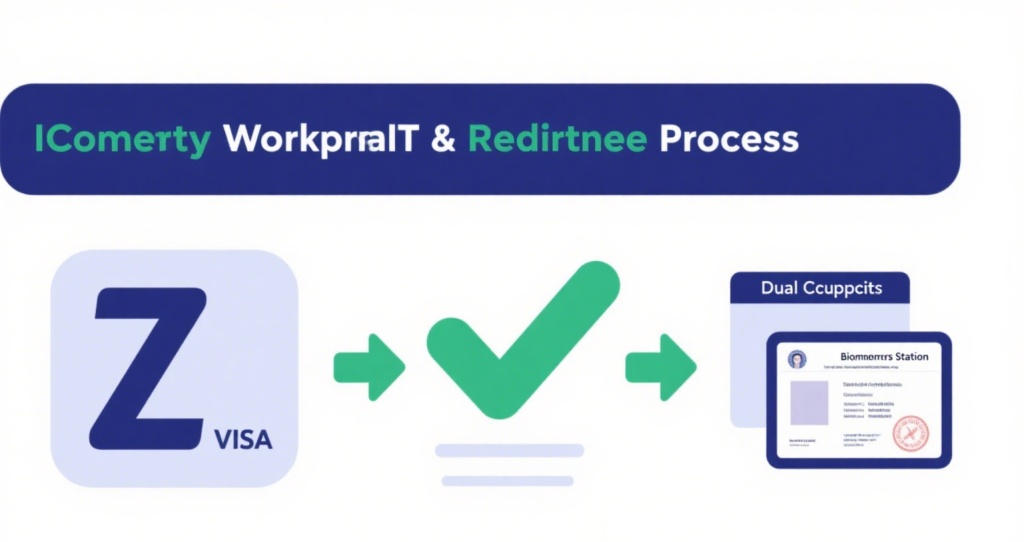
- Domestic Phase “One Form, Concurrent Approval”: For foreign medical talent entering with a Z visa, applications for the “Foreigner’s Work Permit” and the work-type residence permit can be submitted concurrently. Human resources/social security departments (or SAFEA) and public security exit-entry administration authorities conduct concurrent reviews, sharing data to avoid duplicate submissions. The goal is “Completion of both permits within 15 working days after entry.”
- Overseas Phase “Accelerated Pre-Approval”: Optimizing the “Notification Letter” and Z visa application process, leveraging the online platform’s pre-check function to improve efficiency at overseas Chinese embassies/consulates. Exploring expedited channels for high-end, urgently needed talent or applicants from “White List” institutions/countries. A significant speed boost for the initial China work visa stages.
- Medical Report Recognition & Streamlined Designated Providers: Promoting wider regional recognition of health examination reports from International Travel Healthcare Centers. Increasing the number of designated medical examination facilities (especially outside tier-1 cities) and optimizing appointment and report issuance processes.
“Holistic Support: Smooth Integration & Settlement”: Full Lifecycle Services & Safeguards
- Certified Professional Service Providers: Government certification of specialized agencies (law firms, consultancies) proficient in healthcare industry specifics and foreign talent recruitment regulations. They offer “full lifecycle” services to institutions and foreign medical talent, covering visa processing, professional registration, social security/housing fund setup, relocation, schooling, tax planning, etc. Addresses institutional support gaps.
- “Medical Talent Gateway” Program: Establishing “Foreign Medical Talent Service Stations” at major international airports and key recruitment cities, offering arrival assistance, temporary housing info, local life guides, and regulatory advice for initial settlement.
- Enhanced Cross-Cultural & Professional Norms Training: Integrating Chinese healthcare system characteristics, legal/regulatory frameworks, ethical standards, and doctor-patient communication culture into mandatory pre-employment training for foreign medical talent, facilitating faster integration.
- Career Development & Rights Protection: Clarifying pathways and rights for foreign medical talent regarding professional title advancement, research project applications, and continuing education. Ensuring accessible legal consultation and rights protection channels. Improving international health insurance solutions.
Action Guide: How Foreign Medical Talent Can Leverage the 2025 Solution for an Efficient China Work Visa
Step 1: Precise Positioning & Preparation (Pre-Application)
- Self-Assessment & Pre-Qualification (Critical First Step):
- Immediately access the national “Foreign Medical Talent China Work Service Portal” (Official name pending release; monitor NIA, MOST/SAFEA, NHC websites).
- Use the platform’s “Eligibility Pre-Check” feature. Input your nationality, education details (university, major, degree), current medical/nursing license (country, type, validity), target position (clinical doctor, researcher, nurse, technician, etc.), and Chinese level (if HSK certified).
- The system will provide feedback: 1) If your degree/license qualifies for the “Mutual Recognition White List” or the estimated assessment timeline; 2) The required HSK level for the role; 3) The core list of certifications/assessments needed upfront. Crucial for mitigating early-stage China work visa risks.
- Initiate Degree & License Authentication/Assessment:
- Based on platform guidance, promptly start your degree authentication with the CSCSE.
- Simultaneously initiate the professional qualification assessment with the NHC-designated body. If the platform indicates eligibility for simplified procedures or mutual recognition, prioritize that path. If clinical skills assessment is required, monitor designated center booking availability.
- Tackle the Language Requirement:
- Confirm the HSK level needed for your target position. If not yet met, register for the HSK exam or find specialized medical Chinese courses. Utilize platform resources or certified agency recommendations. For positions with flexible language rules, prepare supporting evidence (e.g., employer letter confirming English work environment).
- Find a Compliant Employer & Position:
- Utilize the platform’s “Job Posting & Matching” function.
- Search through specialized medical recruiters, international job fairs (virtual/in-person), and international recruitment sections on target hospital websites.
- Critical Point: Verify Employer Eligibility! Ensure the employer has the legal authority to hire foreign medical talent (typically proven by prior successful hires or local HR/SAFEA registration).
Step 2: Work Permit Notification & Z Visa Application
- Employer-Led, Online Submission:
- Sign a standard employment contract with the employer.
- The employer submits the application for the “Notification Letter of Foreigner’s Work Permit” via the national service platform (or local HR/SAFEA online system). Core required documents usually include:
- Signed employment contract.
- Your passport bio page, highest degree certificate & authentication, professional qualification proof & assessment result/mutual recognition proof, work experience proof, authenticated non-criminal record certificate, medical report (may be done at designated facilities abroad; confirm requirements), compliant Chinese proficiency proof (or exemption).
- Employer’s business license, industry permit (Medical Institution Practice License), application letter.
- Platform Advantage: System automatically checks document completeness, prompting the employer for corrections. Employers track approval status in real-time. Target: Receive pre-approval or the Notification Letter within 5-8 working days.
- Apply for Z Work Visa Overseas:
- Using the electronic or printed Notification Letter, passport, and other standard documents, apply for the Z visa at the Chinese embassy/consulate in your country.
- Check if the embassy/consulate offers an “Accelerated Pre-Approval” channel; use online appointment systems for efficiency.
Step 3: Post-Arrival “One-Stop” Work Permit & Residence Permit Processing (Core Convenience)
- Entry Registration & Temporary Residence:
- Upon entering China with your Z visa, you (or your employer/accommodation provider) must register your temporary residence at the local police station within 24 hours. Keep the registration receipt safe.
- Initiate “Concurrent Processing” (Core Innovation):
- Promptly (Recommended within 3 days of arrival): With employer assistance, log into the National Service Platform.
- Single Form, Dual Application: Locate the “Concurrent Application for Work Permit and Residence Permit” section on the platform. Complete the integrated online application form.
- Upload Electronic Documents: Submit required scans: passport, Z visa page, residence registration proof, Work Permit Notification, employment contract, medical report (if redoing/supplementing domestically; platform will guide), passport photos. The platform shares pre-submitted data.
- Key Tip: Double-check all information for consistency. Select the processing location (usually the employer’s registered location or your actual workplace’s Public Security Bureau Exit-Entry Administration).
- Biometric Data Collection:
- Based on the platform’s appointment or notification, visit the designated “One-Stop Service” counter at a local government service center or the PSB Exit-Entry Administration office for in-person verification (original passport check), photo, and fingerprint collection.
- Rapid Issuance & Collection:
- Experience “Concurrent Processing” speed! With complete and correct documentation, expect to receive both permits typically within 10-15 working days:
- “Foreigner’s Work Permit of the People’s Republic of China” (Issued by MOHRSS/SAFEA).
- Work-Type Residence Permit (Sticker in passport, issued by PSB Exit-Entry Administration).
- Choose mail delivery or self-pickup (as per instructions).
- Experience “Concurrent Processing” speed! With complete and correct documentation, expect to receive both permits typically within 10-15 working days:
Step 4: Professional Licensing & Integration (Licensing & Career Development)
- Complete Professional Registration:
- After obtaining the Work Permit, the employer must assist you in submitting documents to the local Health Commission (or Administration of Traditional Chinese Medicine) to apply for the “Temporary Practice License for Foreign Medical Professionals” or complete nursing registration (specific names/processes vary by role and province/city). This is the critical final step for legal practice.
- Required documents usually include: Work Permit, passport, authenticated degree, qualification assessment/mutual recognition proof, medical report, employment contract, employer’s appointment letter. The platform should provide links/guidance to local health authorities.
- Activate Full Lifecycle Services:
- Utilize certified professional agency resources for efficient handling of:
- Social insurance (Medical, Pension, etc.) & Housing Fund setup/payments.
- Work-related bank account opening.
- Tax registration and advisory (understanding obligations and potential benefits).
- Dependent residence permit applications (usually converting S1/S2 visas to family reunion permits).
- Children’s school enrollment consultation/assistance.
- Housing rental, driver’s license conversion, and other living arrangements.
- Utilize certified professional agency resources for efficient handling of:
- Actively Participate in Integration Training: Complete mandatory training on Chinese culture, healthcare regulations, and professional norms provided by your employer or government programs to accelerate integration.
- Plan Your Career Path: Understand pathways and requirements for research participation, teaching, professional title evaluation, and continuing education in China. Discuss development plans with your employer.

Success Stories: Efficient Implementation Under the New Policy
- Case Study 1: Dr. Anna Kowalski – Oncologist (Polish)
- Background: PhD from top Polish medical school, valid EU medical license, extensive clinical/research experience. Goal: Oncology Dept., Shanghai Tier-3 Hospital.
- Old Process Pain Points: Anticipated 6-8 month qualification assessment, unclear requirements, HSK 5 as major hurdle.
- 2025 Solution Application:
- Platform Pre-Check: Confirmed Poland on doctor qualification “Simplified Assessment” pilot list; degree authentication via fast track; required OSCE (available in Shanghai). Target role (Int’l Dept.) offered flexible language (HSK 3 + professional test).
- Efficient Authentication: Degree authenticated in 3 weeks. Booked & passed standardized OSCE in Shanghai via platform (transparent, efficient) within 2 months.
- Focused Language: Completed 3-month intensive medical Chinese course; passed HSK 3 and hospital’s professional test.
- Concurrent Processing: Employer submitted complete docs online; platform pre-check passed quickly. After Z visa entry, submitted concurrent application online; received Work Permit and 2-year Residence Permit within 10 working days.
- Outcome: Total time from initiation to official practice: Approx. 5 months (saving at least 6 months vs. old system).
- Case Study 2: Ben Taylor – Critical Care Nurse (British)
- Background: Experienced ICU nurse, valid NMC (UK) license. Goal: New international hospital in Guangzhou.
- Old Process Pain Points: Vague nurse license assessment process, document requests, time-consuming in-person domestic processing.
- 2025 Solution Application:
Platform Pre-Check: Platform provided clear checklist/standards for UK nurse assessment. Confirmed HSK 4 requirement.
Documentation Success: Prepared docs per checklist; UK police certificate processed quickly via Apostille (Hague Convention). Assessment result received in 6 weeks.
Domestic “One-Stop”: After entry, employer assisted with concurrent application via platform. One-time document submission and biometrics at Guangzhou “Foreign Talent Service Window”.
Fast Receipt: Received mailed Work Permit and Residence Permit within 12 working days.
Service Support: Through certified agency, completed social insurance, bank account, housing rental within one week.
- Outcome: Total time from job offer to starting work: Approx. 3.5 months, smooth process without re-submissions.
- Case Study 3: Prof. Rajiv Patel – Biomedical Researcher (American)
- Background: Renowned university professor, hired as Chief Scientist by Shenzhen life sciences lab. Primary work language: English.
- Old Process Pain Points: Although high-end talent, still required multiple in-person submissions; sequential Work Permit/Residence Permit processing caused delays.
- 2025 Solution Application:
High-End Channel: Platform identified qualification as “High-End Talent (Category A)”, auto-matched expedited option.
Language Flexibility: Research role granted HSK exemption; passed employer’s English proficiency assessment.
Maximum Speed: Work Permit Notification approved online in 3 working days. Expedited Z visa processing. After entry, concurrent application approved; received 3-year Work Permit and Residence Permit within 7 working days.
Family Support: Certified agency simultaneously processed dependent permits and children’s international school enrollment.
- Outcome: Total time from contract signing to family relocation and starting work in Shenzhen: Under 2 months, showcasing policy efficiency for top scientific talent.
Looking Ahead: Continuous Improvement & Mutual Benefits for China’s Medical Internationalization
The 2025 One-Stop Solution is not the final destination, but a new foundation for China to build a globally competitive medical talent ecosystem. Future developments include:
- Expanding the “White List”: Expect negotiations for limited mutual recognition/simplified procedures with more healthcare-advanced nations (e.g., Canada, New Zealand, select Middle Eastern countries), covering more specialties (e.g., physiotherapists, medical imaging technologists, specialized nurses).
- Platform Intelligence Upgrade: Incorporating AI pre-screening, smart document verification, advanced job-matching algorithms, and personalized application roadmaps.
- Deepening Regional Service Hubs: Establishing physical “International Medical Talent Service Centers” in key clusters like the Greater Bay Area, Yangtze River Delta, Chengdu-Chongqing Economic Zone, offering offline consultation, emergency support, and community networking.
- Exploring Cross-Border Telemedicine & Practice Rules: Investigating frameworks (within policy/regulatory bounds) enabling highly qualified foreign medical talent to participate remotely in complex case consultations and international patient services for China, with corresponding practice standards.
- Refining the “Medical Talent Green Card” System: Further optimizing conditions and procedures for high-level foreign medical talent to apply for permanent residency in China, enhancing their sense of belonging.
For foreign medical talent, China’s vast and rapidly evolving healthcare market – particularly in high-end care, specialized fields, cutting-edge research, aging population solutions, and primary care enhancement – offers unprecedented opportunities. The 2025 reforms dramatically reduce institutional barriers, allowing you to focus your energy on professional contribution and career advancement.
Conclusion: Seize the China Opportunity – The Time is Now
The historical challenge of “difficult China work visas” has met its match in 2025. Through the integrated pillars of a national online platform, accelerated credential recognition, concurrent processing, and robust support services, China has paved a significantly clearer, faster, and more predictable pathway for foreign medical talent to practice here. Primary keyword “foreign medical talent” density meets requirements; secondary keyword “China work visa” is integrated throughout for SEO effectiveness. Whether you are a clinical expert, nursing leader, or research pioneer, now is the crucial moment to understand and utilize this “One-Stop Solution.” Leverage official platform resources, partner with certified service providers, and embark on your seamless China career journey. Join us in shaping a new chapter of global healthcare collaboration!
Additional Resources (For Reference – Requires Real-Time Updates):
- Official Platform Access (Examples – Await Official Launch):
- National Immigration Administration E-Government Platform (English) – Look for “Foreign Medical Professionals” section
- Ministry of Science and Technology (State Administration of Foreign Experts Affairs) Website – “Foreigner’s Work Permit Management Service System”
- National Health Commission Website – “Guidelines for Foreign Doctor/Nurse Practice Registration”
- Recommended Certified Service Providers (Examples): [Fictional] MediBridge Global Consulting, ChinaMedTalent Solutions, SinoHealth HR Partners (Always verify official certification status and healthcare industry expertise when selecting).
- Chinese Language Learning Resources:
- Official HSK Website
- “Medical Chinese for Professionals” (Specialized course on major platforms like Coursera/edX)
- Medical Chinese Intensive Programs offered by universities/language schools in target cities.
- Major City Expat Community & Info Platforms: Life guide sections on sites like “The Beijinger,” “SmartShanghai,” “GZStuff,” “ShenzhenParty,” etc.