
Unlock how China’s EV giants recruit foreign professionals for automotive management positions. Explore supply chain talent strategies, key roles & success stories for global expansion.
Introduction
China’s new energy vehicle (NEV) market is reshaping the global automotive landscape at breakneck speed. Driven by strong government policies, explosive technological advancements, and unprecedented consumer enthusiasm, China is not only the world’s largest producer and market for electric vehicles (EVs) but also the epicenter of innovation and transformation for the entire industry. However, this profound industrial revolution has ignited an intense battle for talent in critical automotive management positions, particularly within the realm of supply chain management.
Faced with complex global supply chain restructuring, volatile raw material prices, rapid technological iterations, and pressure to expand production capacity, China’s leading EV companies are actively looking to the international talent pool. They are aggressively recruiting foreign professionals with deep global supply chain experience to gain crucial strategic advantages. Understanding the drivers behind this trend, the challenges involved, and strategies for successful integration is vital for Chinese EV companies aiming to sustain rapid growth and global competitiveness.

China’s EV Industry: A Thriving Giant and Its Supply Chain Challenges
Market Size and Leadership:
- World’s Largest Market: China has been the global leader in new energy vehicle sales for many consecutive years, far exceeding Europe and the US. In 2023, sales surpassed 9.5 million units, with EVs accounting for over 35% of new car sales. Strong growth is projected to continue (Source: China Association of Automobile Manufacturers – CAAM).
- Rise of Domestic Brands: BYD surpassed Tesla to become the global leader in pure EV sales. EV startups like NIO, XPeng, Li Auto, GAC Aion, and Zeekr, along with new energy brands launched by traditional automakers, form a highly dynamic competitive landscape.
- Robust Export Growth: Chinese-made EVs are accelerating their global expansion, with surging exports significantly impacting worldwide market dynamics and further increasing the need for globalized supply chains.
Supply Chain: The Core Battleground and Pain Point for EV Competition:
- Battery Raw Materials (Lithium, Cobalt, Nickel): Extreme price volatility, geopolitical risks (e.g., concentration of critical mineral sources), sustainable mining pressures, and ESG concerns.
- Semiconductor Shortages: While easing, long-term challenges remain regarding the stable supply of advanced process automotive-grade chips and achieving technological self-sufficiency.
- Speed of Technological Iteration: Rapid advancements in battery tech (solid-state), electric drive systems, and electronic/electrical architectures demand highly flexible and forward-looking supply chains.
- Cost Pressures: Fierce competition and reduced government subsidies force companies to continuously optimize supply chain costs while ensuring quality and delivery.
- Need for Global Footprint: Building overseas factories and regional supply chain hubs is essential to serve export markets, circumvent trade barriers, and locate closer to resources or end markets.
- Resilience & Risk Management: Events like pandemics, geopolitical conflicts, and natural disasters have highlighted the critical importance of building diversified, risk-resistant supply chain systems.
- ESG Compliance: Stricter requirements for tracking supply chain carbon footprints, ensuring labor rights, and responsible mineral sourcing are becoming mandatory.
These complex and dynamic challenges make top-tier talent proficient in global supply chain planning, procurement, logistics, manufacturing operations, and risk management the most coveted resource for Chinese EV companies. The traditional domestic talent pool sometimes lacks the breadth of experience and global perspective needed to navigate such intricate, multi-dimensional, globalized supply chain issues. This directly fuels the surging demand for specific types of “automotive management positions.”
Why Chinese EV Companies Target “Foreign Professionals” with Supply Chain Expertise
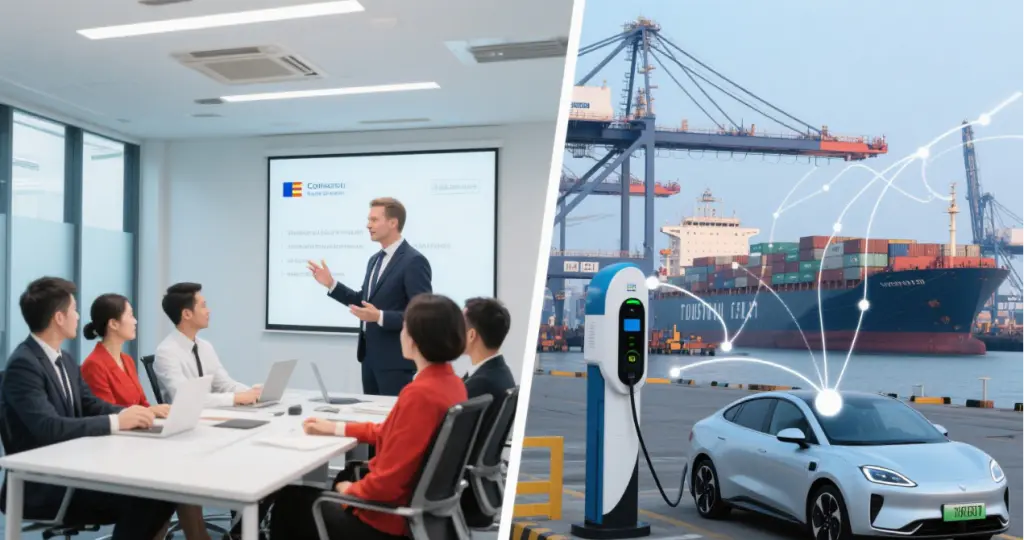
Recruiting foreign professionals with global perspectives and practical experience for key automotive management positions (especially in supply chain) is not blind admiration for foreign credentials; it’s driven by strategic imperatives:
Introducing Scarce Global Perspective & Best Practices:
- Cross-Cultural, Cross-Regional Operational Experience:Foreign professionals often possess successful hands-on experience building, optimizing, and managing supply chains across multiple continents or key markets. They understand different regional business norms, cultural nuances, and regulatory environments – crucial for Chinese EV companies rapidly expanding overseas (“Going Global”).
- Leading Processes & Methodologies: They typically bring expertise in mature supply chain management systems, planning tools (e.g., Advanced Planning and Scheduling – APS), risk management frameworks, and continuous improvement methodologies (like Lean Six Sigma) used by top international OEMs or Tier 1 suppliers. This helps elevate Chinese companies’ operational maturity.
- Global Supplier Networks: They provide access to valuable international high-quality supplier resources and contacts, aiding Chinese companies in building stronger, more diversified global sourcing networks.
Navigating the Complexity of Global Expansion:
- Overseas Plant Setup & Supply Chain Localization: Establishing production bases in regions like Europe or Southeast Asia requires deep understanding of local laws, labor policies, infrastructure, logistics networks, and localization procurement strategies. Foreign professionals with proven success in target regions are ideal candidates.
- International Logistics & Trade Compliance: Complex and evolving international trade rules (e.g., rules of origin, CBAM), optimizing ocean/land/air freight, and customs clearance efficiency are lifelines for overseas operations. International experience is indispensable.
- Leading Cross-Cultural Teams: Managing geographically dispersed supply chain teams demands exceptional cross-cultural communication, coordination, and leadership skills.
Enhancing Supply Chain Resilience & Risk Management Capability:
- Proactive Risk Identification & Modeling:Foreign managers are often trained in systematic risk management, skilled in using tools for scenario simulation and stress testing to build early warning systems.
- Building Diversified Supplier Bases: They better understand how to systematically identify, evaluate, and onboard alternative suppliers globally to reduce single-source dependency.
- Crisis Response Experience: Those who have navigated major supply chain disruptions (e.g., Fukushima earthquake, pandemic, Suez Canal blockage) typically possess more efficient emergency response and recovery plan execution capabilities.
Boosting ESG Performance & International Reputation:
- Understanding Global ESG Standards: They possess deep knowledge of international ESG reporting frameworks (e.g., GRI, SASB) and supply chain due diligence requirements (e.g., EU Supply Chain Act), helping Chinese companies meet increasingly stringent compliance demands and avoid reputational damage.
- Implementing Sustainable Supply Chain Practices: They introduce advanced concepts and technologies in carbon emission tracking, green logistics, and circular economy models.
- Improving International Image: Hiring high-caliber international talent itself signals modern corporate governance and a commitment to talent diversity.
Filling the Domestic High-End Talent Gap:
- While China has a large pool of domestic supply chain talent, top-tier individuals combining deep theoretical knowledge, complex global practical experience, strategic thinking, and cross-cultural leadership remain scarce, especially in the fast-evolving EV sector. Automotive management positions involving top-level global supply chain strategy design are particularly rare. Recruiting foreign professionals is an effective way to rapidly bridge this critical gap.
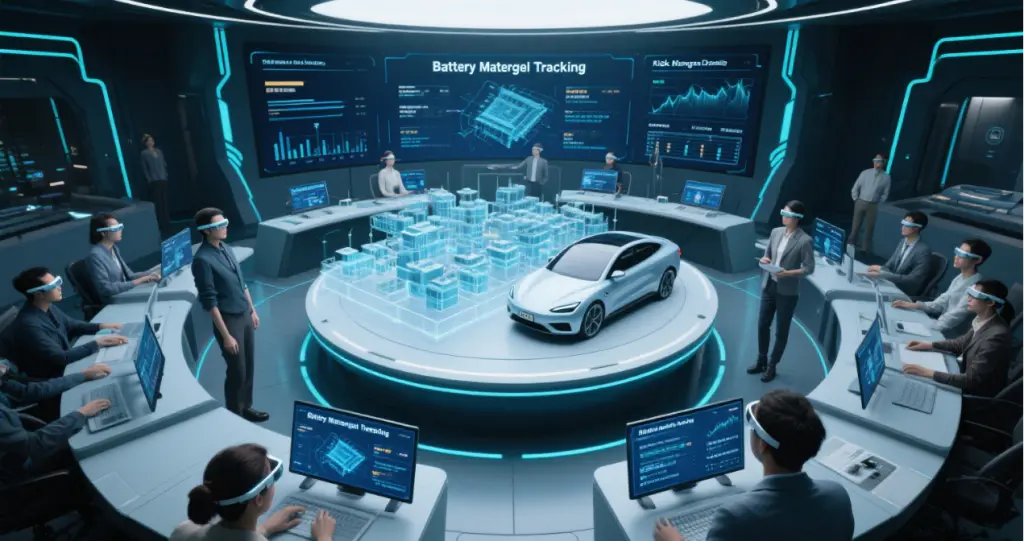
Hot “Automotive Management Positions”: Focus on the Supply Chain
Chinese EV companies offer diverse automotive management positions within the supply chain for foreign professionals, primarily concentrated at strategic, planning, and execution levels:
Strategy & Planning Level:
- Global Supply Chain Vice President/Director (VP/Director of Global Supply Chain): Responsible for developing and executing the company’s overall supply chain strategy, ensuring alignment with business goals (globalization, cost, innovation, ESG), and leading the global supply chain team. This is one of the most critical senior automotive management positions.
- Chief Procurement Officer/Procurement Director (CPO/Director of Procurement): Leads global procurement strategy for direct materials (especially battery raw materials, chips) and indirect materials, manages supplier relationships, drives cost savings and value creation, and ensures supply security.
- Supply Chain Network Planning Director (Director of Supply Chain Network Design): Responsible for designing and optimizing the global manufacturing, warehousing, and distribution network layout to support global production and sales, balancing cost, efficiency, and resilience. This is particularly crucial for Chinese EV firms planning large-scale overseas expansion.
- Demand & Supply Planning Director (Director of Demand & Supply Planning): Responsible for accurate global demand forecasting, coordinating sales and operations planning (S&OP), optimizing inventory levels, and ensuring efficient supply-demand matching.
Execution & Operations Level:
- Global Logistics & Trade Compliance Director (Director of Global Logistics & Trade Compliance): Manages international transportation (ocean, air, land), customs clearance processes, ensures strict adherence to complex international trade regulations, and optimizes logistics cost and speed.
- Supply Chain Risk Management Director (Director of Supply Chain Risk Management): Dedicated to identifying, assessing, monitoring, and mitigating various global supply chain risks (geopolitical, supplier financial, operational disruption, cybersecurity, etc.), building resilience systems.
- Battery Supply Chain Director/Manager (Battery Supply Chain Director/Manager): Focuses specifically on managing the supply chain for the core component – the power battery. This includes raw material sourcing, cell & module supply security, technology roadmap alignment, and recycling loop management. This is a highly sought-after, EV-specific automotive management position.
- Overseas Plant Supply Chain Head/Manager (Supply Chain Head/Manager for Overseas Plant): Based overseas (e.g., Europe, Southeast Asia), responsible for end-to-end supply chain operations of a new or existing overseas plant, including local procurement, production material planning, inbound/outbound plant logistics, and finished goods shipment.
- Sustainable Supply Chain Manager (Sustainable Supply Chain Manager): Focuses on driving ESG practices within the supply chain, including carbon footprint accounting & reduction, responsible mineral sourcing, supplier code of conduct audits & improvement.
These positions demand not only deep expertise and extensive practical experience but also a global perspective, strategic thinking, leadership, and the ability to solve complex problems. This is precisely where qualified “foreign professionals” excel.
Challenges and Strategies for Attracting Top “Foreign Professionals”
Despite the attractive opportunities, Chinese EV companies face significant challenges in recruiting and retaining top international supply chain talent for automotive management positions:
Key Challenges:
- Cultural Adaptation & Integration: Significant cultural differences (work styles, communication habits, decision-making processes) can lead to “culture shock” and struggles to adapt. Hierarchical structures, meeting efficiency, and reporting lines can become friction points.
- Language Barrier: While English is the lingua franca, insufficient Chinese proficiency remains an obstacle for deep operational involvement and efficient collaboration with local teams and suppliers. The internal company language environment is crucial.
- Complex Living Environment: Practical issues like visa processing, housing, children’s education, healthcare, air quality, and internet access impact the quality of life and stability for foreign professionals and their families.
- Compensation & Benefits Expectations: Top international talent typically expects globally competitive total compensation packages (including high base salary, performance bonuses, equity incentives, international school subsidies, comprehensive insurance, home leave allowances). Balancing this with internal equity is challenging.
- Clarity of Career Path: Foreign professionals are concerned about their long-term potential within the Chinese company (e.g., promotion to higher roles, global rotation opportunities) and career prospects after leaving China.
- Concerns about a “Glass Ceiling”: Some foreign professionals may worry about limited influence in core decision-making circles or finding it culturally difficult to integrate fully into the highest levels of management.
- Geopolitical Sensitivity: In the current international climate, professionals from certain countries may have concerns about long-term safety or professional reputation while working in China.
Strategies for Successful Attraction & Retention:
- Offer Globally Competitive Total Rewards Packages:
- Competitive Base Salary: Benchmark against international markets (e.g., Germany, US) for equivalent roles.
- Significant Performance Bonuses: Strongly linked to company performance and individual KPIs.
- Long-Term Incentives (LTI): Offer stock options or Restricted Stock Units (RSUs) to align long-term interests and share in the company’s growth, particularly attractive in fast-growing Chinese EV firms.
- Comprehensive Expatriate Benefits: Include housing allowance or high-quality company accommodation, full coverage of international school tuition, top-tier global health insurance, annual home leave flights, relocation/settling-in allowance, tax advisory and compliance services.
- Life Convenience Support: Provide full assistance with visas/work permits, local life orientation guides, language learning subsidies.
- Foster an International and Inclusive Corporate Culture:
- Establish English as the Working Language: Enforce its use, especially in cross-border meetings, core documentation, and key communications.
- Cross-Cultural Training: Provide cultural training not only for foreign professionals but also for local teams on international work styles and inclusive leadership to promote mutual integration.
- Build Diverse Leadership Teams: Ensure visible representation and voice for foreign professionals in management layers, avoiding tokenism.
- Open and Transparent Communication: Encourage expression of diverse opinions and build a communication atmosphere based on trust and respect.
- Grant Genuine Strategic Responsibilities and Decision-Making Authority:
- Make it clear that hired foreign professionals are experts brought in to solve critical problems, not just advisors or implementers. Grant them decision-making power and resource allocation authority commensurate with their roles.
- Involve them deeply in formulating and executing the company’s global supply chain strategy, ensuring their professional input is genuinely valued.
- Design Clear Career Development Paths:
- Clearly articulate potential internal career progression paths (e.g., managing larger regions, taking on broader functions) during onboarding and in regular reviews.
- Discuss potential future global rotations or promotions to higher group-level positions.
- Provide continuous professional development and leadership training opportunities.
- Provide Strong Local Support Partners:
- Assign capable, English-fluent, and company-savvy local deputies or key team members to foreign managers to help them quickly understand internal processes, build networks, and resolve daily operational issues.
- Focus on Family Integration:
- Provide spouse employment support information or networks.
- Organize social events for expatriate families to help them build social circles and adapt faster.
- Direct Attention and Communication from Senior Leadership:
- Top company executives (CEO, HR VP) should hold regular one-on-one meetings with key foreign talent to understand challenges, address concerns, provide support, and convey the company’s high valuation of their contribution.
Success Stories and Future Outlook
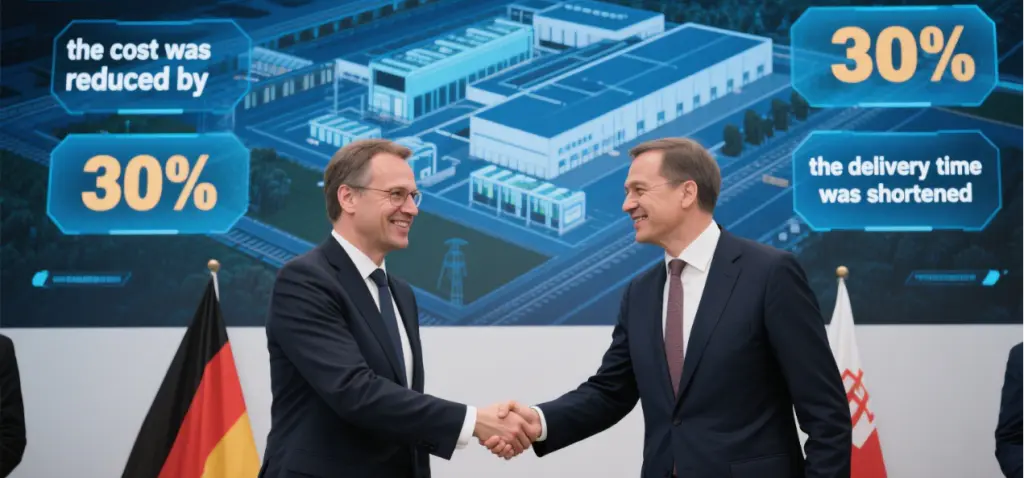
Case Study 1: Leading EV Startup – Global Supply Chain VP
- Background: The company needed top talent to lead global supply chain development to accelerate European market entry and establish a local factory.
- Hire: Recruited a seasoned executive (German national) with over 20 years of global supply chain experience (procurement, logistics, production planning) at a top German luxury automaker.
- Role: Global Supply Chain Vice President, reporting directly to the COO.
- Key Results: Led the design of an efficient China-Europe supply chain network; successfully established key Tier 2 supplier bases in Europe, significantly reducing logistics costs and risks; implemented an advanced supply chain risk monitoring and early warning system; optimized global battery raw material procurement strategy, strengthening bargaining power. His extensive experience and network were instrumental in the company’s smooth European launch. This appointment to a key automotive management position was seen as a pivotal step in the company’s internationalization strategy.
Case Study 2: Leading Battery Manufacturer – Chief Procurement Officer (CPO)
- Background: Facing extreme volatility in lithium, cobalt, and nickel prices and geopolitical risks, the company aimed to elevate the professionalism and globalization of its procurement strategy.
- Hire: Appointed an American-Chinese (fluent in English and Mandarin, with East-West background) who held senior procurement roles at a US tech giant and a global mining company.
- Role: Chief Procurement Officer, responsible for global procurement strategy and execution for all direct materials.
- Key Results: Restructured global raw material procurement strategy, achieving supplier base diversification (expanding into Africa, Australia, South America); led the signing of several long-term strategic supply agreements for critical minerals, securing capacity and smoothing price volatility; established a robust supplier performance and risk management system; significantly elevated the strategic importance of the procurement function. The dual cultural background of this foreign professional facilitated seamless communication and coordination.
Future Outlook:
- Sustained Strong Demand: As Chinese EV companies accelerate globalization (more overseas plants, deeper local operations), technology competition intensifies (solid-state batteries, 800V platforms, autonomous driving), and demands for supply chain resilience and ESG compliance increase, the need for foreign professionals with top-tier global supply chain management capabilities will continue to grow. Vacancies for relevant automotive management positions will persist.
- Intensifying Talent Competition: Competition isn’t just among Chinese companies; global traditional OEMs and tech giants are vying for the same pool of elite supply chain talent. Offering a truly attractive platform, compensation, culture, and growth opportunities is key to winning.
- Role Specialization & Deepening: Requirements will become more specialized. Experts focusing solely on battery supply chains, semiconductor supply security, sustainable supply chain digitization, or deep operations in specific regions (e.g., Southeast Asia, Central & Eastern Europe) will be increasingly sought after.
- Accelerated Internationalization of Local Talent: Many excellent local supply chain professionals will rapidly develop international capabilities through global responsibilities, overseas rotations, and participation in worldwide projects. We will likely see more models of integrated Sino-foreign teams co-leading global operations. The international competence of local Chinese talent in automotive management positions will rise significantly.
- Technology-Driven Transformation: The application of AI, big data, and blockchain in supply chains will reshape management functions. Managers (regardless of nationality) who understand digital technologies and can apply them to solve real supply chain problems will become increasingly valuable.
Conclusion
The explosive growth of China’s electric vehicle industry, particularly its ambitious global strategy, has placed supply chain management at the forefront of competition. In this arena, top-tier talent possessing global vision, deep practical experience, and cross-cultural leadership has become a core asset determining corporate success. Recruiting foreign professionals with extensive supply chain experience for critical automotive management positions is a vital and effective strategic choice for China’s EV leaders. It enables them to acquire scarce knowledge, accelerate global expansion, build resilient supply chains, and enhance international competitiveness. This goes beyond merely filling skill gaps; it’s about injecting new ways of thinking and global best practices.
However, success is not guaranteed. Companies must proactively address challenges like cultural integration, language barriers, lifestyle adaptation, compensation expectations, and career development. Systematic strategies are essential: offering genuinely globally competitive compensation and long-term incentives; fostering a highly international, inclusive, and empowering work environment; granting foreign executives substantive strategic responsibilities and decision-making authority; outlining clear career paths; and providing comprehensive localization support.
Chinese EV companies that successfully attract, effectively integrate, and fully leverage the value of these international experts will gain a significant edge in building future-proof, intelligent, efficient, and resilient global supply chain systems. This advantage will position them favorably in the global competition for the new energy vehicle market, enabling them to continue leading industrial transformation. The global battle for top talent in automotive management positions, especially supply chain leaders, will continue to shape the future landscape of China’s and the world’s electric vehicle industry.