
Complete guide for foreign pilots on converting to a CAAC license in China. Step-by-step process, detailed cost analysis, eligibility, and FAQs. Navigate regulations smoothly and advance your aviation career in China’s growing market.
Introduction: Career Opportunities for Foreign Pilots in China
China’s aviation industry has experienced explosive growth over the past decade, establishing itself as one of the world’s largest air travel markets. Industry reports project that China will require thousands of new pilots by 2030 to meet operational demands. This trend has created unprecedented opportunities for foreign pilots. Nonetheless, to fly in China, foreign pilots must comply with local regulations, the most critical step being the conversion of their foreign license to a CAAC license. Understanding the process and associated fees is vital for foreign pilots, as it directly impacts career planning and financial budgeting. This guide delves into each stage, offering practical advice for foreign pilots.
Overview of the CAAC Licensing System
The CAAC is the authoritative regulatory body for civil aviation in China, responsible for issuing and managing pilot licenses. CAAC licenses are categorized into several types, including Private Pilot License (PPL), Commercial Pilot License (CPL), and Airline Transport Pilot License (ATPL). Each has specific requirements and limitations. When converting their license, a foreign pilot must apply for the corresponding CAAC license based on their existing license type and flight experience. While CAAC licenses have a degree of international recognition, the conversion process emphasizes compliance with Chinese safety standards, which may require foreign pilots to undergo additional assessments. Foreign pilots should first understand the CAAC licensing structure to formulate an effective conversion strategy.
The Necessity of License Conversion for Foreign Pilots
For any foreign pilot, converting to a CAAC license is a mandatory step to legally enter China’s aviation market. Without a CAAC license, a foreign pilot cannot operate aircraft registered in China or be employed by Chinese airlines. Furthermore, many international airlines operating routes within China require pilots to hold a CAAC license. The conversion not only validates the foreign pilot’s skills but also enhances their global career competitiveness. With the progression of China’s Belt and Road Initiative, the demand for foreign pilots is expected to grow steadily, making license conversion a valuable investment. Foreign pilots are advised to initiate this process early to capitalize on market opportunities.
Eligibility Criteria for Foreign Pilots
Before starting the conversion process, a foreign pilot must meet the eligibility criteria set by the CAAC. These criteria typically include: holding a valid pilot license issued by an International Civil Aviation Organization (ICAO) member state; possessing minimum flight hours (e.g., usually 250+ hours for CPL applicants); passing a CAAC-designated medical examination; and demonstrating English or Chinese language proficiency (at least ICAO Level 4). Foreign pilots must also provide proof of a clean accident record. As standards are subject to change, foreign pilots should verify the latest requirements via the CAAC official website or an authorized training organization. Those not meeting the criteria may need to complete supplementary training first.
The Detailed License Conversion Process for Foreign Pilots
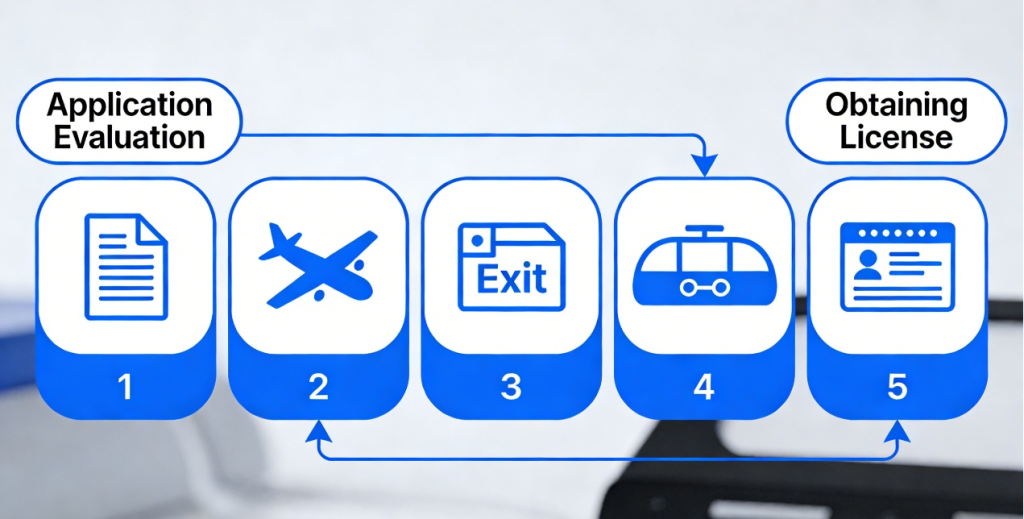
The conversion process can be broken down into five primary steps, each requiring careful preparation by the foreign pilot.
Step 1: Initial Assessment and Application
The foreign pilot must first submit an application to the CAAC or an approved flight school. Required documents include a copy of the current license, logbook, medical certificate, passport copy, and resume. The CAAC will review these files to assess the foreign pilot’s eligibility. This stage can take several weeks, so foreign pilots should prepare all documents in advance and ensure their authenticity. Maintaining clear communication with the CAAC is crucial for foreign pilots to avoid delays.
Step 2: Document Preparation and Authentication
The foreign pilot needs to have all documents translated into Chinese and notarized. This includes translated copies of the license, flight records, and training certificates. Translations must be completed by a certified agency to ensure accuracy. Additionally, the foreign pilot may need to provide a verification letter from the original issuing authority. The document authentication process is tedious but foundational for a successful conversion. Foreign pilots might consider seeking assistance from professional agencies to save time.
Step 3: Theoretical Knowledge Exams
Upon document approval, the foreign pilot must take the CAAC theoretical exams. Subjects cover aviation law, navigation, meteorology, aircraft systems, etc., based on the CAAC syllabus. Exams may be conducted in Chinese or English, and the foreign pilot should confirm the language option. Since CAAC standards may differ from the foreign pilot’s home country, many foreign pilots need to attend preparatory training courses. Exam fees vary per subject, typically ranging from $50 to $150 each. The foreign pilot must pass all subjects to proceed.
Step 4: Practical Skill Test (Flight Check)
After passing the theory exams, the foreign pilot will undergo a practical skill test (flight check) administered by a CAAC examiner to assess flying proficiency. The test includes flight maneuvers, emergency procedures, instrument flying, etc. The foreign pilot may need to complete additional flight training at a designated school to meet CAAC standards. Test costs involve aircraft rental, examiner fees, and insurance, totaling approximately $500-$1,000. Foreign pilots should schedule the test in advance and ensure they are in good physical condition.
Step 5: License Issuance and Ongoing Requirements
After successfully passing all exams and tests, the CAAC will issue the converted license to the foreign pilot. The license may come with restrictions, such as being valid for specific aircraft types, requiring additional ratings for removal. Furthermore, the foreign pilot must comply with CAAC’s recurrent training requirements, including periodic refresher courses and medical exams. Once converted, the foreign pilot can apply for jobs with Chinese airlines or for a work visa. The entire process usually takes 3 to 6 months, requiring patience and flexibility from the foreign pilot.
Cost Analysis for Foreign Pilot License Conversion
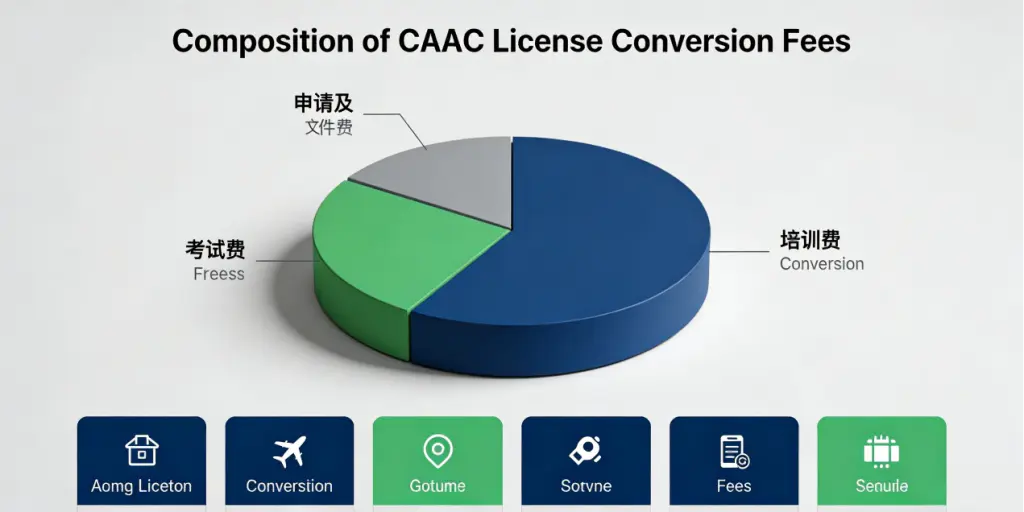
Cost is a central consideration for any foreign pilot undergoing license conversion. Total expenses vary based on individual circumstances and training needs, but the following breakdown provides a general estimate:
- Application Fee: The foreign pilot must pay an application fee of $200-$500 for the CAAC’s initial assessment processing.
- Document Authentication & Translation Fee: Translation and notarization costs approximately $100-$300, depending on the number of documents. Foreign pilots should choose a reliable service provider.
- Theory Exam Fees: Each exam subject costs $50-$150. Typically, 10-15 subjects are required, totaling $500-$1,500. Foreign pilots may also need to purchase study materials, adding around $200.
- Practical Test Fee: This includes aircraft rental (about $300 per hour) and examiner fees (~$200). The test usually requires 3-5 hours, totaling $1,100-$1,700. Costs increase if additional training is needed.
- Training Fees: Many foreign pilots require supplementary training, such as differences courses or language training. Ground school may cost around $1,000, flight training $3,000-$5,000, and simulator training $2,000-$3,000. Total training expenses can reach $5,000-$10,000.
- Medical Exam Fee: The CAAC-designated medical exam costs approximately $100-$200 and must be renewed periodically by the foreign pilot.
- Miscellaneous Costs: These include travel, accommodation, visa application, and consultancy fees, estimated at $500-$1,000.
In summary, the total cost for a foreign pilot to convert a CAAC license ranges from $5,000 to $15,000 USD or higher. Foreign pilots should create a detailed budget and account for potential overruns. Some flight schools offer package services that may help foreign pilots manage costs.
Challenges and Solutions for Foreign Pilots
During the conversion process, foreign pilots often face the following challenges:
- Language Barrier: CAAC exams and documents are primarily in Chinese, posing difficulties for foreign pilots. Solutions include opting for English exam versions where available or hiring interpreters. Foreign pilots can also learn basic Chinese to better integrate into the work environment.
- Regulatory Differences: Chinese aviation regulations may differ from the foreign pilot’s home country, causing confusion. Foreign pilots should study CAAC rules and attend regulatory training courses.
- Logistical Issues: These include finding accommodation, transportation, and training resources. Foreign pilots can seek support through online forums or agencies and network with other foreign pilots to share experiences.
- Time Management: The process can be lengthy, potentially affecting the foreign pilot’s career plans. It is advisable for foreign pilots to start early and maintain a flexible schedule.
To address these challenges, foreign pilots can seek professional consultancy, join pilot associations, or utilize online resources. The CAAC is also gradually streamlining processes to attract more foreign pilots.
Frequently Asked Questions (FAQ) for Foreign Pilots
Q1: How long does the conversion process take?
A: For a foreign pilot, it typically takes 3 to 6 months, depending on document processing speed and exam scheduling. Foreign pilots should apply early to minimize delays.
Q2: Can a foreign pilot convert their license directly without additional training?
A: Most foreign pilots require some training to bridge gaps between CAAC standards and their original license. The CAAC determines training requirements based on the initial assessment.
Q3: Does the CAAC have mutual recognition agreements?
A: Yes, the CAAC has bilateral agreements with several countries, which may simplify the process for foreign pilots from those nations. Foreign pilots should check if their home country is on the list.
Q4: If an exam is failed, can a foreign pilot retake it?
A: Yes, foreign pilots can usually retake exams after a waiting period, but additional fees apply. Thorough preparation is recommended for first-time success.
Q5: Do foreign pilots need to learn Chinese?
A: It is not mandatory, but basic Chinese is helpful for daily communication. CAAC exams are available in English, so proficient English-speaking foreign pilots can manage most stages.
Q6: What are the job prospects for foreign pilots after conversion?
A: Chinese airlines actively recruit qualified foreign pilots, especially for international routes. Foreign pilots can expect competitive salaries and benefits.
Q7: Do the fees include visa application costs?
A: No, foreign pilots must handle work visa applications separately, costing approximately $200-$500. Consulting an immigration expert is advisable.
Q8: Is a CAAC license valid globally?
A: The CAAC license is primarily valid within China but can be recognized internationally through additional procedures. Foreign pilots planning to fly globally should consider other certifications.
Q9: How to choose a training school?
A: Foreign pilots should select CAAC-approved schools and review feedback from previous foreign pilot trainees. Schools in Beijing, Shanghai, and Guangdong are popular choices.
Q10: What recurring requirements must foreign pilots follow after conversion?
A: These include periodic recurrent training, medical exams, and maintaining flight hour records. Foreign pilots must uphold CAAC standards to maintain license validity.
Practical Advice for Foreign Pilots
To ensure a smooth conversion, foreign pilots should consider the following advice:
- Conduct Thorough Research: Foreign pilots should visit the CAAC website and industry forums to gather the latest information. Keywords like “foreign pilot license conversion” can aid searches.
- Plan Finances: Foreign pilots must budget for all potential costs and reserve contingency funds. Exploring payment plan options can reduce financial pressure.
- Seek Professional Assistance: Hiring an experienced agent or consultant familiar with CAAC processes can save foreign pilots significant time and effort.
- Network Actively: Join foreign pilot communities, attend aviation expos, and connect with peers to gain insider knowledge and support.
- Stay Updated: CAAC regulations may change; foreign pilots should subscribe to relevant news sources to adapt their strategies accordingly.
- Manage Health: Maintain good physical health through regular exercise and a balanced diet to meet stringent medical requirements.
Future Trends Impacting Foreign Pilots

China’s aviation sector is projected to continue expanding, with its fleet potentially doubling by 2040. This will create even more opportunities for foreign pilots. The CAAC is promoting digital reforms, such as online exams and e-licenses, which may simplify the conversion process. Furthermore, with deepening international cooperation, foreign pilots may benefit from more flexible mutual recognition agreements. Environmental considerations and new technologies (like electric aircraft) will also influence training requirements, and foreign pilots must stay informed to remain competitive. Foreign pilots should view conversion as a long-term investment and actively engage with industry developments.
Resources and Support Networks
Foreign pilots can utilize the following resources:
- Official Channels: The CAAC website provides guidelines and contact details. Foreign pilots can download application forms and regulatory documents.
- Training Organizations: Institutions like the Civil Aviation Flight University of China and Eastern Flight Training Center offer customized courses for foreign pilots.
- Online Platforms: Forums such as Pilot Network and Aviation China allow foreign pilots to ask questions and share experiences.
- Industry Associations: Organizations like the International Federation of Air Line Pilots’ Associations (IFALPA) offer legal and professional support for foreign pilots.
- Government Programs: Some local governments provide subsidies to attract foreign pilots; they should inquire about local policies.
Conclusion: The Chinese Journey for a Foreign Pilot
In summary, converting a foreign pilot license to a CAAC license is a multi-step, costly process that is essential for any foreign pilot pursuing a flying career in China. By understanding the process and fees, foreign pilots can better prepare for and navigate the challenges.
This guide provides a comprehensive overview for foreign pilots, emphasizing the keyword “foreign pilot” for SEO purposes. As China’s aviation market grows, foreign pilots will play a significant role, and license conversion is the critical first step in this journey. Foreign pilots should approach the process with a positive mindset, leverage available resources, and ultimately achieve their professional dreams in China. Patience and thorough preparation are key to a successful conversion, paving the way to vast opportunities.