
Explore product manager positions in China: 2025 salary data by city/industry, entrepreneurship opportunities for product managers, and demand for foreign talent. Get insights for PM career growth.
Introduction
Amid the wave of digital transformation sweeping across all industries in China, product manager positions have evolved from being “core roles” in the internet sector to permeating fintech, smart manufacturing, healthcare, and other fields. They have become a key driving force behind corporate innovation and business growth. According to the Q1 2025 “China Product Manager Position Recruitment Report” released by Zhaopin (a leading Chinese recruitment platform), the quarterly vacancy volume for product manager positions in China in 2025 increased by 23% year-on-year compared to 2024. Among these, product manager positions requiring AI product design or cross-border business experience ranked among the top 5 most competitive roles. This data not only confirms the high demand for product manager positions in China’s job market but also highlights their core value in industrial upgrading—whether optimizing user experience, facilitating technology implementation, or identifying new market needs, product manager positions serve as a crucial bridge connecting users, technology, and business.
Current Market Demand for Product Manager Positions in China: Industry and Regional Distribution Characteristics
To gain a deeper understanding of the growth potential of product manager positions in China, it is essential to first clarify the patterns of their market demand distribution.
Industry Perspective
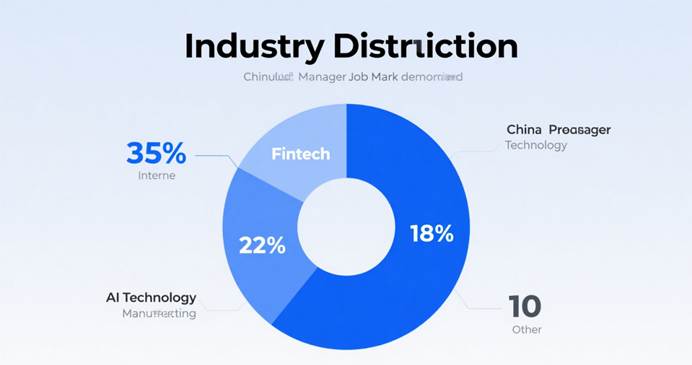
The internet industry remains the largest “demander” of product manager positions, but differentiated trends have emerged in sub-sectors. Internet giants like ByteDance, Alibaba, and Tencent have seen an 18% year-on-year increase in demand for “short video product managers” and “e-commerce supply chain product managers.” Meanwhile, emerging AI startups prefer to hire “large model application product managers” and “AI interaction design product managers.” Beyond the standard requirements for needs analysis and prototype design capabilities, these product manager positions specifically require candidates to have a foundation in machine learning and data interpretation skills.
Notably, the digital transformation of traditional industries is spawning a large number of “cross-border product manager positions.” For example, “fintech product managers” in banks need to master both banking business logic and internet product design thinking, while “smart cockpit product managers” in the automotive industry must understand user interaction needs and the technical constraints of in-vehicle systems. The salary levels of these interdisciplinary product manager positions are often 20%-30% higher than those of traditional roles.
Regional Distribution
The demand for product manager positions in China presents a pattern of “first-tier cities leading, new first-tier cities catching up.” As core hubs for China’s internet and technology industries, Beijing, Shanghai, and Shenzhen accounted for 45% of the national recruitment volume for product manager positions in Q1 2025. Among them, Beijing ranked first with a 21% share, with positions concentrated in technology parks such as Zhongguancun and Wangjing—primarily focusing on B2B enterprise services and AI technology application-related product manager positions.
Shanghai’s product manager positions lean more toward cross-border e-commerce and fintech. For instance, PDD’s cross-border business unit added 120 product manager positions in 2025, mainly responsible for researching overseas user needs and iterating localized products. Shenzhen’s product manager positions are deeply integrated with hardware technology; enterprises like Huawei and DJI recruit “smart hardware product managers” who need to coordinate R&D, production, and marketing teams to drive products from concept to mass production.
Among new first-tier cities, Hangzhou, Chengdu, and Wuhan have seen the most significant growth in demand for product manager positions. Driven by enterprises like Alibaba and NetEase, Hangzhou’s recruitment volume for product manager positions increased by 35% year-on-year in 2025, with “live-streaming e-commerce product managers” and “cloud computing product managers” becoming popular roles. As a western internet industry center, Chengdu’s R&D centers established by Tencent and ByteDance have recruited nearly 500 product managers, focusing on user-side products and requiring strong localized user insight capabilities from candidates.
Wuhan, leveraging its university resources and the Optics Valley Technology Park, focuses on “industrial internet product managers” and “healthcare product managers.” These product manager positions emphasize integration with traditional industries. For example, a healthcare technology company in Wuhan is recruiting a “chronic disease management APP product manager,” who needs to collaborate with hospital experts to design patient follow-up functions while complying with medical data security regulations.
Skill Specialization Trend
The demand for product manager positions in China also shows a trend of “skill specialization.” According to Lagou ’s 2025 “Product Manager Position Skill Demand Report,” 85% of enterprises require product manager candidates to master at least one prototype design tool (e.g., Figma, Axure), and 70% of mid-to-senior product manager positions demand data analysis skills (e.g., basic SQL, Python). Product managers with interdisciplinary skills in “user research,” “business analysis,” and “project management” have a 40% higher success rate in job applications than candidates with single skills. This increase in skill requirements reflects enterprises’ higher expectations for the value of product manager positions and drives the professional upgrading of the product manager workforce.
Salary Analysis of Product Manager Positions in China: Differences by City, Tenure, and Industry
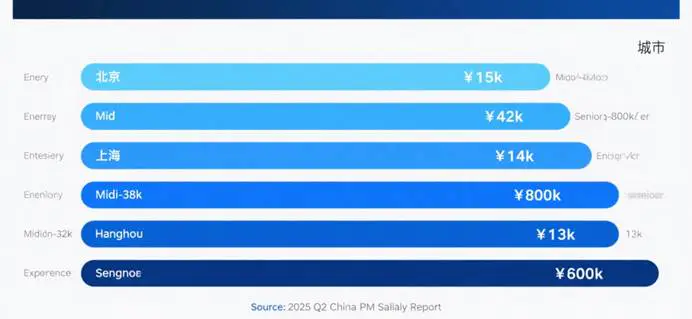
Salary level is a core indicator of the attractiveness of product manager positions. Salaries for product manager positions in China exhibit significant “stratification,” which is tied to a city’s economic level, industry development stage, as well as a candidate’s work tenure and skill set. By organizing salary data for product manager positions from Boss Zhipin and Liepin in Q2 2025, we can clearly identify salary differences across various dimensions to provide references for job seekers and practitioners.
City Dimension: Salary Gaps Between First-Tier and New First-Tier Cities
First-tier cities, as core demand hubs for product manager positions, also lead the nation in salary levels. In Q2 2025, the average monthly salary for product manager positions in Beijing was 28,500 RMB. Among these, senior product managers with 3-5 years of experience had an average monthly salary of 42,000 RMB, while those with AI or large model-related experience could earn over 60,000 RMB per month. For example, Baidu’s “large model product manager” position offers a basic monthly salary of 50,000-70,000 RMB, plus annual stock options (approximately 1.5 times the annual salary). These high-paying product manager positions are primarily responsible for implementing large models in scenarios such as search and autonomous driving, requiring candidates to have at least 2 years of large model product design experience.
Shanghai’s average monthly salary for product manager positions was 27,800 RMB, slightly lower than Beijing, but product manager positions related to cross-border business have a distinct salary advantage. For instance, SHEIN’s “cross-border e-commerce product manager” position—responsible for iterating APP functions for overseas markets—offers an average monthly salary of 35,000-45,000 RMB, with quarterly bonuses (up to twice the monthly salary) based on overseas market performance. Fintech product manager positions also offer high salaries; Lufax’s “supply chain finance product manager” position has an average monthly salary of 38,000 RMB, requiring candidates to be familiar with supply chain finance processes and regulatory policies.
Shenzhen’s average monthly salary for product manager positions was 27,200 RMB, with hardware technology-related product managers enjoying prominent salary benefits. Huawei’s “smart car cockpit product manager” position offers an average monthly salary of 40,000-55,000 RMB, responsible for designing user interactions and optimizing functions for in-vehicle systems. DJI’s “drone industry application product manager” position has an average monthly salary of 38,000 RMB, requiring candidates to design product solutions based on industry needs in agriculture, surveying, and mapping.
While salaries for product manager positions in new first-tier cities are lower than in first-tier cities, they are growing at a faster rate. Hangzhou’s average monthly salary for product manager positions was 23,500 RMB, with e-commerce product managers approaching first-tier city salary levels. For example, Alibaba’s Taobao business unit offers an average monthly salary of 32,000 RMB for “live-streaming e-commerce product managers,” who are responsible for optimizing live broadcast functions and user conversion paths.
Chengdu’s average monthly salary for product manager positions was 20,800 RMB; Tencent’s Chengdu branch offers an average monthly salary of 28,000 RMB for “social product managers,” primarily responsible for iterating short video social functions. Wuhan’s average monthly salary for product manager positions was 19,500 RMB; a healthcare technology company in Optics Valley offers an average monthly salary of 25,000 RMB for “medical AI product managers,” responsible for identifying needs and facilitating clinical implementation of AI-aided diagnosis products.
Work Tenure Dimension: Salary Progression from New Graduates to Experts
Salaries for product manager positions show a clear positive correlation with work tenure. Salary differences across stages not only reflect the value of experience accumulation but also the evolution of job responsibilities.
- New Graduate Product Managers (0-1 year of experience): The average monthly salary ranges from 12,000 to 18,000 RMB. In first-tier cities, starting salaries for new graduate product managers are generally above 15,000 RMB. For example, ByteDance’s “product manager management trainee” position offers a starting salary of 18,000 RMB per month, plus housing subsidies and annual salary adjustments. In new first-tier cities, starting salaries for new graduate product managers range from 12,000 to 15,000 RMB; an e-commerce startup in Hangzhou offers a starting salary of 13,000 RMB per month for “assistant product managers,” who primarily assist senior product managers in writing requirement documents and organizing user feedback. At this stage, product manager positions focus on executive tasks, with the core goal of familiarizing candidates with product design processes and team collaboration models.
- Product Managers with 1-3 years of experience: The average monthly salary ranges from 20,000 to 30,000 RMB, and they can independently manage the iteration of single functional modules or small-scale products. For example, a “CRM product manager” (2 years of experience) at a SaaS company in Beijing earns an average monthly salary of 25,000 RMB, responsible for designing the lead management module of the customer management system. A “user growth product manager” (3 years of experience) at a cross-border e-commerce company in Shanghai earns an average monthly salary of 28,000 RMB, responsible for implementing overseas user acquisition and retention strategies. At this stage, product manager positions require candidates to have independent needs analysis and project promotion capabilities, with salary growth primarily driven by skill improvement and project experience accumulation.
- Senior Product Managers with 3-5 years of experience: The average monthly salary ranges from 35,000 to 50,000 RMB, and they typically oversee the overall planning of product lines or cross-departmental collaboration projects. For example, a “smart home product manager” (4 years of experience) at a smart hardware company in Shenzhen earns an average monthly salary of 42,000 RMB, responsible for coordinating the iteration of multiple product lines such as smart speakers and smart door locks. A “commercial product manager” (5 years of experience) at a major internet company in Hangzhou earns an average monthly salary of 48,000 RMB, responsible for APP ad monetization and paid function design, directly accountable for product revenue. At this stage, product manager positions require business acumen and team management skills, with salaries often including performance bonuses (30%-50% of monthly salary) and stock options.
- Product Managers with over 5 years of experience (e.g., product directors, product experts): The average annual salary ranges from 800,000 to 1.5 million RMB, with some leading enterprises offering even higher compensation. For example, product directors at Alibaba generally earn an annual salary of 1.2-1.5 million RMB (including stocks), responsible for the overall product strategy planning of business units. A product expert at an AI startup in Beijing earns an annual salary of 1 million RMB, responsible for the technical implementation and market promotion of large model products. At this stage, product manager positions are part of the core decision-making layer of enterprises, with salaries closely tied to company performance and product strategy outcomes.
Industry Dimension: Salary Advantages of Product Managers in High-Growth Industries
The development speed and profit models of different industries directly impact the salary levels of product manager positions. High-growth industries such as the internet, fintech, and AI technology offer significantly higher salaries for product manager positions than traditional industries.
- Internet Industry: Short video, e-commerce, and enterprise services are the “three major highlands” for product manager salaries. In 2025, the average monthly salary for short video product managers was 32,000 RMB; Douyin’s “short video content ecosystem product manager” position—responsible for optimizing creator incentive mechanisms—offers a monthly salary of up to 38,000 RMB. The average monthly salary for e-commerce product managers was 30,000 RMB; PDD’s “agricultural product e-commerce product manager” position—responsible for designing the upstream supply chain of agricultural products—offers a monthly salary of 35,000 RMB. The average monthly salary for enterprise service (SaaS) product managers was 29,000 RMB; DingTalk’s “collaborative office product manager” position—responsible for iterating team collaboration functions—offers a monthly salary of 33,000 RMB.
- Fintech Industry: Due to complex business logic and regulatory requirements, product manager positions in fintech also offer high salaries. In 2025, the average monthly salary for fintech product managers was 35,000 RMB, with those specializing in blockchain payments and intelligent investment advisory earning even more. For example, Ant Group’s “blockchain cross-border payment product manager” position offers an average monthly salary of 45,000 RMB, responsible for designing blockchain-based cross-border remittance products. JD Digits’ “intelligent investment advisory product manager” position offers an average monthly salary of 42,000 RMB, responsible for implementing fund recommendation algorithms and optimizing user experience.
- AI Technology Industry: This is one of the fastest-growing fields for product manager salaries in recent years. In 2025, the average monthly salary for AI product managers was 40,000 RMB, with those focusing on large model applications and AI healthcare leading the way. For example, iFlytek’s “large model education application product manager” position—responsible for integrating large model technology into educational software—offers an average monthly salary of 48,000 RMB. InferVision’s “AI medical imaging diagnosis product manager” position—responsible for the clinical implementation of AI-aided lung cancer diagnosis products—offers an average monthly salary of 45,000 RMB. These product manager positions require candidates to have both technical understanding and industry knowledge, resulting in significant salary premiums.
In contrast, product manager positions in traditional industries (e.g., manufacturing, retail) offer lower salaries, with an average monthly salary of 18,000-25,000 RMB. However, their salary growth potential is substantial amid digital transformation. For example, Haier Group’s “industrial internet product manager” position—responsible for designing factory digital management systems—offers an average monthly salary of 24,000 RMB, a 15% year-on-year increase from 2024. Walmart China’s “retail digitalization product manager” position—responsible for designing collaborative functions between offline stores and online APPs—offers an average monthly salary of 22,000 RMB, a 12% increase.
Benefits System: Additional Salary Supplements for Product Manager Positions
Beyond base salaries, the benefits system is an important component of compensation for product manager positions in China—especially in major internet companies and high-growth startups, where benefits often become a key factor in attracting talent.
Stock options are among the most attractive benefits for mid-to-senior product manager positions. Major companies like Tencent and Alibaba offer stock options to product managers with over 3 years of experience, typically vested over 4 years. For example, senior product managers at Tencent can receive stock options worth 500,000-1,000,000 RMB (based on current stock prices). To attract talent, startups offer even more generous stock options; an AI startup in Beijing provides stock options worth 2,000,000 RMB to product directors with 5 years of experience, which could double in value if the company goes public.
Performance bonuses are a common benefit for product manager positions, with payout ratios tied to company performance and product KPIs. Major internet companies typically offer 1-3 months of monthly salary as performance bonuses; for example, ByteDance product managers with an annual performance rating of A can receive 3 months of monthly salary as a bonus. Performance bonuses at startups are more variable—if a product achieves user growth or revenue targets after launch, bonuses can reach 4-6 months of monthly salary.
In addition, many enterprises offer special benefits for product manager positions, such as ByteDance’s “housing subsidy” (3,000 RMB per month), Alibaba’s “children’s education subsidy” (10,000 RMB per year), and Huawei’s “overseas assignment subsidy” (an additional 5,000-10,000 RMB per month). These benefits not only enhance the overall salary competitiveness of product manager positions but also reflect enterprises’ emphasis on the product manager workforce.

Entrepreneurship Opportunities for Product Manager Positions in China: Directions, Advantages, and Support Resources
For product managers with accumulated experience, entrepreneurship has become an important path for career advancement. The core capabilities of product manager positions—needs insight, product design, project promotion, and user-centric thinking—are highly aligned with the core qualities required for entrepreneurship. As a result, “product manager entrepreneurship” has become one of the mainstream trends in China’s internet entrepreneurship sector in recent years. According to 36Kr’s 2025 “China Internet Entrepreneurship Report,” entrepreneurs with a product manager background account for 35% of all internet entrepreneurs, and 28% of these entrepreneurs have successfully secured angel round or later financing—higher than the average of 22% for entrepreneurs with other professional backgrounds.
Core Entrepreneurship Directions for Product Managers: Focus on High-Demand, Low-Threshold Fields
Combining current market trends in China and the capability advantages of product managers, the following directions have become popular choices for product manager entrepreneurship. These directions not only have strong market demand but also allow product managers to fully leverage the core skills of product manager positions.
SaaS Enterprise Services Sector
SaaS (Software as a Service) is a “golden track” for product manager entrepreneurship, especially vertical industry SaaS products. With their insight into enterprise user needs, product managers can design solutions that address industry pain points. For example, a former Alibaba product manager founded “Canxiaomi,” a catering SaaS platform. Targeting the pain points of small and medium-sized catering businesses—such as inefficient ordering, difficult member management, and lack of data analysis—the platform designed a lightweight SaaS system with four core functions: “QR code ordering,” “intelligent inventory management,” “member marketing,” and “data reporting.” Within one year of launch, the platform served 5,000 catering stores and secured tens of millions of RMB in angel round financing.
The advantages of such entrepreneurial projects include: 1) clear market demand, as enterprise digital transformation drives SaaS demand growth; 2) product managers can quickly iterate products through user research, reducing R&D costs; 3) a clear profit model (subscription-based), making it easier to gain capital recognition.
AI Application Implementation Sector
While AI technology R&D has high barriers, the AI application implementation sector is more accessible to product managers. Product managers can focus on “AI + vertical scenarios”—such as AI education, AI healthcare, and AI workplace tools—by integrating third-party AI interfaces (e.g., Baidu ERNIE Bot, Alibaba Tongyi Qianwen) to design C-end or B-end application products.
For example, a team of former Tencent product managers developed “AI Writing Assistant,” an APP targeting the document, email, and PPT writing needs of workplace professionals. The APP provides AI-aided generation, optimization, and translation functions. Through user research, the product managers identified that workplace professionals most needed “quick generation of industry-compliant documents,” so they prioritized the development of an “industry template library” (e.g., internet industry weekly report templates, fintech industry report templates). Within 3 months of launch, the APP gained over 100,000 users, with paid members (29 RMB per month, 299 RMB per year) accounting for 15% of total users and monthly revenue exceeding 400,000 RMB.
The core of such projects lies in product managers’ understanding of user scenarios—there is no need for in-depth AI technology R&D, enabling rapid product launch and market validation.
Cross-Border E-Commerce Tools Sector
With the rapid development of China’s cross-border e-commerce (cross-border e-commerce transaction volume is expected to exceed 20 trillion RMB in 2025), demand for tool-based products targeting cross-border e-commerce sellers has surged—making this an important direction for product manager entrepreneurship. Product managers can design “cross-border e-commerce product selection tools,” “overseas logistics tracking tools,” and “multi-platform store management tools” to address sellers’ pain points in product selection, operations, and logistics.
For example, a former ByteDance product manager founded “Cross-Border Product Selection Hero,” a SaaS tool that integrates sales data, competitor data, and supply chain data from platforms such as Amazon, Shopee, and Temu. The tool provides sellers with “high-sales product recommendations,” “competitor price monitoring,” and “supply chain connection” services. Leveraging their understanding of cross-border e-commerce product selection logic, the product manager designed a “product selection scoring model” (integrating 10 dimensions including sales volume, competition level, and profit margin). Within 6 months of launch, the tool gained over 2,000 paid users with an annual customer unit price of 3,800 RMB, generating annual revenue exceeding 7 million RMB. In 2025, it partnered with Alibaba International Station to become an officially recommended product selection tool.
The advantages of such projects include: 1) a large base of cross-border e-commerce sellers with rigid demand; 2) product managers can quickly optimize functions through data analysis to enhance user stickiness; 3) a “free trial + paid upgrade” model enables rapid customer acquisition.
Vertical User Service APPs
With their user-centric thinking advantages, product managers also have competitiveness in entrepreneurship focused on vertical C-end APPs. For example, focusing on niche groups such as “middle-aged and elderly health management,” “pet owner services,” and “workplace skill improvement,” product managers can design APPs that meet specific needs.
For example, a team of former Meituan product managers developed a “middle-aged and elderly health management APP” that provides chronic disease monitoring, health information, and online consultation functions. Through offline community promotion and registration assistance from family members, the APP gained over 500,000 users within 6 months and achieved profitability through advertising and health product e-commerce.
The key to such projects lies in product managers’ ability to accurately identify the pain points of niche groups and create competitive advantages through differentiated functions and user experiences.
Core Advantages of Product Manager Entrepreneurship: End-to-End Control from Needs to Implementation
Compared to entrepreneurs with technical or operational backgrounds, entrepreneurs with a product manager position background have unique advantages that span the entire entrepreneurship process—from “needs identification” and “product design” to “project implementation” and “user growth.” These advantages are also key reasons for the higher success rate of product manager entrepreneurship.
Needs Insight Capability: Accurately Identifying Market Pain Points
A core responsibility of product manager positions is to “identify user needs”—using user research, data analysis, and scenario analysis to find unmet market pain points. This capability is crucial in entrepreneurship, helping entrepreneurs avoid “self-indulgent products” (products that do not meet real market needs). For example, a product manager entrepreneur discovered through research that small and medium-sized foreign trade enterprises face “high service fees and slow fund arrival” in cross-border payments. They then developed a “low-cost cross-border payment tool,” which quickly gained market recognition—directly demonstrating the value of product managers’ needs insight capabilities.
Product Design Capability: Rapidly Launching MVPs and Iterating
Product managers are familiar with the “Minimum Viable Product (MVP)” concept, enabling them to launch core-function products at the lowest cost in the early stages of entrepreneurship. They can then quickly iterate based on user feedback, avoiding resource waste. For example, in a SaaS entrepreneurial project, a product manager team developed an MVP version with core functions in just 2 months. They collected feedback from 50 enterprise users through free trials, optimized the product in 1 month, and then launched a paid version—significantly reducing R&D risks. This “rapid trial and error, rapid iteration” capability is a core skill developed through product manager positions and a key to the success of entrepreneurial projects.
Cross-Team Collaboration Capability: Coordinating Resources to Drive Project Implementation
Entrepreneurship requires coordination across multiple roles, including R&D, design, marketing, and operations. Product managers accumulate rich cross-team collaboration experience in their roles, enabling them to effectively drive project progress. For example, in an AI application entrepreneurial project, the product manager (as the founder) not only oversaw product design but also coordinated third-party AI technology teams, UI design teams, and marketing teams to ensure on-time product launch and user growth. This coordination capability is often lacking in technically oriented entrepreneurs.
User-Centric Thinking: Enhancing Product Competitiveness and User Stickiness
Product managers always prioritize “user value,” and this thinking helps enhance product user experience and stickiness in entrepreneurship. For example, in a cross-border e-commerce tool entrepreneurial project, product managers identified through user feedback that sellers needed “multi-platform inventory synchronization” functions. They prioritized the development of this feature, which increased user retention by 30% and paid conversion rates by 15% after launch. Compared to entrepreneurial projects that focus solely on technology or marketing, product manager-led projects are more likely to gain user recognition.
Support Resources for Product Manager Entrepreneurship: Policy, Capital, and Community Support
In China, product manager entrepreneurship is supported not only by market demand but also by multiple resources including policies, capital, and communities. These resources lower the threshold for entrepreneurship and increase the probability of project success.
Policy Support: Entrepreneurship Subsidies and Incubator Support from Local Governments
To encourage innovation and entrepreneurship, local governments across China have launched support policies for tech-focused entrepreneurial projects. Product manager entrepreneurial projects—especially those in AI, SaaS, and cross-border e-commerce—can enjoy benefits such as subsidies, office space support, and tax incentives.
For example, Beijing’s Zhongguancun Science Park provides up to 500,000 RMB in entrepreneurship subsidies for AI entrepreneurial projects, along with free incubator workspaces (for 1 year). Hangzhou’s Binjiang District offers “rent subsidies” (50 RMB per square meter per month, for 3 years) and “tax exemptions” (exemption from corporate income tax for the first 2 years) for cross-border e-commerce entrepreneurial projects. In addition, governments organize entrepreneurship training and project matchmaking events to help product manager entrepreneurs enhance their capabilities and connect with resources.
Capital Support: Favor from Angel Investors and Venture Capital Funds
Product manager entrepreneurial projects are more likely to attract capital due to their clear needs orientation and strong product implementation capabilities. In 2025, 30% of funds in China’s angel investment market were allocated to product manager entrepreneurial projects, with an average angel round financing amount of 10-20 million RMB.
For example, an AI education entrepreneurial project led by a former Baidu product manager secured 15 million RMB in angel round financing from Sequoia Capital before launch, thanks to its clear product plan and user needs analysis. A cross-border e-commerce tool project led by a former JD product manager obtained 12 million RMB in investment from IDG Capital through product demos and market research data. In addition, many investment institutions provide “post-investment services” for product manager entrepreneurs, such as industry resource connection and team building guidance, to help projects grow rapidly.
Community Resources: Mutual Assistance and Collaboration in Product Manager Entrepreneurship Communities
China has a large number of product manager communities (e.g., Everyone is a Product Manager, PMCAFF), which serve not only as learning and communication platforms for product managers but also as important channels for connecting entrepreneurial resources. Many product manager entrepreneurial projects find partners, technical teams, or early users through these communities.
For example, the founder of a SaaS entrepreneurial project recruited a former Alibaba technical director as a partner through the PMCAFF community, solving key R&D challenges. An AI application project organized user beta testing through a community, quickly collecting feedback to optimize the product. In addition, communities regularly host “product manager entrepreneurship salons,” inviting successful entrepreneurs to share experiences and help new entrepreneurs avoid risks.
Successful Cases of Product Manager Entrepreneurship: Transitioning from Product Managers to Founders
The following real cases demonstrate how entrepreneurs with a product manager position background have achieved breakthroughs through their core capabilities, providing references for more product manager entrepreneurs.
Case 1: Catering SaaS Entrepreneurship by a Former Alibaba Product Manager
The founder previously oversaw local life service products at Alibaba and had a deep understanding of the digital needs of the catering industry. In 2024, they founded “Canxiaomi,” a catering SaaS platform targeting the pain points of small and medium-sized catering businesses: “inefficient ordering,” “difficult member management,” and “lack of data analysis.” The platform designed a SaaS system with four core functions: “QR code ordering,” “intelligent inventory,” “member marketing,” and “data reporting.”
In the early stages of entrepreneurship, the founder visited 100 catering stores offline to collect needs and iterate the product quickly. After launch, the platform adopted a “1-month free trial + store-scale-based pricing (99 RMB per month per store)” model for customer acquisition. Within 1 year, it served 5,000 stores and secured 30 million RMB in Series A financing from Matrix Partners China in 2025, with a valuation of 200 million RMB.
Case 2: AI Workplace Tool Entrepreneurship by Former Tencent Product Managers
The core team of 3 members were all former Tencent product managers. In early 2025, they developed “AI Writing Assistant,” an APP targeting the document, email, and PPT writing needs of workplace professionals. The APP provides AI-aided generation, optimization, and translation functions. Through user research, the product managers identified that workplace professionals most needed “quick generation of industry-compliant documents,” so they prioritized the development of an “industry template library” (e.g., internet industry weekly report templates, fintech industry report templates).
Within 3 months of launch, the APP gained over 100,000 users, with paid members (29 RMB per month, 299 RMB per year) accounting for 15% of total users and monthly revenue exceeding 400,000 RMB. The team is currently preparing for angel round financing.
Case 3: Cross-Border Product Selection Tool Entrepreneurship by a Former ByteDance Product Manager
The founder previously oversaw product selection functions for ByteDance’s cross-border e-commerce products. In late 2024, they founded “Cross-Border Product Selection Hero,” a SaaS tool that integrates sales data, competitor data, and supply chain data from platforms such as Amazon, Shopee, and Temu. The tool provides sellers with “high-sales product recommendations,” “competitor price monitoring,” and “supply chain connection” services.
Leveraging their understanding of cross-border e-commerce product selection logic, the product manager designed a “product selection scoring model” (integrating 10 dimensions including sales volume, competition level, and profit margin). Within 6 months of launch, the tool gained over 2,000 paid users with an annual customer unit price of 3,800 RMB, generating annual revenue exceeding 7 million RMB. In 2025, it partnered with Alibaba International Station to become an officially recommended product selection tool.
Foreign Talent and Product Manager Positions in China: Demand, Challenges, and Opportunities
With the acceleration of Chinese enterprises’ global expansion and the growth of foreign-funded enterprises’ operations in China, the proportion of foreign talent in product manager positions in China is gradually increasing. Especially in cross-border business and international product design, foreign product managers—with their global perspective and overseas market experience—have become valuable resources for enterprises. At the same time, the Chinese government is continuously optimizing policies for foreign talent, providing more convenience for foreigners to work in product manager positions in China.
Demand Scenarios for Foreign Talent in Product Manager Positions in China
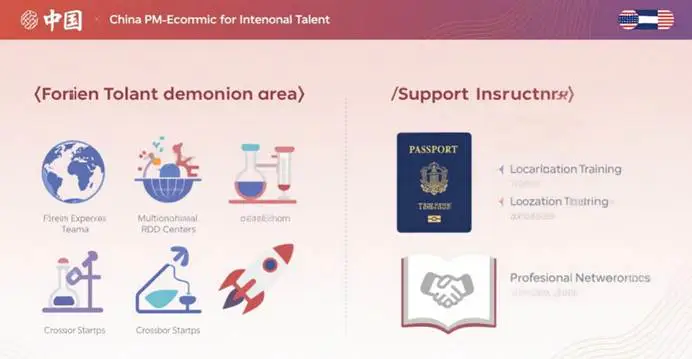
Current demand for foreign talent with product manager position capabilities in China is concentrated in the following scenarios, which require both product manager professional skills and the international advantages of foreign talent.
Overseas Business Units of Chinese Enterprises
As Chinese enterprises such as ByteDance (TikTok), Alibaba (AliExpress), and Tencent (WeChat Pay) accelerate their global expansion, their overseas business units have seen a surge in demand for “localized product managers.” These product manager positions require foreign talent to be familiar with local market culture, user habits, and regulatory policies to drive localized product iteration.
For example, TikTok is recruiting “Indonesian-speaking product managers” for its Southeast Asian market, responsible for designing the content ecosystem of TikTok Indonesia. Candidates need to understand Indonesian users’ content preferences (e.g., localized short video types) and local regulatory requirements (e.g., content review rules). AliExpress is recruiting “European e-commerce product managers” for its European market, responsible for optimizing the shopping experience for European users—such as adapting to local payment methods (e.g., SEPA transfers) and logistics timeliness needs.
The average monthly salary for these foreign product manager positions ranges from 35,000 to 50,000 RMB (approximately 5,000-7,000 USD), which is about 20% higher than that of local Chinese product managers with similar experience. Additional benefits include housing subsidies and work visa application support.
R&D Centers of Foreign-Funded Enterprises in China
Foreign-funded enterprises such as Microsoft, Google, and Amazon also recruit foreign product managers for their R&D centers in China, responsible for “global product localization” or “China-specific product design.”
For example, Microsoft Research Asia is recruiting “Office 365 China product managers,” responsible for adapting Office 365 functions to Chinese user needs (e.g., integrating WeChat login, supporting Chinese handwriting input). Google China’s R&D center is recruiting “AI product managers,” responsible for combining Google’s AI technology with Chinese market scenarios (e.g., AI education, AI mobility).
These foreign product manager positions typically require candidates to have over 3 years of product manager experience and be familiar with the Chinese market. The average annual salary ranges from 800,000 to 1.2 million RMB (including stocks), aligned with the global compensation systems of foreign-funded enterprises.
Cross-Border Startups
Many Chinese startups focusing on cross-border business also prefer to hire foreign product managers to enhance their products’ international competitiveness. For example, a cross-border social APP startup is recruiting “North American market product managers” (U.S. citizens) responsible for user growth and function iteration of the APP in North America. Leveraging their understanding of the social habits of North American young people, the product manager designed an “interest-based community matching” function, which increased monthly active users (MAU) in North America by 30% after launch.
A cross-border medical technology startup is recruiting “European medical product managers” (German citizens) responsible for launching Chinese medical AI products in Europe. Familiar with EU CE certification processes, the product manager helped the product quickly obtain market access in Europe. These startups offer equity incentives to foreign product managers, with an average monthly salary of 40,000-60,000 RMB and significant decision-making authority over products.
Challenges for Foreign Talent in Product Manager Positions in China
Despite strong demand, foreign talent still faces challenges in working in product manager positions in China—related to cultural differences, market understanding, and policy adaptation.
Insufficient Understanding of Chinese Market Needs
A core requirement of product manager positions is to “understand user needs,” but foreign talent often lacks in-depth knowledge of Chinese users’ behavioral habits, consumption psychology, and cultural backgrounds—leading to misalignment between product design and market needs. For example, a foreign product manager designed a “social e-commerce APP” that copied the “personal homepage display model” of European and American markets but ignored Chinese users’ emphasis on “cost-effectiveness information,” resulting in low user conversion rates after launch. Another foreign product manager led the development of a “workplace collaboration tool” that failed to consider the “hierarchical management” characteristics of Chinese enterprises, leading to incompatible permission management functions and forced product iteration.
Cross-Cultural Team Collaboration Barriers
Team collaboration models in Chinese enterprises—such as rapid iteration, collective decision-making, and overtime culture—differ from those familiar to foreign talent, potentially reducing collaboration efficiency. For example, a foreign product manager was accustomed to “process-driven project advancement,” but the Chinese team preferred “flexible adjustments and rapid trial and error,” leading to project delays. Another foreign product manager was unaccustomed to the “real-time communication” of Chinese teams (e.g., real-time feedback in WeChat workgroups), resulting in delayed information synchronization and impacting product iteration cycles.
Work Visa and Policy Adaptation Issues
Although the Chinese government has simplified visa processes for foreign talent, some foreign product managers still face challenges such as long work visa processing times and strict eligibility review. For example, foreign product managers without work experience in China need to provide multiple documents including academic certification and work experience certificates, with processing times of 2-3 months. In addition, some cities have requirements for “foreign product managers” regarding education (e.g., bachelor’s degree or above) and work tenure (e.g., over 2 years), limiting the employment of some foreign talent.
Support Measures for Foreign Talent by the Chinese Government and Enterprises
To address these challenges, the Chinese government and enterprises have launched a series of support measures to help foreign talent better integrate into product manager positions in China and leverage their advantages.
Policy Optimization: Simplifying Visa and Employment Processes
The Chinese government has implemented a classified management system for “foreign talent work permits,” categorizing foreign product managers (especially those with AI or cross-border experience) as “high-end talent.” They enjoy green channels for visa applications (e.g., review periods shortened to 5 working days) and extended work permit validity (up to 5 years).
For example, cities like Beijing, Shanghai, and Guangzhou implement a “deficiency-tolerant acceptance” policy for “foreign product managers,” allowing some documents to be supplemented later. Shenzhen has launched a “144-hour visa-free transit” policy for foreign talent, facilitating short-term business trips and research for foreign product managers. In addition, China has relaxed residence permit policies for foreign talent—qualified foreign product managers can apply for “foreign permanent residence permits,” enjoying the same rights as Chinese citizens in housing purchases and children’s education.
Enterprise Support: Providing Localization Training and Resources
Many enterprises offer “Chinese market localization training” for foreign product managers to help them quickly understand Chinese user needs. For example, Alibaba offers a “Chinese e-commerce market course” for foreign product managers, inviting industry experts to explain the consumption habits and platform rules of Chinese e-commerce users. Tencent assigns “Chinese colleague mentors” to foreign product managers, providing one-on-one guidance on familiarizing themselves with team collaboration models and corporate culture.
In addition, enterprises provide “translation support” (e.g., meeting translation, document translation) and “life service assistance” (e.g., housing, medical care, children’s enrollment) for foreign product managers to address their life concerns.
Community Building: Promoting Communication Among Foreign Product Managers
Cities across China have established “foreign product manager communities,” such as “Global PM China” in Shanghai and “Foreign PM Network” in Beijing. These communities regularly host salons and workshops to help foreign product managers exchange experiences and connect with resources.
For example, “Global PM China” holds a “Chinese Product Manager Case Sharing Session” every month, inviting local Chinese product managers to explain successful cases (e.g., the product iteration logic of Douyin and Meituan) to help foreign product managers understand the Chinese market. The community also organizes “enterprise visit activities,” leading foreign product managers to visit enterprises such as Alibaba and ByteDance to gain in-depth insights into the R&D processes of Chinese internet products.
Conclusion: Development Prospects and Recommendations for Product Manager Positions in China
Overall, product manager positions in China are in a “golden development period” characterized by “growing demand, rising salaries, and active entrepreneurship,” offering broad prospects for both employment and entrepreneurship. From a market demand perspective, digital transformation is driving sustained growth in demand for product manager positions across industries—especially for interdisciplinary and specialized product managers (e.g., AI product managers, cross-border product managers), who have become scarce resources.
From a salary perspective, the average monthly salary for product manager positions in first-tier cities has exceeded 28,000 RMB, with mid-to-senior product managers earning annual salaries of 800,000-1.5 million RMB and increasingly comprehensive benefits systems. From an entrepreneurship perspective, fields such as SaaS, AI applications, and cross-border tools provide low-threshold, high-potential entrepreneurial paths for product managers, allowing them to fully leverage the core capabilities of product manager positions. From a foreign talent perspective, the global expansion of Chinese enterprises and the development of foreign-funded enterprises in China offer more employment opportunities for foreign product managers, supported by optimized policies.
We offer the following recommendations for individuals interested in pursuing or advancing in product manager positions in China:
For Job Seekers: Focus on High-Demand Skills and Enhance Comprehensive Capabilities
Prioritize learning high-demand skills such as AI product design, data analysis, and cross-border business, and obtain relevant certifications (e.g., NPDP product manager certification, SQL/Python data analysis certifications). Accumulate industry experience through internships or project practice—especially in vertical fields such as healthcare, finance, and industrial internet. Pay attention to product manager position opportunities in new first-tier cities, where demand is growing rapidly, competition is less intense than in first-tier cities, and the salary gap is gradually narrowing.
For Practitioners: Deepen Expertise in Vertical Fields and Advance Toward Management or Expert Roles
After 3-5 years of work, focus on 1-2 vertical fields (e.g., SaaS enterprise services, AI healthcare) to become a product expert in the field. Proactively take on cross-departmental projects to enhance team management and business analysis capabilities, and advance toward roles such as product director or product owner. Stay updated on industry trends (e.g., AI large model applications, new cross-border e-commerce policies) and adjust skill directions in a timely manner to avoid being eliminated by the market.
For Entrepreneurs: Accurately Position the Market and Iterate Quickly
Conduct in-depth market research before entrepreneurship, and choose “small but focused” vertical fields (e.g., industry-specific SaaS, scenario-specific AI tools) to avoid blindly entering red oceans. Prioritize launching MVP versions to validate the market, and iterate products quickly based on user feedback. Proactively connect with capital and entrepreneurial resources, and join incubators or product manager entrepreneurship communities to reduce entrepreneurial risks.
For Foreign Talent: Strengthen Chinese Market Learning and Proactively Integrate into Teams
Deepen understanding of Chinese user needs and market rules by reading industry reports (e.g., from iResearch, Analysys) and participating in localization training. Proactively adapt to Chinese team collaboration models and learn Chinese (especially professional terminology) to improve communication efficiency. Leverage support policies from the government and enterprises to apply for work visas and residence permits, laying a foundation for long-term development in China.
In the future, as China’s digital transformation deepens and its global integration accelerates, product manager positions will continue to play an important role, with sustained growth in both salary levels and career development opportunities. For product managers, seizing market opportunities and continuously enhancing capabilities will enable them to achieve both professional value and personal growth in this field.