
Learn how China’s banking industry enhances risk management efforts by recruiting foreign analysts. Explore trends, challenges, and practical strategies for cross-border risk control.
Introduction
Against the backdrop of deepening integration of the global financial market and the continuous advancement of China’s financial opening-up, the risk management efforts of China’s banking industry have shifted from the traditional focus on “risk prevention and control” to the dual goals of “proactive management and value creation.” With the deepening of interest rate liberalization, the expansion of cross-border business, and the acceleration of digital transformation, the banking industry faces increasingly complex credit risks, market risks, operational risks, and cross-border compliance risks. This has made risk management efforts a core link determining banks’ asset quality, operational stability, and even industry competitiveness. In recent years, a number of state-owned major banks, joint-stock commercial banks, and city commercial banks have launched foreign analyst recruitment programs. By introducing professionals with international market experience and advanced risk control capabilities, they have injected new impetus into the risk management efforts of China’s banking industry. This collaborative model of “local demand + international talent” is not only a strategic choice for banks to cope with the complex risk environment but also an important manifestation of China’s risk management efforts aligning with international standards.
Current Status and Core Challenges of Risk Management Efforts in China’s Banking Industry
Achievements in the Systematic Construction of Risk Management Efforts
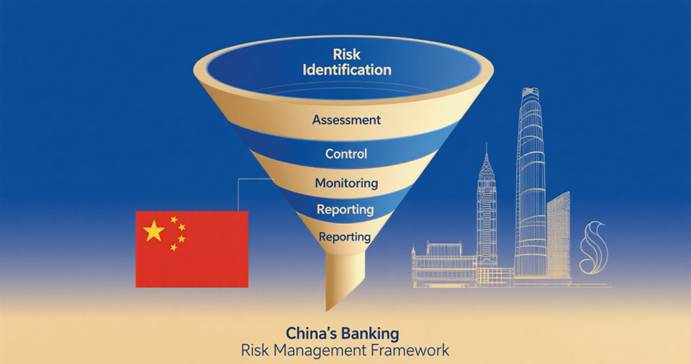
After more than a decade of development, China’s banking industry has initially established a comprehensive risk management system centered on the Core Indicators for the Supervision of Commercial Bank Risks and Basel III, covering credit risk, market risk, operational risk, and liquidity risk. In the practice of risk management efforts, most banks have achieved a full-process closed loop of “risk identification – assessment – control – monitoring – reporting”: In the field of credit risk, by establishing customer credit rating models and improving pre-loan investigation and post-loan management mechanisms, the non-performing loan ratio has been controlled within a reasonable range (as of 2024, the non-performing loan ratio of Chinese commercial banks has remained stable at around 1.6%); In the field of market risk, tools such as interest rate risk gap management and exchange rate risk hedging instruments (e.g., forward foreign exchange settlement and sales, foreign exchange swaps) are used to reduce the impact of market fluctuations on the balance sheet; In the field of operational risk, information system upgrades (such as the application of blockchain in cross-border payments) and internal control process optimization have reduced human errors and moral hazards.
However, with the increase in the degree of opening-up of China’s financial market (e.g., the expansion of QFII/RQFII quotas and the relaxation of access for foreign financial institutions), the risk management efforts of the banking industry face new dimensions. For example, the growth in cross-border mergers and acquisitions, international trade financing, and other businesses requires risk management efforts to not only cover local market rules but also adapt to international regulatory standards (such as the European Union’s Markets in Financial Instruments Directive II, or MiFID II); Under digital transformation, cybersecurity risks and data compliance risks (e.g., in accordance with the Personal Information Protection Law) have become new priorities in risk management efforts, and traditional risk control methods are no longer sufficient to address these emerging risks.
Core Bottlenecks in Risk Management Efforts
Currently, the bottlenecks in the risk management efforts of China’s banking industry are mainly reflected in three aspects: First, the insufficient international adaptability of risk assessment models. The credit risk assessment models commonly used by local banks are mostly based on domestic enterprise data, lacking accurate predictive capabilities for the credit status of cross-border enterprises and industry cycle fluctuations in the international market. This limits the accuracy of risk management efforts when conducting cross-border credit business; Second, the lack of experience in cross-border risk control. Most local risk management personnel lack practical experience in the international market and have weak capabilities in identifying and addressing derivative risks in the international financial market (such as interest rate swaps and credit default swaps – CDS) and cross-border capital flow risks, making it difficult to meet the risk management needs of banks under the “going global” strategy; Third, the insufficient international coordination of compliance management. There are significant differences in financial regulatory policies across countries and regions (such as the U.S. Dodd-Frank Act and the UK’s Financial Conduct Authority (FCA) Rules). Local banks often face regulatory penalties due to unfamiliarity with local compliance requirements when conducting cross-border business, which exposes the shortcomings of the “compliance risk control” link in risk management efforts.
The existence of these bottlenecks means that China’s banking industry urgently needs to introduce external talents to fill the gap in the international capabilities of risk management efforts – and recruiting foreign analysts with an international perspective and practical experience has become a key path to solving this problem.
The Necessity of Banks Recruiting Foreign Analysts for Risk Management Efforts
Core Advantages of Foreign Analysts and Their Alignment with the Needs of Risk Management Efforts
The advantages of foreign analysts (especially professionals with work experience in Wall Street, the City of London, or Singapore’s financial center) in the field of risk management are highly aligned with the core needs of risk management efforts in China’s banking industry. Specifically, these advantages are reflected in three aspects:
First, proficiency in applying international risk assessment tools. Foreign analysts are familiar with mainstream international quantitative risk models and tools, such as the “Value at Risk (VaR) Model” and “stress testing framework” widely used in market risk measurement, the “KMV Model” (a credit risk model based on option pricing theory) applied in credit risk assessment, and the “Loss Distribution Approach (LDA)” adopted in operational risk measurement. The introduction of these tools can help China’s banking industry optimize the quantitative analysis capabilities of risk management efforts and improve the accuracy of risk assessment. For example, a former Goldman Sachs risk analyst recruited by a state-owned major bank in 2023 introduced a “dynamic stress testing model,” which reduced the risk early warning response time for the bank’s cross-border credit business by 40% and effectively lowered the incidence of delinquent loans – this directly demonstrates the role of foreign analysts in improving the efficiency of risk management efforts.
Second, a global perspective on cross-border risks. Foreign analysts have long been deeply involved in the international financial market and have a keen insight into global macroeconomic cycles (such as the impact of U.S. Federal Reserve interest rate hikes on emerging markets), regional financial market fluctuations (such as the impact of the European energy crisis on cross-border trade), and changes in international regulatory policies (such as the latest revisions to Basel III). This global perspective can help the risk management efforts of China’s banking industry break free from the constraints of “local thinking” and identify potential risks in cross-border business in advance. For example, when the Federal Reserve launched a new round of interest rate hikes in 2024, the foreign analyst team of a joint-stock commercial bank developed a transmission model of “U.S. dollar interest rate fluctuations – cross-border capital flows – bank foreign exchange risks” and formulated a foreign exchange asset-liability structure adjustment plan for the bank. As a result, the bank’s foreign exchange exposure losses decreased by 30% compared with the previous year during the U.S. dollar appreciation cycle, fully verifying the value of foreign analysts in cross-border risk management efforts.
Third, international experience in compliance risk management. Foreign analysts are familiar with the financial regulatory rules of different countries and regions and can help the risk management efforts of China’s banking industry establish a dual system of “international compliance + local adaptation.” For example, when a city commercial bank expanded its cross-border payment business in Southeast Asia, the former DBS Bank (Singapore) compliance analyst it recruited not only assisted the bank in complying with Malaysia’s Financial Services Act and Indonesia’s Banking Act but also promoted the establishment of a “cross-border compliance risk checklist” in risk management efforts, ensuring no regulatory penalties during the business operation – this provided an important guarantee for the stable development of the bank’s cross-border business.
Industry Trends and Policy Support for Banks Recruiting Foreign Analysts
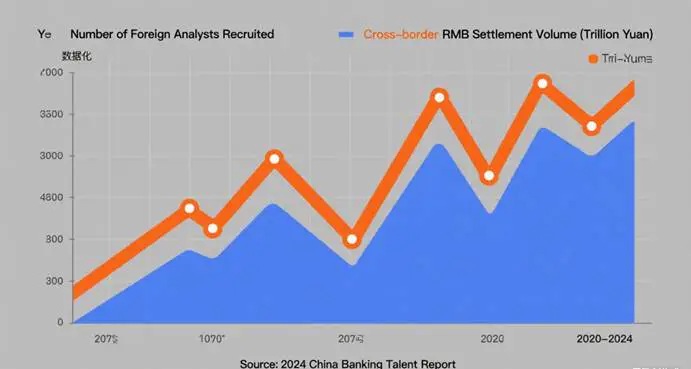
From the perspective of industry practice, the recruitment of foreign analysts by China’s banking industry has shifted from “individual attempts” to “regular deployment.” According to data from the 2024 Report on the Development of Banking Talents in China, the number of foreign analysts recruited by state-owned major banks and national joint-stock commercial banks in 2023 increased by 180% compared with 2020, with more than 60% of the recruited positions concentrated in risk management departments. Specifically, the recruiting entities can be divided into three categories: First, state-owned major banks (such as Industrial and Commercial Bank of China and China Construction Bank), which mainly recruit risk management analysts for their overseas branches (such as London Branch and New York Branch) to meet the risk control needs of the local market; Second, joint-stock commercial banks (such as China Merchants Bank and Shanghai Pudong Development Bank), which focus on introducing foreign analysts to their head office risk management departments to be responsible for cross-border business risk assessment and international model optimization; Third, foreign-funded legal person banks (such as HSBC China and Standard Chartered China), which integrate international risk management experience with the local market by recruiting foreign analysts to improve the risk control capabilities of their business in China.
At the policy level, China’s financial regulatory authorities have also provided support for banks to recruit foreign analysts. For example, the 14th Five-Year Plan for Financial Talent Development clearly states that “support will be given to the banking industry in introducing international financial risk management talents to enhance cross-border risk control capabilities”; In 2023, the State Administration of Foreign Exchange (SAFE) issued the Notice on Further Promoting the Facilitation of Cross-Border Trade and Investment, encouraging banks to optimize the cross-border business risk management system through the introduction of international talents. These policies have removed obstacles for banks to recruit foreign analysts and provided policy guarantees for the international development of China’s risk management efforts.
Practical Paths for Foreign Analysts to Support Risk Management Efforts in China’s Banking Industry

Optimizing Risk Assessment Models to Enhance the Quantitative Level of Risk Management Efforts
Risk assessment models are core tools for risk management efforts in the banking industry, and foreign analysts have made particularly significant contributions to model optimization. Taking credit risk assessment models as an example, traditional local models rely heavily on enterprise financial statement data (such as asset-liability ratio and net profit margin) but insufficiently consider factors such as cross-border transaction data of enterprises, international credit ratings (such as S&P and Moody’s ratings), and global industry prosperity. This leads to deviations in the credit assessment of cross-border enterprises. By introducing the concept of “multi-dimensional data integration,” foreign analysts incorporate international credit rating data, cross-border trade transaction flow data, and global supply chain risk indices into the models, significantly improving the accuracy of credit risk assessment.
For instance, a former Morgan Stanley credit risk analyst recruited by China Merchants Bank in 2022 led the development of the “Cross-Border Enterprise Credit Assessment Model 2.0.” Based on the original financial data, this model added three new dimensions of indicators: “fluctuations in international market share,” “credit status of major trading partners,” and “cross-border exchange rate risk exposure,” and trained the model using machine learning algorithms on historical default data. After the model was launched, the accuracy of default prediction for the bank’s cross-border enterprise loans increased by 25%, and the non-performing loan ratio decreased by 0.3 percentage points – this achievement directly reflects the role of foreign analysts in enhancing the quantitative level of risk management efforts.
In terms of market risk models, foreign analysts have also made outstanding contributions. For example, a former City of London market risk analyst recruited by Industrial Bank optimized the parameter settings of the VaR model for the bank’s foreign exchange derivative business: replacing the original “static historical simulation method” with the “dynamic Monte Carlo simulation method” and introducing “extreme market scenario assumptions” (such as market fluctuations on the scale of the 2008 financial crisis). This allowed the VaR model to more accurately measure potential losses in extreme market environments. After the optimized model was applied, during the period of intensified global foreign exchange market volatility in 2023 (such as the U.S. dollar index exceeding 114), the accuracy of risk reserve provisioning for the bank’s foreign exchange derivative business increased by 30%, effectively avoiding over-provisioning or under-provisioning and ensuring the scientific nature of risk management efforts.
Strengthening Cross-Border Risk Control to Expand the International Dimension of Risk Management Efforts
With the rapid growth of cross-border business in China’s banking industry (the cross-border RMB settlement volume of Chinese commercial banks reached 150 trillion yuan in 2023, a year-on-year increase of 18%), cross-border risks have become a key area of risk management efforts, and the professional capabilities of foreign analysts in this field are being fully utilized. Specifically, through full-process participation in “risk identification – strategy formulation – dynamic monitoring,” foreign analysts have helped banks build a sound cross-border risk management system.
In the risk identification phase, foreign analysts, relying on their familiarity with the international market, can identify potential risk points in advance. For example, when the European Central Bank (ECB) launched an interest rate cut cycle in 2024, the foreign analyst team of a state-owned major bank analyzed euro zone economic data and changes in European banking credit policies, predicted the risk that “the depreciation of the euro may lead to an expansion of exchange rate risk exposure for Sino-European trade enterprises,” and promptly submitted the Report on the Impact of the Euro Zone Interest Rate Cut on Cross-Border Trade Credit Business to the risk management department, providing a basis for the bank to adjust its credit policies in advance.
In the strategy formulation phase, foreign analysts are proficient in designing international risk hedging solutions. For example, when a joint-stock commercial bank carried out the “financing business for Chinese enterprises’ infrastructure projects in Africa,” it faced the dual challenges of exchange rate fluctuations (such as the sharp depreciation of the South African rand and Nigerian naira) and political risks. The former Citibank cross-border risk analyst recruited by the bank designed a combined hedging solution of “foreign exchange swaps + political risk insurance + cross-border guarantees”: using foreign exchange swaps to lock in exchange rates for the next three years to reduce exchange rate fluctuation risks; purchasing political risk insurance from international credit insurance institutions (such as the Berne Union) to cover risks such as wars and policy changes; and introducing local foreign-funded banks as cross-border guarantors to improve the project’s credit rating. After the implementation of this solution, the non-performing rate of the bank’s African infrastructure project financing was controlled below 0.5%, far lower than the industry average, fully verifying the strategic innovation capabilities of foreign analysts in cross-border risk management efforts.
In the dynamic monitoring phase, foreign analysts have promoted risk management efforts to shift from “post-event disposal” to “pre-event early warning.” For example, a former HSBC cross-border risk analyst recruited by Bank of Communications led the construction of the “Global Cross-Border Risk Monitoring Platform”: this platform integrates global macroeconomic data (such as GDP growth rate and inflation rate), cross-border capital flow data (such as short-term capital inflows/outflows), and international geopolitical risk indices (such as the Global Conflict Tracking Index). Through real-time data updates and risk threshold early warnings, it helps the risk management department keep abreast of risk changes in cross-border business. After the platform was launched, the risk early warning response time for the bank’s cross-border business was reduced from 48 hours to 8 hours, and the efficiency of risk event disposal increased by 60%.
Promoting the Internationalization of Compliance Management to Improve the Compliance System of Risk Management Efforts
Compliance risk is an important component of risk management efforts in the banking industry, and foreign analysts play an irreplaceable role in promoting the internationalization of compliance management. As China’s banking industry accelerates its “going global” pace, how to adapt to the regulatory rules of different countries and regions (such as the U.S. Foreign Corrupt Practices Act (FCPA) and the European Union’s General Data Protection Regulation (GDPR)) has become a major challenge in risk management efforts. Relying on their familiarity with international regulatory rules, foreign analysts have helped banks build a dual compliance system of “international compliance + local adaptation.”
On the one hand, foreign analysts assist banks in interpreting and implementing international regulatory rules. For example, when a foreign-funded legal person bank (such as HSBC China) responded to the EU’s MiFID II regulatory requirements, the former London FCA compliance analyst it recruited was responsible for converting requirements in MiFID II such as “financial product information disclosure,” “customer suitability assessment,” and “transaction reporting obligations” into internal compliance operating procedures for the bank. Specifically, the analyst took the lead in formulating the Guidelines for Information Disclosure of Cross-Border Financial Products, clarifying the disclosure elements and frequency of different types of cross-border products (such as cross-border funds and foreign exchange derivatives); designed a “customer risk preference and product suitability assessment questionnaire” to ensure that the products sold to customers match their risk tolerance; and built a “cross-border transaction reporting system” to realize the real-time collection of cross-border transaction data and automatic reporting to regulatory authorities. These measures not only helped the bank successfully pass inspections by EU regulatory authorities but also established a standardized compliance operating system for risk management efforts.
On the other hand, foreign analysts promote the integration of bank compliance management with local regulatory requirements. For example, when a city commercial bank carried out cross-border data transmission business, it faced dual compliance requirements from the EU GDPR and China’s Data Security Law (e.g., GDPR requires explicit user consent for cross-border data transmission, while the Data Security Law requires a security assessment for the outbound transfer of important data). The former Monetary Authority of Singapore (MAS) compliance analyst recruited by the bank designed a compliance solution of “data classification and grading + cross-border transmission whitelist + security assessment mechanism”: classifying cross-border transmitted data into “general data,” “important data,” and “core data,” allowing only “general data” to be transmitted through whitelisted overseas institutions; entrusting third-party institutions to conduct security assessments before the outbound transfer of “important data”; and prohibiting the cross-border transmission of “core data” to ensure compliance with local regulatory requirements. After the implementation of this solution, the bank did not experience any cross-border data compliance risk incidents, while ensuring the normal development of cross-border business, achieving a “win-win” situation for compliance and business development.
In addition, foreign analysts have also assisted banks in establishing cross-border compliance risk training systems. For example, a former American Express compliance analyst recruited by Industrial and Commercial Bank of China designed a “series of international compliance risk training courses” for employees in the bank’s risk management departments across the country. The content covers FCPA anti-bribery compliance, GDPR data protection, and Basel III compliance requirements. The training adopts a “case teaching + simulation exercise” approach: by analyzing international compliance penalty cases (such as a case where an international bank was fined 1 billion U.S. dollars for violating the FCPA), it helps employees understand the severity of compliance risks; through simulating cross-border business compliance review processes, it improves employees’ practical operation capabilities. As of 2024, this training has covered more than 80% of the risk management positions in the bank, significantly enhancing employees’ international compliance awareness and capabilities and promoting the compliance level of risk management efforts to a new level.
Existing Problems and Optimization Strategies in Banks’ Recruitment of Foreign Analysts
Core Problems in Recruitment and Management
Although foreign analysts have brought significant value to the risk management efforts of China’s banking industry, there are still some problems in the recruitment and management process that restrict the full play of their roles:
First, communication barriers caused by cultural differences. Some foreign analysts are not familiar with the culture of China’s local financial market (such as the internal decision-making process of banks and the way of communicating with regulatory authorities), resulting in low collaboration efficiency with local teams in risk management efforts. For example, when a foreign analyst of a joint-stock commercial bank promoted the optimization of a risk model, he directly collaborated with the technology department on model development without understanding the bank’s process that “inter-departmental collaboration requires prior approval from the Head Office Risk Control Committee,” leading to delays in the project; in addition, language differences (such as translation deviations of professional terms) may also lead to inaccurate transmission of key information in risk assessment reports, affecting the decision-making efficiency of risk management efforts.
Second, insufficient understanding of the local market. Some foreign analysts lack in-depth understanding of the particularities of China’s financial market (such as the credit system of state-owned enterprises, the risk characteristics of local government financing vehicles (LGFVs), and the requirements of inclusive finance policies), resulting in the risk management solutions they design being disconnected from local actual needs. For example, a “small and micro-enterprise credit assessment model” designed by a foreign analyst for a city commercial bank relied too heavily on enterprise financial data (while small and micro-enterprises in China generally have incomplete financial data), resulting in an accuracy rate of only 60% in the actual application of the model, far lower than expected, and unable to meet the risk management needs of the bank’s inclusive finance business.
Third, mismatch between the salary and career development system. Foreign analysts generally have high expectations for salary packages (for example, some analysts with Wall Street experience expect an annual salary of over 1 million yuan), but the salary systems of some local banks are unable to meet this demand; at the same time, some banks have not designed a clear career development path (such as promotion channels and cross-departmental rotation opportunities) for foreign analysts, leading to a low retention rate of foreign analysts. According to the 2024 Report on Talent Turnover in China’s Banking Industry, the turnover rate of foreign analysts recruited by banks within one year of employment reaches 35%, with dissatisfaction with salary and confusion about career development being the main reasons.
Optimization Strategies to Address the Problems
In response to the above problems, China’s banking industry needs to optimize the recruitment and management mechanism of foreign analysts from three dimensions – “recruitment adaptation, training integration, and incentive guarantee” – to ensure that they better serve risk management efforts:
First, strengthen the assessment of “local adaptability” in the recruitment phase. When recruiting foreign analysts, banks should not only assess their international risk management experience but also add an assessment dimension of “understanding of China’s financial market.” For example, case analysis questions (such as “How to design a risk assessment plan for China’s local government financing vehicles”) and local market research reports (such as “Analyze the impact of China’s inclusive finance policies on bank risk management efforts”) can be used to judge the candidate’s understanding of the local market; at the same time, priority should be given to candidates with work experience in China’s financial market (such as those who have worked in foreign-funded banks in China) or who are familiar with China’s regulatory policies to reduce obstacles caused by cultural and market cognitive differences.
Second, strengthen “cross-cultural integration and local training” after onboarding. Banks should formulate a systematic onboarding training plan for foreign analysts, covering China’s banking regulatory system (such as the regulatory requirements of the China Banking and Insurance Regulatory Commission (CBIRC)), the bank’s internal management system (such as decision-making processes and departmental responsibilities), and local market characteristics (such as the risk characteristics of small and micro-enterprises and cross-border trade models); at the same time, establish a “local mentor system” and assign a risk management backbone familiar with the local market to each foreign analyst to assist them in quickly integrating into the team. For example, in the “International Talent Localization Program” launched by a state-owned major bank in 2023, foreign analysts were arranged to participate in a three-month rotation training (covering the Inclusive Finance Department, Corporate Finance Department, and Cross-Border Business Department) and were assigned senior managers from the Head Office Risk Control Department as mentors to help them quickly understand local business. After the training, the matching degree between the risk management solutions designed by foreign analysts and local needs increased by 40%, and the team collaboration efficiency improved significantly.
Third, build an incentive system of “market-oriented salary and clear career development.” Banks should design competitive salary packages for foreign analysts based on international market salary levels (such as basic salary + performance bonus + long-term incentives, where performance bonuses are linked to the effectiveness of risk management efforts, such as the reduction in non-performing rates caused by risk model optimization and the reduction in cross-border risk incidents); at the same time, design a clear career development path for foreign analysts, such as the promotion channel of “Risk Management Analyst – Head of Cross-Border Risk Team – Deputy General Manager of Head Office Risk Control Department,” and provide cross-departmental rotation opportunities (such as serving in overseas branches and participating in head office strategic projects). For example, in the “International Risk Management Talent Program” launched by a joint-stock commercial bank in 2024, it was clearly stipulated that foreign analysts who have achieved significant results in risk management efforts (such as leading risk models that have reduced the bank’s losses by more than 10 million yuan) can be promoted to team leaders after three years of employment; at the same time, excellent foreign analysts are provided with opportunities to work in overseas branches (such as Hong Kong Branch and Singapore Branch) to meet their career development needs. After the implementation of this program, the retention rate of foreign analysts in the bank increased from 35% to 70%, effectively stabilizing the risk management talent team.
Future Trends: The Collaborative Development of China’s Risk Management Efforts and the Recruitment of Foreign Analysts

With the continuous deepening of China’s financial market opening-up (such as China further relaxing access restrictions for foreign financial institutions in 2024, allowing foreign-funded banks to carry out full-license business) and the continuous expansion of cross-border business in the banking industry (it is expected that the cross-border RMB settlement volume of Chinese commercial banks will exceed 200 trillion yuan by 2025), the collaborative development of China’s risk management efforts and the recruitment of foreign analysts will show three major trends:
In-depth Integration of “Internationalization + Localization” in Risk Management Efforts
In the future, the risk management efforts of China’s banking industry will no longer be a “simple transplantation of international experience” but an “in-depth integration of international standards and local needs.” On the basis of retaining advanced international risk management tools (such as quantitative models and hedging strategies), foreign analysts need to fully combine the particularities of China’s financial market (such as policy orientation, market structure, and customer characteristics) to design risk management solutions adapted to the local market. For example, in the field of green finance, foreign analysts can combine international green finance risk assessment tools (such as the assessment framework of the EU’s Sustainable Finance Disclosure Regulation (SFDR)) with China’s “dual carbon” policies (such as green credit guidelines) to design a “green project environmental risk assessment model,” supporting the risk management efforts of the bank’s green credit business; in the field of digital RMB, foreign analysts can draw on international digital currency risk management experience (such as the risk control plan for the U.S. Federal Reserve’s digital dollar) to assist banks in building a risk monitoring system for digital RMB business, covering money laundering risks and technical security risks.
“Professionalization + Segmentation” in the Recruitment of Foreign Analysts
With the segmentation of risk management efforts (such as green finance risks, digital finance risks, and cross-border compliance risks), banks’ recruitment of foreign analysts will shift from “general talents” to “segmented field experts.” For example, in the field of green finance risks, banks will give priority to recruiting foreign analysts with international green finance certifications (such as the Climate Risk Analyst (CRA) certification) and familiar with international carbon market rules (such as the EU Emissions Trading System (EU ETS)); in the field of digital finance risks, they will focus on recruiting foreign analysts with cybersecurity risk assessment experience (such as the CISSP certification) and familiar with blockchain technology risks; in the field of cross-border compliance risks, they will prefer foreign analysts familiar with the regulatory rules of specific regions (such as Southeast Asia and the Middle East). This “segmented” recruitment trend will make the professional capabilities of foreign analysts more accurately match the needs of risk management efforts, improving the pertinence and effectiveness of risk management efforts.
“Sino-Foreign Collaboration” in the Risk Management Talent Team
In the future, China’s banking industry will form a collaborative risk management model of “foreign analysts + local teams”: foreign analysts will be responsible for introducing advanced international experience, optimizing risk models and tools, and addressing cross-border risks; local teams will be responsible for adjusting solutions in line with local market needs, communicating with regulatory authorities, and implementing risk control measures. This collaborative model can not only improve the efficiency of risk management efforts but also realize the “local transmission of international experience” – through training and project collaboration, foreign analysts will pass on international risk management knowledge to local teams, enhancing the international capabilities of local risk management personnel. For example, a state-owned major bank plans to train 500 local risk management backbones with an international perspective through “Sino-foreign collaborative projects” by 2025, achieving the talent development effect of “introducing one person and driving a group,” and laying a talent foundation for the long-term development of China’s risk management efforts.
Conclusion
The risk management efforts of China’s banking industry are in a critical stage of transitioning from “local leadership” to “world-class standards,” and recruiting foreign analysts, as an important support for this transition, has become an industry consensus. With their proficiency in applying international risk assessment tools, global perspective on cross-border risks, and experience in compliance management, foreign analysts have injected new vitality into the risk management efforts of China’s banking industry, helping banks better cope with risk challenges in the complex international financial environment. Although there are still problems such as cultural differences and insufficient understanding of the local market in the recruitment and management process, these problems will be gradually resolved through optimization strategies of “recruitment adaptation, training integration, and incentive guarantee.”
In the future, with the deepening of China’s financial market opening-up and the segmentation of risk management efforts, China’s banking industry needs to further strengthen the recruitment and management of foreign analysts, promote the in-depth integration of “international experience and local needs,” and build a “Sino-foreign collaborative” risk management talent team. Only in this way can the level of risk management efforts be continuously improved, the stable operation of the banking industry be ensured, and solid support be provided for the high-quality development of China’s financial market.