
When foreign workers start looking into the Chinese job market, one phrase keeps coming up: the “35-year-old threshold.” You’ll hear it from recruiters, in industry forums, and from other expats who have been here a while. It’s not written in any law. No regulation says people over 35 cannot work. But in practice, something shifts around that age for a lot of people. Resumes that used to get callbacks start getting silence. Promotion conversations that were once about “when” become conversations about “if.” People in their forties start noticing that their names appear on lists they were not meant to see.
What is Age Discrimination?
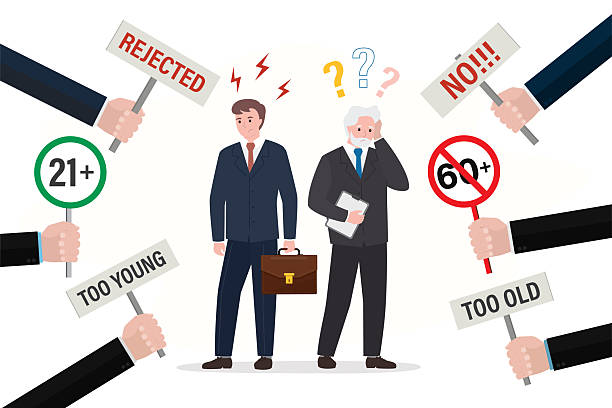
Put simply, it means treating someone differently at work because of how old they are. Hiring, firing, paying, promoting—any of these can be affected. In China, this usually does not happen with a written policy. It happens through habits, expectations, and decisions that nobody writes down but everyone seems to follow. This guide covers what age discrimination actually looks like in Chinese companies, why it happens, what the law says, and whether being over 40 really shuts you out of the market.
How Age Discrimination Shows Up in Workplace
If you want to see age discrimination in the workplace in China, start with job ads. They are the most honest signal in the whole system. You will see “35 years old and below” printed right at the top of listings for software engineers, marketing managers, and operations staff. Nobody hides it. They do not need to. Until recently, this was considered a normal hiring preference, not a problem.
The signs of age discrimination pile up quickly once you start looking. Job ads with age caps are just the most visible one. Then there are the unwritten rules about promotion. If you have not hit a certain level by 33 or 34, the door quietly closes. Your company will not tell you this directly, but you will notice that people older than you stop moving up. Salary inversion is another one. New hires straight out of school sometimes get offered more than people who have been doing the job for eight years.
Training budgets go to the younger staff. When layoffs come, the older employees tend to be first on the list. Contracts that were always renewed suddenly are not. People get moved to lesser roles without any stated reason. Performance reviews start using language that feels subjective and hard to pin down. Your opinions in meetings get less attention. And sometimes you look around and realize your responsibilities are now being handled by someone ten years younger, without anyone ever explaining why.

Age discrimination at work is probably most visible in internet and tech. The industry runs on a blunt assumption: if you are still writing code at 35 instead of managing people, you missed your window. This is not whispered. Tech employees talk about it openly with each other. The logic, such as it is, goes like this: younger workers accept lower pay, complain less about overtime, and are assumed to pick up new tools faster. None of that may be true about any specific person, but it does not have to be true about a specific person. It only has to be the operating assumption.
Manufacturing and services have their own versions. Factory job postings routinely state age ranges. “18 to 40” is common. If you are 42 and need production line work, you will not even get through the door. Airlines and high-end restaurants often set lower limits for customer-facing roles. None of this is hidden. Walk past any factory hiring board and you will see the numbers.
The reasons are not complicated. For decades, Chinese employers had more young applicants than they knew what to do with. When supply is endless, why bother with older candidates? Overtime is another factor. A lot of these jobs run on twelve-hour days and six-day weeks. Managers default to assuming younger bodies handle it better. And then there is cost. China’s labor law ties social insurance contributions to years of service, so an older worker doing the same job as a younger one can cost 30 or even 50 percent more. For a company running thin margins, that gap is real.
China’s retirement ages add a strange piece of context. Men retire at 60, female cadres at 55, female workers at 50. So a person who is considered “too old” to hire at 35 still has 15 to 25 years left before they can legally stop working. The social deadline and the legal deadline are completely out of sync, and nobody pretends otherwise.
Why Age Discrimination Exists in China
The root causes are structural. This is not about Chinese culture being somehow more ageist than other cultures. It is about specific features of the labor market.
The biggest one is supply. For years, China had more young workers entering the job market than the economy could absorb. When you can choose from a giant pool of 22-year-olds, a 42-year-old does not look like a top pick. That dynamic is shifting as the population ages, but hiring habits formed over decades do not change overnight.
Cost is the second driver. Seniority-based pay scales and social insurance rules make older workers noticeably more expensive. Two people doing the same work, but the 45-year-old costs the company much more. For businesses with tight margins, that matters.
Work intensity is third. Overtime is built into how many Chinese companies operate. Managers assume, often without checking, that younger workers will handle the hours and older ones will push back. Whether this assumption is accurate for any individual person is beside the point. It shapes who gets interviewed and who gets kept.
Promotion structure plays a role too. Chinese firms tend to have flat hierarchies. There are not that many management seats, and once they are filled, they stay filled. If you do not grab one by your mid-thirties, you are seen as having stalled. The idea that someone could stay in a technical role for decades and keep getting better at it is less established here than in some Western industries.
Finally, a lot of these companies are young. Many internet firms are less than ten years old, run by founders in their thirties, and may not exist in another five. They have no incentive to build a workforce that ages with them because they are not planning for that future.
Does Law Protect Workers from Age Discrimination?
Here is the blunt answer. China’s Labor Law and Employment Promotion Law ban discrimination based on ethnicity, race, gender, and religion. Age is not on the list. There is no age discrimination act in China. The United States has the Age Discrimination in Employment Act, which protects workers 40 and older from discrimination in hiring, pay, promotion, and firing. The UK covers age under its Equality Act. China has nothing comparable. That is the gap in age discrimination laws.

In court, proving age discrimination is extremely difficult. A company will never write “let go because too old” on a termination notice. They will write that performance was inadequate, or the position was eliminated, or the contract was not renewed. The worker has to prove the real reason was age, and the worker almost never has the evidence to do that. There have been a few court rulings in recent years that sided with older workers, but these are rare and do not add up to a systematic protection. Proposals to add age to the anti-discrimination laws have been discussed for years but have not gone anywhere.
Age Discrimination in China vs. the West
The US has laws that explicitly make it illegal to discriminate age. The ADEA covers hiring, pay, promotions, and terminations for anyone 40 and older. Someone who thinks they were targeted can file a complaint with the EEOC or take the case to court. The system is not perfect, but it is there.
That said, having laws does not make the problem disappear. Silicon Valley has its own version of age bias. A 55-year-old programmer in San Francisco will tell you the same things a 45-year-old programmer in Shenzhen will tell you about how hard it is to get an interview. The difference is that American workers can fight back legally, and companies know it. That changes behavior, even if it does not fully fix the culture.
The age where this starts is also different. In China, the unspoken line is around 35. In the US, the legal protection starts at 40. So a Chinese worker is being called “old” in their early thirties, while an American worker in their late thirties has not even reached the protected age yet. The social clock runs much faster in China.
Can You Find Work Over 40 in China?
If you only look at internet job boards and factory hiring signs, the picture looks terrible. But that is not the whole picture. Plenty of people over 40 work in China. They just tend to be in industries that do not make headlines. Age discrimination is real and it is harsh in certain sectors. But it is not the same everywhere. Knowing which sectors value experience is half the battle.
International schools and bilingual schools are a big exception. They do not care about age in the way tech companies do. A 50-year-old physics teacher with twenty years of classroom experience is a strong candidate, not a risky one. Walk into any international school in Beijing or Shanghai and you will see plenty of older foreign teachers.
Multinational corporations are the second one. These companies usually apply the HR policies of their headquarters, which means anti-discrimination rules and more structured hiring. Engineering, quality, supply chain—these areas reward people who have been around. A 50-year-old quality manager with experience across three countries is not getting screened out by an algorithm.
Management and senior technical roles are the third. Factory directors, R&D heads, chief engineers. Nobody hiring for these positions cares about your age. They care whether you can fix the problem. If a 55-year-old German engineer can solve a production issue that has been costing the company money, nobody asks about his birthday.

Niche technical trades are the fourth. Precision manufacturing, mold design, brewing, instrument repair, high-end cooking. The talent pool for these jobs is so small that filtering by age would be absurd. There are not enough qualified people at any age. If you have the skill, you have the work.
Training and consulting is the fifth direction. After years in an industry, you can teach. Manufacturing training centers and vocational schools hire foreign instructors with real factory experience. The older you are, the more your words carry weight with students.
Here is the practical summary. If you are 25, an internet company might snap you up. If you are 45, that same company might ignore your application. But international schools, multinationals, factories, and specialty trades are looking at your experience, not your age. The question is not whether age discrimination exists. It does. The question is whether you are applying to the parts of the market where it dominates or the parts where it does not. For foreign workers with real experience and the right industry focus, the door is open. It is just a different door than the one most people walk toward first.
Conclusion
Age discrimination in Chinese workplaces is real. The 35-year-old threshold is not a myth. It shows up in job ads, in layoff patterns, and in the careers of people who hit their mid-thirties and find the path narrowing. Legal protections are weak compared to Western standards. But the picture is not one color. International schools hire older teachers without hesitation. Multinationals apply policies that limit age-based decisions. Factories and specialty trades need experience and do not care what year you were born. If you are a foreign worker over 40, your odds are not the same in every industry. Pick the right one, and your age is not a burden. It is the reason they hire you.