
Explore in-depth employment opportunities for foreign engineers in China’s booming commercial space sector. This guide includes a detailed company list, analysis of the job market, and practical strategies for your career move.
Introduction
China’s commercial space industry is experiencing unprecedented rapid growth. Bolstered by national policy support, surging market demand, and accelerated technological innovation, this sector is not only providing a vast stage for domestic talent but is also becoming a significant destination for global foreign engineers seeking career development. For international professionals specializing in aerospace engineering, propulsion technology, satellite design, software systems, and related fields, China’s commercial space ecosystem offers abundant and highly attractive opportunities. This article will provide an in-depth exploration of the current development status of China’s commercial space industry, analyze the employment environment, visa policies, and cultural adaptation challenges faced by foreign engineers, and furnish a detailed list of major companies along with practical job-seeking strategies.
The Rise and Prospects of China’s Commercial Space Industry
Over the past decade, China has achieved remarkable feats in the space domain, from the Chang’e lunar missions to the Tiangong space station, from the global deployment of Beidou to the Tianwen Mars exploration. Against this backdrop, China’s commercial space industry, which began to sprout around 2015 following policy relaxation, has rapidly accelerated onto a fast track. Unlike the U.S. model led by NASA and private companies like SpaceX, China’s commercial space development presents a unique path characterized by “national team” leadership and the swift follow-up of private enterprises. According to reports from institutions like CCID Consulting, China’s commercial space market is projected to reach several trillion RMB by 2025, covering the entire industry chain including satellite manufacturing, launch services, ground equipment, and satellite applications/operations.
At the government level, the 14th Five-Year Plan explicitly designates space technology as a strategic emerging industry, encouraging private capital participation and promoting commercial operations. Cities such as Beijing, Shanghai, Shenzhen, Wuhan, and Chongqing have successively introduced policies, established commercial space industrial parks, and offered tax incentives, R&D subsidies, and talent recruitment programs. This favorable macro-environment has directly fueled immense demand for high-end technical talent. The domestic cultivation of relevant professionals struggles to keep pace with the industry’s explosive growth in the short term. Consequently, recruiting experienced international foreign engineers has become a strategic choice for many Chinese commercial space companies.
Analysis of Employment Opportunities for Foreign Engineers in China
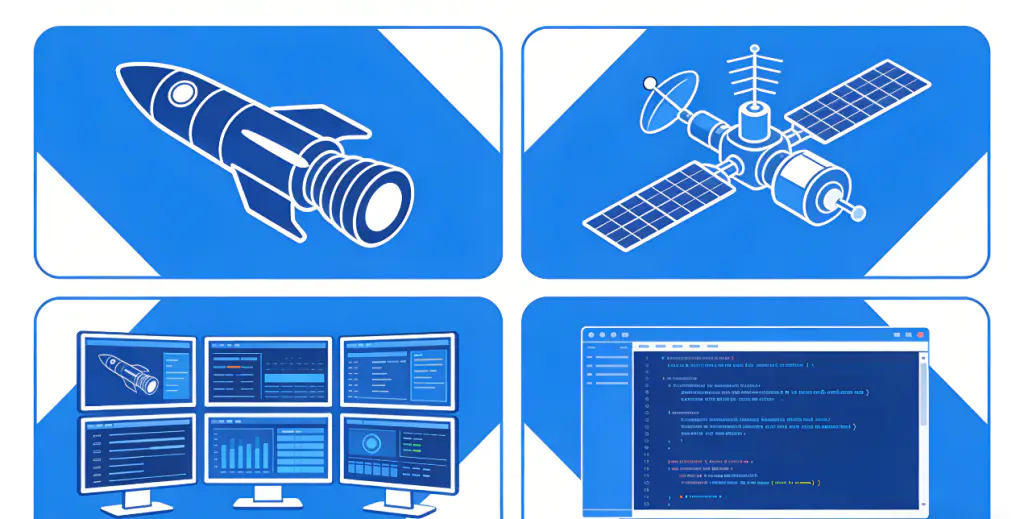
For foreign engineers, employment opportunities within China’s commercial space sector are primarily concentrated in the following core areas:
Rocket Research, Development, and Manufacturing
This is the segment with the highest technical barriers and greatest need for experience. Opportunities involve liquid/solid rocket engine design, structural mechanics, fluid dynamics, thermal protection materials, propellant technology, and overall system design. Foreign engineers with experience at international firms like ULA, SpaceX, or Blue Origin are particularly sought after.
Satellite Design and Applications
This includes the design of platforms and payloads for various satellites (communication, remote sensing, navigation), on-board electronics systems, attitude control, and constellation networking technologies. The demand for relevant talent is intense, especially with China’s plans to construct large-scale low-Earth orbit (LEO) communication constellations (e.g., “Hongyan,” “Hongyun”).
Ground Systems and TT&C (Tracking, Telemetry, and Command)
This encompasses the development and maintenance of launch site ground equipment, TT&C stations, data reception and processing systems, and satellite operation management platforms.
Aerospace Software and Digitalization
Software domains such as flight control software, orbital dynamics simulation, mission planning systems, AI-based data processing, and digital twins offer numerous positions for foreign engineers with strong programming and algorithmic backgrounds.
Advanced Manufacturing and Processes
Process engineers specializing in 3D printing (additive manufacturing), composite material processing, precision manufacturing, and automated assembly are crucial for enhancing R&D efficiency and reducing manufacturing costs.
The advantage for foreign engineers lies in bringing international frontier project experience, engineering management concepts, safety standards, and innovative thinking, helping Chinese companies integrate more quickly with global practices and compete internationally. Founding teams of many Chinese commercial space startups themselves have overseas study or work experience and highly value diverse team composition.
Opportunities and Challenges for Foreign Engineers
Opportunities:
- High-Growth Market: Being part of one of the world’s fastest-growing space markets offers the chance to participate in projects from the ground up, with a steep career growth curve.
- Competitive Compensation: To attract top international talent, leading commercial space companies typically offer compensation packages aligned with global standards, including competitive base salary, performance bonuses, stock options (where applicable), and comprehensive benefits.
- Policy Support: Many cities offer preferential policies for high-level foreign talent, including residency permits, housing subsidies, and children’s education support. Visa processes for foreign engineers are continually being streamlined and optimized.
- Technical Challenges & Sense of Achievement: Participating in solving unique technical challenges within China’s commercial space sector and witnessing/contributing to industry milestones can provide immense professional fulfillment.
Challenges:
- Language and Cultural Barriers: A Mandarin-speaking work environment can be a significant hurdle. While the internal working language within many R&D teams may be English, cross-department collaboration, understanding local regulations, and supply chain communication often require some level of Mandarin proficiency or support.
- Technology Transfer and Compliance: Space technology involves sensitive areas. Foreign engineers must strictly adhere to China’s export control regulations, information security rules, and intellectual property agreements. Companies also implement strict compartmentalization of project information.
- Adapting to Local Engineering Practices: The pace of R&D in China can be extremely fast, requiring adaptation to different project management and decision-making processes.
- Long-Term Career Path: For foreign engineers considering long-term development in China, it is essential to have a clear plan for their career progression and potential role evolution within the company.
List of Chinese Commercial Space Companies (Employers Actively Hiring Foreign Engineers)
The following is a list of key players active in China’s commercial space industry chain, known to have recruited international talent or with explicitly internationalized team structures. This list provides crucial starting points for foreign engineers in their job search.
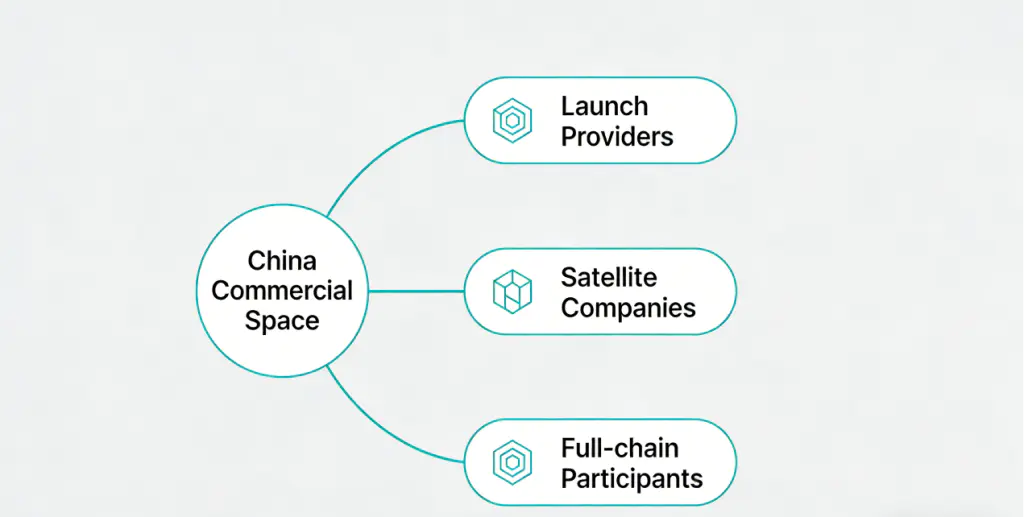
Launch Service Providers:
- LandSpace: China’s first private launch vehicle developer, focused on medium-sized liquid oxygen methane rockets (Zhuque series). Its technical team has a relatively high degree of internationalization and has publicly recruited talent with international backgrounds in propulsion and system design.
- i-Space: Achieved the first orbital launch by a Chinese private launch vehicle. Its business covers small solid rockets and reusable liquid oxygen methane engine development, with high demand for talent in engines and structures.
- Galactic Energy: Known for its “Ceres” series solid rockets and developing the “Pallas” reusable liquid rocket, actively recruiting excellent engineers domestically and internationally.
- OneSpace: Focuses on R&D of small solid launch vehicles and air-launch systems.
- CAS Space: Incubated by the Institute of Mechanics of the Chinese Academy of Sciences, dedicated to solid and liquid launch vehicle development. Strong background, high hiring thresholds.
Satellite Manufacturers and Operators:
- Chang Guang Satellite Technology (CGSTL): A leading enterprise in China’s commercial remote sensing satellite field, operating the “Jilin-1” constellation. Requires a large number of high-end talents in optical payloads, satellite platforms, and image processing.
- Spacety: Specializes in customized development and networking services for micro-nano satellites. Flexible, open style, frequent international cooperation, a potential entry point for foreign engineers into China’s satellite sector.
- GalaxySpace: Aims to build an LEO broadband communication constellation, a leader in this field in China. Eagerly seeks talent in satellite communication payloads, phased array antennas, inter-satellite links, etc.
- Commsat: Focuses on micro-nano satellite development and constellation networking solutions.
- ADA-SPACE: Committed to the operation and application of AI remote sensing satellite constellations.
Full-Industry-Chain Players and Emerging Forces:
- Geespace: Under Geely Holding Group, lays out the full industry chain from satellite R&D/manufacturing to applications, particularly for future mobility services. Strong capital backing, prominent international vision, actively recruits global talent intersecting automotive and aerospace.
- Oriental Space: Focuses on developing medium-sized commercial launch vehicles. The founding team has China-U.S. background, company culture emphasizes East-West technology integration.
- Deep Blue Aerospace: Dedicated to R&D of reusable liquid launch vehicles (liquid oxygen/kerosene). Its technical path shares similarities with SpaceX and has strong interest in foreign engineers with relevant expertise.
Supply Chain and Technical Support Enterprises:
Numerous technology companies specializing in propellants, special materials, high-end sensors, space-grade chips, simulation/testing software, etc., also hire international engineers for their aerospace business lines.

Job Search Strategies and Practical Guide
Skill Matching and Resume Preparation
Research target companies’ technology roadmaps and products thoroughly (via their official websites, technical papers, press conferences) to match your skills precisely. Your resume should highlight specific project experience, technical achievements (e.g., percentage efficiency improvements, solving specific problems), and use quantifiable results. Be prepared to elaborate in detail on technical aspects of past work (in compliance with former employers’ confidentiality agreements).
Job Search Channels
- Professional Platforms: Monitor job postings on LinkedIn, Zhaopin, Liepin using keyword combinations like “Foreign Engineer,” “Aerospace,” “Propulsion,” “Satellite” in English and ” Foreign, Aerospace, Rocket, Satellite in Chinese.
- Company Websites: Directly visit the “Careers” or “Join Us” section of the aforementioned companies’ official websites.
- Industry Conferences & Networking: Actively participate in international aerospace conferences held in China or online, such as the China Space Conference, International Astronautical Congress, to build industry connections.
- Recruitment Agencies: Some international headhunting firms specializing in high-tech or advanced manufacturing operate in China and are often commissioned to find scarce foreign engineer talent.
Visa and Work Permit
The most common visa is the Z Work Visa. The process typically involves: the company obtaining the qualification to apply for work permits for foreign employees, applying for the “Notification Letter of Foreigner’s Work Permit” for you, you applying for the Z Visa at a Chinese embassy/consulate overseas with that notification, and after entry, obtaining the Work Permit and Residence Permit. Required documents usually include degree authentication (often requiring certification by Chinese embassies/consulates or the Chinese Service Center for Scholarly Exchange), a criminal record check, health examination report, and proof of work experience. The R Talent Visa is for high-level talents and offers more convenient treatment. The company’s HR department usually provides full assistance.
Interview Preparation
Interviews may involve multiple technical rounds conducted by future colleagues and team leads, deeply assessing professional capability. There may also be management interviews assessing cultural fit and long-term motivation. Be prepared to discuss your understanding of China’s commercial space market and your reasons for choosing to join the specific company.
Salary Negotiation
Compensation packages usually include base salary, annual bonus, allowances (housing, transportation, meals), commercial insurance, and possibly stock options. Understand the cost of living in first-tier cities like Beijing, Shanghai, and Shenzhen, and consider this comprehensively during negotiations.
Cultural Integration
Learning basic Mandarin will significantly improve daily life and work communication. Maintain an open mind, understand differences in work and communication styles between East and West, and proactively build trust with local colleagues.
Future Outlook
As Chinese commercial space companies’ technologies mature and they begin to target the international launch services market and global satellite application business, their demand for foreign engineers with international perspectives and experience will only increase. Simultaneously, China continues to improve its ecosystem for attracting international talent. For foreign engineers who dare to embrace challenges and desire to participate in shaping the future of spaceflight, China’s commercial space wave presents a historic career stage.
Choosing to join China’s commercial space endeavor is more than just a job; it is a journey to participate in a new chapter of global space exploration. By contributing their professional expertise, foreign engineers can become bridges connecting China and the world’s aerospace community, collectively advancing humanity’s strides into space.
(Note: Company information and policies mentioned in this article are based on publicly available sources. Please refer to the latest official releases from respective companies when job seeking. For visa policy changes, consult China’s immigration authorities or professional legal agencies.)