
If you have used Uber in New York or Lyft in London, you already know the drill: open the app, set a destination, and a car shows up. Now imagine doing the same thing in Shanghai, but the app is in Chinese, the driver doesn’t speak a word of English, and your usual payment method doesn’t work. That’s the reality for most foreigners the first time they try to use ride-hailing apps in China. These platforms are not just a convenience — they are the backbone of daily transport in a country where street hailing has nearly disappeared.
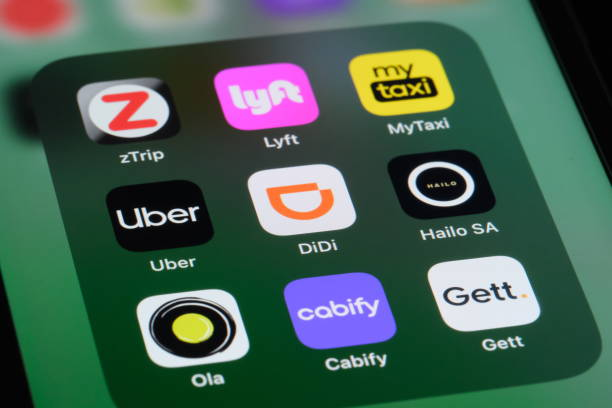
The good news is that with the right setup, you can use them almost as easily as Uber or Lyft, and in many ways, they outperform their Western counterparts: shorter wait times, lower fares, and features built for a cashless society. This guide introduces the main ride-hailing tools available to English speakers, explains how they differ from what you’re used to in Europe or North America, and gives you step-by-step advice so you never get stuck on a curb staring at your phone.
The App Landscape: China vs. the West
In most Western countries, one or two apps dominate your phone. Uber is everywhere; Lyft fills in the gaps in the US; Bolt or Freenow pop up in parts of Europe. The experience is consistent: you enter an address, a price estimate appears, and you swipe to confirm. Ride-hailing apps in China follow the same basic logic, but the ecosystem is different. A single company, Didi Chuxing, controls the overwhelming majority of the market, similar to how Uber once dreamed of dominating globally before retreating from China. What sets Didi Chuxing apart for a foreign visitor is that it actually works with an international credit card and provides an English interface — something very few Chinese apps bother to offer.
Didi Chuxing is the exception in a field built almost entirely for locals. If you try Meituan Dache or the ride-hailing button inside Gaode Maps, you will quickly hit a wall: they demand a Chinese phone number and a digital payment wallet tied to a local bank account. That’s a level of friction unheard of in the West, where you can sign up for Uber with just an email and a credit card.

Here, the learning curve is steeper, but once you clear the initial setup, the service itself often feels smoother than what you get back home. Cars arrive faster — often in under two minutes in city centers — because Didi Chuxing has an enormous driver network. And unlike some Western cities where surge pricing can triple your fare on a rainy Friday night, price spikes here tend to be milder and more predictable.
Making Payments Work Without a Chinese Bank
If you have ever been forced to download a separate payment app just to take a taxi, you know how frustrating that is. In much of Europe and North America, you can hop into an Uber and pay with whatever card is saved in your phone. In China, the entire mobility system runs on digital payment, and cash is simply not accepted inside ride-hailing apps. This is perhaps the biggest culture shock for travelers used to tapping a contactless card or handing over a few banknotes. But once you embrace the local method, the efficiency is hard to deny.
Digital payment is the only way to settle a fare inside Didi. The setup, however, is less painful than it looks. Open the app’s Wallet section and add your international credit card — Visa and Mastercard both work. You will be asked to verify your identity with a photo of your passport and a selfie. It’s a regulatory requirement, not a Didi peculiarity.
Complete this once on hotel Wi-Fi and your card stays linked for every subsequent trip. If you already use Alipay, linking that same international credit card there first and then choosing Alipay inside Didi gives you a reliable backup. This double-link approach is something you rarely need in the West, but here it acts as insurance against occasional card-processing hiccups.
The reward for this extra setup is a fare structure that often feels like a bargain compared to Western prices. A 30-minute ride across a central district in Beijing or Chengdu runs about 25–40 RMB — roughly
3.50 to 5.50. The same trip in Los Angeles or Berlin could easily cost four times that amount. Tipping doesn’t exist, which also lowers the total spent, and because digital payment settles automatically at the end of the ride, you never fumble for coins or wait for a card machine.
The Ride Experience: Familiar, With a Few Twists
Once you are inside the car, you will notice a blend of the familiar and the unfamiliar. The basic flow is identical to Uber: the driver follows a GPS route you can track in real time, and the app shows an ETA. But here is the one moment that almost every foreigner dreads: the phone call. Seconds after you book, your phone rings.
You pick up, hear rapid Mandarin, and your brain freezes. In Western apps, drivers rarely call unless something is seriously wrong. On ride-hailing apps in China, it’s routine — the driver is usually just confirming which side of the street you’re on or spotting your exact pickup point among several exits.
This is where the English interface saves you. Didi’s in-app chat now supports auto-translation. You can type “I’m in front of the Starbucks” in English, and the driver reads it in Chinese. Even better, snap a photo of your surroundings and send it; a picture of a shop sign resolves confusion instantly. If you absolutely need to speak, one short phrase — “Wo zai diding weizhi”(I’m at the pinned location)—tells the driver to trust the GPS and stop circling. Nine times out of ten they grunt “hao” and arrive a minute later.

Comfort-wise, the cars themselves often beat their Western equivalents. A large portion of Didi’s fleet consists of electric or hybrid sedans that are cleaner and quieter than the aging Prius you might get in some US cities. Drivers routinely offer tissues when you enter, a small courtesy you rarely see in the West. Seatbelt reminders in the back are strict, and tipping is non-existent — the fare on the screen is the final amount, which takes the awkwardness out of payment.
Because the English interface overlays major street names, you can follow the route without anxiety. In over two years of using these apps across Chinese cities, I’ve never had a driver take a deliberately longer route, something that still happens occasionally with taxis in certain European capitals.
When to Use an App, a Taxi, or a Bike
In Western cities, your ride-hailing app is often the only choice besides public transport or a rental scooter. In China, the options are broader, and picking the right one at the right moment can save you both money and stress.
Traditional taxis still fill the streets, and they operate more like the metered cabs you find in London or New York — except the language barrier is much higher. Almost no driver speaks English, so you need a destination written in Chinese characters. A hotel business card works perfectly. Taxis run on meters, so you avoid surge pricing, and they accept cash, which is a useful fallback when your phone dies. The base fare is slightly higher than Didi’s standard rate, but for a short, straightforward trip they work fine.
Shared bikes are another layer entirely, and they are far more integrated into daily life than the dockless bikes in Western cities. In many Chinese urban centers, you can scan a QR code on a Hello Bike or Meituan Bike with Alipay’s international version, and a 30-minute ride costs about 1.5 RMB. That’s roughly $0.20— a price point no Western bike-share can match. On a mild morning, a bike ride is often faster than a car stuck in traffic.
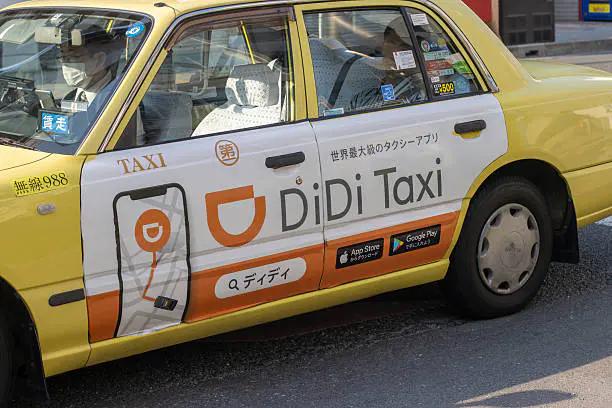
So when do you choose what? In a downpour at rush hour, Didi’s reliability and door-to-door comfort beat everything. On a sunny afternoon with empty sidewalks, a shared bike feels like the best way to see the city. At 3 a.m. outside a club in Chengdu, the first empty taxi you flag down with a destination card and a 100-yuan note in hand is the smartest move. The trick is knowing that ride-hailing apps in China don’t have to be your only tool — just the most versatile one.
Safety, Support, and What to Do
Safety features on ride-hailing apps in China are extensive, partly because regulators demanded them after high-profile incidents several years ago. In this regard, they have leapfrogged many Western platforms. Uber and Lyft have emergency buttons and trip sharing, but the Chinese implementations are more deeply integrated. On Didi, a prominent safety shield button sits on the home screen. Tap it to share your ride live with a trusted contact or to connect with a security center that can track your car and dispatch help. You can also record audio during the trip, a feature that Uber only introduced in limited markets after much debate.
If you leave something in the car, the recovery process is more streamlined than what you might expect from a European taxi company. Inside the app, select “I lost an item,” and Didi connects you directly to the driver. A small return fee — usually 10 to 20 RMB — is automatically charged to your digital payment method when the item is returned. I have retrieved a phone from a back seat in under an hour this way. By comparison, retrieving a lost item from a New York yellow cab is often a bureaucratic nightmare.
English-speaking customer support is accessible through the Didi help center. Replies take a couple of hours, which is slower than the live chat you might get from Uber support, but they are generally helpful for straightforward issues like fare disputes. For urgent problems — a charge for a ride you never took — sending screenshots through the in-app chat resolves things faster than email.
One subtle cultural factor works in your favor: driver ratings matter enormously here. A low score limits a driver’s access to higher-paying ride categories, so they have a strong incentive to keep the car clean and follow the rules. If a driver plays loud videos or takes a wrong turn, a concise note in your rating feedback can actually improve things for the next passenger. The system is not perfect, but combined with the GPS tracking that flags route deviations, it creates a level of accountability that sometimes feels absent in less regulated Western markets.
Conclusion
In the end, using ride-hailing apps in China feels different from what you’re used to in Europe or North America, but the gap is narrower than you think. The initial setup demands more effort — linking an international credit card, verifying your identity, getting comfortable with the English interface — yet the payoff is a service that is often faster, cheaper, and more reliable than its Western equivalents.
The digital payment ecosystem, once intimidating, quickly becomes a convenience you miss when you go home. Keep a destination card and some cash for taxis and bikes as a backup, and know that the safety tools have your back. With a few rides under your belt, you’ll stop worrying about the language barrier and start enjoying how easy it is to explore Chinese cities on your own terms.