
Explore this comprehensive guide for financial professionals seeking international finance careers in Shanghai and Shenzhen. Discover key sectors, required skills, and a comparative analysis of these leading Asian financial hubs to advance your career in global finance.
Introduction
As China’s role in the global economic landscape becomes increasingly prominent, the field of international finance is experiencing unprecedented opportunities for growth. Shanghai and Shenzhen, the two primary financial engines of China, are not only critical domestic markets but are also playing ever more crucial roles within the global international finance system.
For financial professionals with ambitions to excel on the international finance stage, a deep understanding of the job markets, role requirements, and career development pathways in these two cities is a key to unlocking success. This comprehensive guide provides an in-depth analysis of the international finance employment landscapes in Shanghai and Shenzhen, offering financial professionals detailed insights and practical advice spanning over 2,500 words, designed to help you stand out in the competitive world of international finance.

Shanghai: The Eastern Rise of a Global International Finance Hub
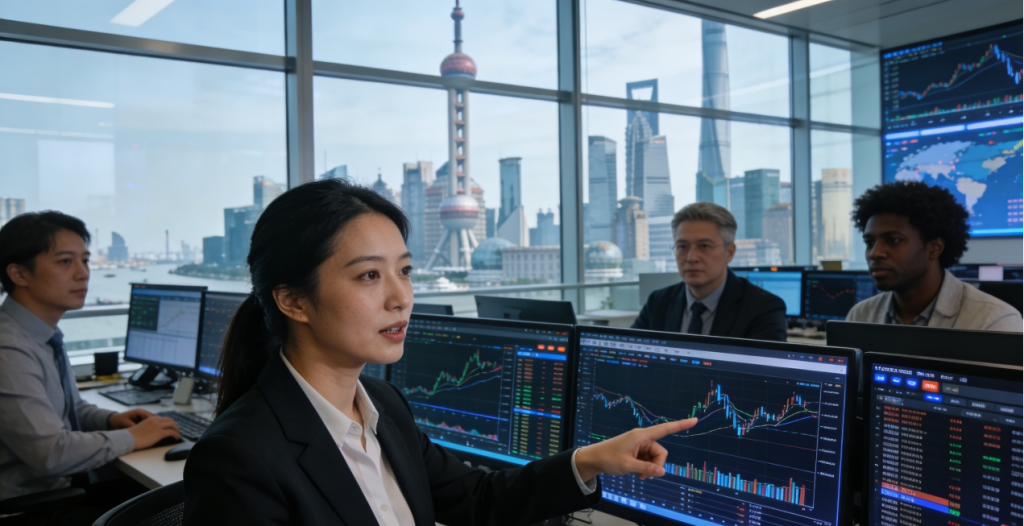
Shanghai is renowned as China’s financial heart, and its strategic goal of building an international finance center has been elevated to the national level. The Pudong New Area, specifically the Lujiazui Financial District, is home to thousands of international finance institutions, including foreign-funded banks, multinational investment banks, global asset management firms, and international insurance companies. For financial professionals, international finance roles in Shanghai span a wide spectrum, from traditional banking to cutting-edge fintech.
Regarding international finance market infrastructure, the Shanghai Stock Exchange, Shanghai Futures Exchange, and China Financial Futures Exchange offer a rich variety of trading products, including increasingly internationalized crude oil futures, gold futures, and the further-opening treasury bond futures market. The continuous deepening of these platforms’ internationalization has created numerous high-end positions for financial professionals skilled in cross-border trading, risk management, and derivatives pricing. Furthermore, the financial liberalization policies within the Shanghai Free-Trade Zone and the Lingang New Area—such as pilot innovations in cross-border cash pooling and integrated domestic/foreign currency accounts—have attracted numerous multinational corporations to establish treasury centers, urgently requiring talents with an international perspective in treasury management and foreign exchange risk control.
The demand for international finance talent in Shanghai is characterized by high specialization and interdisciplinary skills. Investment banking divisions favor candidates with experience in cross-border M&A and overseas IPOs. Asset management firms seek portfolio managers proficient in global asset allocation and ESG (Environmental, Social, and Governance) investment strategies. In the fintech sector, applications of blockchain technology in cross-border payments and trade finance, along with advances from the Digital Currency Research Institute, provide crossover opportunities for financial professionals with strong technical backgrounds. Notably, the Shanghai municipal government, through initiatives like the “Pujiang Talent Program,” offers residency, tax benefits, and housing subsidies for overseas-returned financial professionals, significantly reducing initial living costs.
Key Sectors and Opportunities in Shanghai
- Investment Banking & Capital Markets: Focus on cross-border listings, syndicated loans, and securities underwriting with international reach.
- Asset & Wealth Management: Serving high-net-worth individuals and institutional clients with global investment portfolios.
- Fintech Innovation: Developing and implementing solutions for digital banking, blockchain applications, and regulatory technology (RegTech).
- Risk Management & Compliance: Ensuring adherence to complex international regulatory frameworks like Basel III.
Shenzhen: The Innovation-Driven Frontier of International Fintech
As a core engine of the Guangdong-Hong Kong-Macao Greater Bay Area, Shenzhen’s international finance profile is deeply integrated with technological innovation and cross-border finance. Shenzhen-Hong Kong cooperation is the central advantage for Shenzhen’s international finance development. The Qianhai Shenzhen-Hong Kong Modern Service Industry Cooperation Zone and the Hetao Shenzhen-Hong Kong Science and Technology Innovation Cooperation Zone provide financial professionals with unique platforms for cross-border business. Reforms to the Shenzhen Stock Exchange’s ChiNext and STAR markets have enhanced their function in financing innovative companies, attracting global capital and spawning numerous international finance roles related to equity financing and venture capital.
In the realm of international finance technology (Fintech), Shenzhen is a global benchmark. The fintech ecosystems derived from local giants like Tencent and Ping An Group, along with numerous startups, are leading innovation in digital currency, robo-advisory, and cross-border blockchain supply chain finance. The establishment of the People’s Bank of China’s Digital Currency Institute in Shenzhen has promoted trials of digital currency in cross-border scenarios, creating demand for hybrid talent proficient in both financial compliance and cutting-edge technology. For financial professionals, this means opportunities extend beyond traditional analysis and risk control to emerging functions like product management, compliance technology (Comptech), and data science.
Green finance is another highlight of Shenzhen’s international finance landscape. As one of China’s first pilot zones for green finance reform and innovation, Shenzhen is active with international institutions involved in green bond issuance, carbon finance trading, and sustainable investment. Financial professionals familiar with international green standards (such as the Equator Principles, TCFD framework) can find a differentiating advantage in fields like environmental risk analysis and green asset securitization. Moreover, leveraging the Pearl River Delta’s robust manufacturing base, Shenzhen has strong demand for entity-oriented international finance services like cross-border trade finance and supply chain finance, particularly needing practical experts proficient in international letters of credit, factoring, and exchange rate hedging.
Key Sectors and Opportunities in Shenzhen
- Fintech & Digital Finance: Leading in digital payments, insurtech, and the application of central bank digital currency (CBDC).
- Venture Capital & Private Equity: Financing technology startups and innovative enterprises, with strong cross-border links to Hong Kong.
- Green & Sustainable Finance: Developing products and markets for environmental finance and carbon trading.
- Cross-Border Financial Services: Facilitating trade and investment flows within the Greater Bay Area and beyond.

Comparative Analysis: Shanghai vs. Shenzhen International Finance Roles
While both Shanghai and Shenzhen are pivotal international finance hubs, their market emphases and cultural atmospheres are distinct. Financial professionals should make informed choices based on their expertise and career aspirations.
Shanghai leans towards being a comprehensive international finance center. Its roles are predominantly in financial market trading, multinational corporate headquarters finance, and high-end wealth management. The overall style is closer to traditional global hubs like New York and London. The professional network is more globalized, with frequent networking events, making it suitable for financial professionals adept at complex financial modeling, international negotiation, and multilingual communication. Salary levels are the highest in China, but living costs (especially housing) are correspondingly high. Shanghai places extremely high value on international professional qualifications (e.g., CFA, FRM, ACCA), with charterholders enjoying significant advantages in the job market.
Shenzhen boasts a more innovative and flexible atmosphere, with roles centered on tech-finance, cross-border investment and financing, and the startup ecosystem. The work pace is fast, with a strong culture of innovation and tolerance for trial-and-error, suitable for financial professionals who are bold, adaptable, and have a high sensitivity to technology. Shenzhen’s salary competitiveness is robust, supplemented by strong government talent subsidies, and housing costs are somewhat more favorable than Shanghai’s. In Shenzhen, alongside traditional finance certifications, candidates with data analysis, programming skills, or fintech micro-credentials are increasingly favored.
Strategic Choice for Financial Professionals: If your background is inclined towards investment banking, asset management, and international compliance, Shanghai offers a broader stage. If you are passionate about fintech, green finance, or Shenzhen-Hong Kong cross-border business, the opportunities in Shenzhen may be a better fit. Regardless of location, continuously enhancing your core competencies in international finance—including analytical skills in international accounting standards, cross-border tax planning, and geopolitical risk—is key to securing high-quality positions.
Enhancing Competitiveness: Essential Skills and Certifications for Financial Professionals
In the competitive international finance job market, financial professionals must systematically build their knowledge framework and skill set. Regarding hard skills, in addition to solid financial analysis and valuation modeling capabilities, a deep understanding of international financial market rules (e.g., MiFID II, Basel III) is indispensable. With the digital wave, proficiency in Python or R for data analysis and risk modeling has become a default requirement for many high-end roles. Soft skills emphasize cross-cultural communication, ethical decision-making, and crisis management, which directly impact career ceilings, especially when handling cross-border transactions.
Professional certifications are a passport for financial professionals entering the international finance field. The globally recognized CFA (Chartered Financial Analyst) is the gold standard in investment management. The FRM (Financial Risk Manager) focuses on risk management, suitable for risk control and compliance roles. ACCA (Association of Chartered Certified Accountants) emphasizes international accounting standards and auditing. For international professionals focusing on the Chinese market, local qualifications for securities, funds, and futures are mandatory thresholds. Furthermore, emerging certifications in fintech (e.g., CAFTA) and courses related to sustainable finance can enhance your employability in niche areas.
Networking is crucial in international finance career development. Active participation in industry events like the Lujiazui Forum in Shanghai or the Shenzhen International FinTech Festival, and joining professional organizations like local CFA Society chapters, can effectively expand your connections. Simultaneously, using platforms like LinkedIn to build a personal brand and regularly sharing insights on international finance trends can increase your visibility to recruiters and employers.
Future Outlook: Trends and Opportunities in Shanghai and Shenzhen International Finance
Looking ahead, international finance roles in Shanghai and Shenzhen will continue to expand alongside China’s financial opening. Shanghai is committed to building a Renminbi asset risk management center, with new businesses like internationalized derivative markets and the southbound Bond Connect expected to generate numerous trading, research, and compliance positions. Shenzhen, leveraging pilot programs like the “Cross-boundary Wealth Management Connect” in the Greater Bay Area, will pioneer in areas like wealth management connectivity and cross-border digital currency payments, offering financial professionals historic opportunities to participate in rule-making.
Green finance and sustainable development have become mainstream narratives in global international finance. Both Shanghai and Shenzhen have prioritized green finance as a strategic focus. Future areas like environmental risk stress testing, innovative transition finance products, and the financialization of carbon markets will require a large number of interdisciplinary talents who blend finance with environmental knowledge. Financial professionals who proactively build relevant knowledge and project experience will hold a significant career advantage in the coming decade.
Digital transformation will reshape the essence of international finance roles. The application of AI in algorithmic trading and robo-advisory, and the penetration of blockchain in cross-border settlement and digital identity verification, mean traditional roles will evolve and new roles will emerge. Financial professionals must maintain technological awareness and engage in continuous learning to avoid skill obsolescence.

Conclusion
In summary, for ambitious financial professionals, the international finance stages of Shanghai and Shenzhen are filled with limitless potential. The two cities, with their complementary positioning, jointly form the forefront of China’s participation in global financial governance. The keys to success are: accurately positioning your strengths, deeply integrating international standards with Chinese practice, and committing to a lifelong journey of learning and evolution. Whether you choose Shanghai on the East China Sea or Shenzhen on the South China Sea, by deeply cultivating your expertise in the field of international finance, you will leave your professional mark on the Eastern rise within the global financial landscape.