
You pull a shirt off the rack in a Shanghai store. The style looks right. The fabric feels good. Then you check the tag and see XXXL printed where your American closet is full of L and M. Your first instinct is to put it back. Don’t. This moment has nothing to do with your body and everything to do with how Asian sizing to American sizing systems were built from the ground up for different populations. A US Large doesn’t simply shift one notch — it can jump to XXL or beyond on a Chinese clothing size chart.

The gap isn’t a marketing trick. It isn’t vanity sizing run amok. It’s a straightforward result of anthropometry, the science of body measurement, combined with local garment traditions that evolved in isolation from Western standards. This blog explains why Asian sizing to American sizing differences exist, how they play out across women’s and men’s clothing and shoes, and what you can measure on your own body to make sense of any size label you encounter.
Why a US L Becomes an Asian XXL
If you’ve ever held up a Chinese-market shirt and thought “there’s no way this is an XXL,” you’ve asked the central question behind asian clothes sizing. The answer starts with average body dimensions. The typical American woman is around 5 feet 4inches tall and weighs about 170 pounds. While the average Chinese woman stands closer to 5 feet 2inches and weighs roughly 130 pounds. A 40-pound difference in average body mass doesn’t just change one number on a scale — it cascades into every seam on a piece of clothing. Shoulder width narrows. Sleeve length shortens. Torso length decreases. The circumference of arms, thighs, and hips shrinks in proportion.
National sizing standards are built from these averages. When Chinese brands develop their Asian sizing charts, they reference local body measurement surveys, not American ones. That’s why a Chinese clothing size chart uses numbers that look completely foreign next to a US tag. The measurement that fills out a Medium on an American frame simply occupies more fabric space than the average Chinese Medium was designed to accommodate.

Cultural preferences add a second layer. Chinese brands often cut garments for a slimmer, less curvy silhouette. This reflects both local body types and local tastes in how clothing should hang on the body. An American-cut shirt with room through the chest and shoulders feels entirely different from a Chinese-cut shirt with the same labeled chest measurement, because the distribution of that fabric — where the ease is built in — follows different rules. When you combine smaller average frames with a preference for closer-fitting clothes, the result is predictable: your US Large lands at an Asian XXL or XXXL almost every time.
These differences are not a judgment. They are simply math. Asian sizing to american sizing conversion is about reconciling two systems that were never designed to talk to each other. Once you understand that, the emotional sting of picking up a 3XL tag disappears.
Measures for Chinese Clothing Size Chart
The only reliable bridge between Asian sizing and US sizing is a flexible tape measure and five minutes of your time. Labels lie. Numbers on a Chinese clothing size chart don’t — provided you know your own inputs.
Get a soft tailor’s tape measure. Don’t use a rigid metal one. It won’t wrap around your body and will give you numbers that are off by an inch or more. Measure your bust or chest at the fullest point while wearing a thin, fitted layer. Keep the tape parallel to the floor and snug but not tight. Measure your natural waist at the narrowest point of your torso, usually just above your belly button. For your hips, measure around the fullest part of your seat. Write everything down in both inches and centimeters. Most Chinese size charts use centimeters, so having both saves you from doing math in a fitting room.
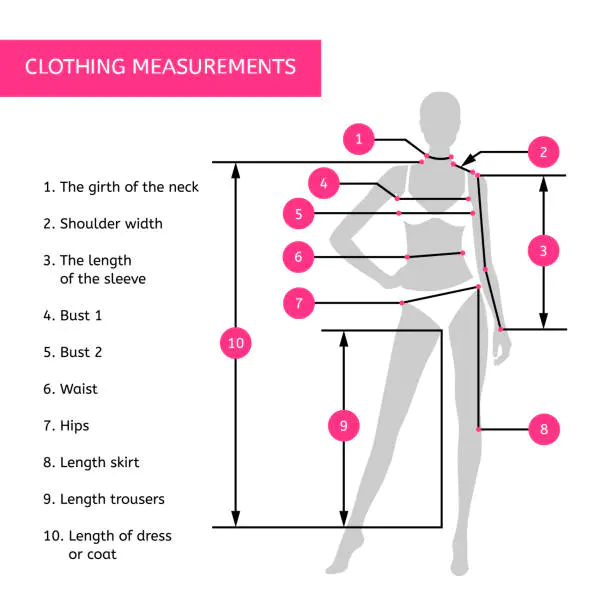
For pants, measure your inseam from the crotch seam to your ankle bone on a pair of pants that fit you well. For shoes, stand barefoot on a piece of paper, trace your foot, and measure from the heel to the tip of your longest toe in centimeters. Also measure the widest part of your foot across the ball. These two numbers — foot length and foot width — are your best friends when shopping Chinese shoe brands.
When you look at a Chinese clothing size chart online or in a store, skip the S, M, L, XL labels. Go straight to the column that lists garment dimensions. Compare your body numbers to the listed measurements. Add a small allowance for ease — half an inch to an inch depending on how lose you want the fit. Read reviews from other Western buyers. Look for comments about whether something runs small, large, or true to the listed measurements, and watch for specific warnings about narrow shoulders or short hems. This combination — your own measurements plus a brand’s chart plus reviews from people with your build — is the closest thing to a guarantee you’ll find.
Conclusion
Anyway, size only means whether the cloth fits you or not. The gap between Asian sizing to American sizing is not a problem you solve once and then forget. Every time you shop a Chinese brand, just check the size chart, and ignore the letter on the label. Your body measurements in centimeters will tell you more than any S, M, L, or XL ever could.
The sizing systems on either side of the Pacific were built for different populations with different average frames and different ideas about how a garment should sit on the body. Accepting that fact removes the emotional charge from seeing a 3XL tag. It’s not a comment on you. It’s just a number from a chart that wasn’t designed with you in mind.