
Learn about the hotel management profession in China’s top five-star international hotels: how global brands (Marriott, Hilton) drive demand, what skills (multilingual, data analysis) matter most, why international talents stand out, and where this profession is heading—your guide to the sector’s opportunities.
Introduction: The Rise of China’s Hotel Industry and the Core Role of the Hotel Management Profession
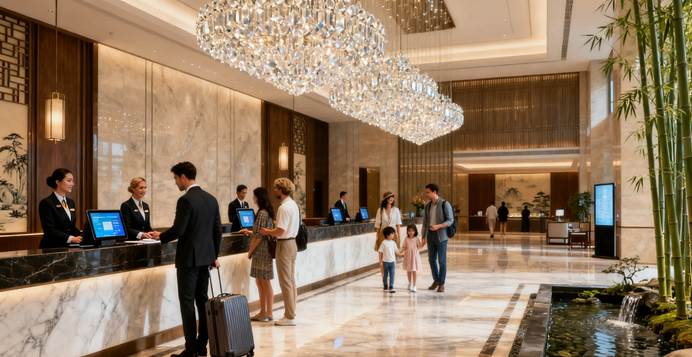
In recent years, China’s hotel industry has witnessed unprecedented development opportunities, especially in the field of five-star international chain hotels. Driven by consumption upgrading, the recovery of inbound tourism, and the accelerated expansion of global brands, this sector has become a core force promoting the high-quality development of the hotel industry. Throughout this process, the hotel management profession plays a crucial role—it is not only a bridge connecting hotel operations, customer service, and brand value but also the key to determining whether five-star international chain hotels can stand out in the fierce market competition. From daily hotel room management and catering service coordination to the implementation of brand standards, cross-departmental team collaboration, and the enhancement of customer satisfaction and market reputation, every link relies on professional hotel management professionals. Today, the demand of China’s five-star international chain hotels for hotel management professionals no longer limits to basic operational capabilities; it is evolving toward internationalization, digitalization, and professionalism. In particular, there is an unprecedented eagerness for hotel management professionals with an international perspective and cross-cultural management experience.
Current Development of the Hotel Management Profession in China and the Layout of Five-Star International Chain Hotels
Expansion of International Chain Hotel Brands in China and Growing Demand for Hotel Management Professionals
Globally renowned five-star hotel brands such as Marriott, Hilton, InterContinental, and Hyatt have significantly accelerated their expansion in the Chinese market over the past five years. Take Marriott International as an example: by 2024, the number of its five-star and luxury brand hotels (such as The Ritz-Carlton and JW Marriott) already in operation in China has exceeded 200, representing a nearly 40% increase compared to 2019. The company plans to open an additional 50 five-star hotels in China over the next three years, covering core cities like Beijing, Shanghai, Guangzhou, Chengdu, and Hangzhou, as well as popular tourist destinations such as Sanya and Lijiang. Each newly opened five-star international chain hotel requires a complete hotel management team—positions ranging from Hotel General Manager and Resident Manager to Director of Operations, Director of Rooms, Director of Food and Beverage, and Director of Sales and Marketing, all of which fall under the core scope of the hotel management profession. According to data from the China Tourist Hotels Association, the annual demand for hotel management professionals in China’s five-star international chain hotels reached over 50,000 between 2023 and 2024. Among these, the talent gap for mid-to-senior management positions requiring international hotel management experience accounted for 35%. This gap has directly driven up the salary levels in the hotel management profession; the annual salary for Director of Operations positions in some international chain hotels has exceeded 800,000 RMB, which is 20%-30% higher than that in domestic five-star hotels.
Impact of Consumption Upgrading in China’s Five-Star Hotel Market on the Hotel Management Profession
With the increase in Chinese residents’ disposable income and the shift in consumption concepts, high-end hotel consumption is no longer limited to business travel. Demand for scenarios such as leisure vacations, family travel, and high-end weddings continues to grow. Consumers also have increasingly higher requirements for the service quality, personalized experiences, and brand culture of five-star hotels. For instance, international tourists pay more attention to multilingual services (English, Japanese, Korean, etc.) and international catering standards (such as halal food certification and gluten-free meal options), while domestic high-end consumers value the integration of localization and internationalization (e.g., Chinese-style tea breaks and traditional cultural experience activities in hotels). These changes in demand pose new challenges to the capabilities of hotel management professionals: in addition to mastering traditional hotel operational processes (such as operating room reservation systems and controlling catering costs), hotel management professionals must also possess the ability to identify customer needs, cross-cultural service awareness, and the ability to design innovative services. Take Hampton by Hilton (China) as an example: its “localization upgrade service” launched for the Chinese market requires the hotel management team to adjust room arrangements, catering menus, and event planning in line with local cultural characteristics. In this process, hotel management professionals with international brand operation experience and an understanding of the Chinese market have become the core force driving service upgrades.
Core Competency Requirements for the Hotel Management Profession in Five-Star International Chain Hotels
Professional Operational Capabilities: The Fundamental Pillar of the Hotel Management Profession
Professional operational capabilities are the core foundation of the hotel management profession and the primary criterion for five-star international chain hotels to select talents. This capability covers the coordinated management of various hotel departments: in terms of room management, hotel management professionals need to be familiar with room cleaning standards (such as the “white-glove inspection” process commonly used in international chain hotels), room equipment maintenance (e.g., troubleshooting intelligent room control systems), and room inventory management (such as the replenishment cycle of linens and toiletries); in catering management, they must master menu design (combining seasonal factors and customer group needs), food procurement and cost control (such as food traceability requirements for international supply chains), and catering service standards (e.g., Western dining etiquette and Chinese dining table arrangement); in front desk operations, they need to be proficient in hotel reservation systems (such as the internationally used Opera PMS system), optimize customer check-in/check-out processes, and handle customer complaints (following the “first-responsibility system” and brand complaint resolution standards). Take InterContinental Hotels Group’s “InterContinental Operating Standards (IOC)” as an example: it has more than 200 detailed indicators for the operational capabilities of hotel management professionals, with clear regulations on everything from the time required for room preparation to the response speed of catering services. Only hotel management professionals who are proficient in these standards can ensure the efficiency and stability of hotel operations.
Cross-Cultural Communication Skills: A Special Requirement for the Hotel Management Profession in International Chain Hotels
The customer base of five-star international chain hotels is distinctly international. According to data from Marriott International China, the proportion of international guests in its five-star hotels averages 30%, and in hotels located in first-tier cities like Shanghai and Beijing, this proportion even exceeds 50%. At the same time, hotel employees may also come from different countries and regions (such as foreign chefs and international trainers). Therefore, cross-cultural communication skills have become an essential competency for hotel management professionals. Specifically, hotel management professionals need to be able to communicate fluently in English (or other commonly used foreign languages) in daily work, understand the needs and behavioral habits of customers from different cultural backgrounds (e.g., Western customers value privacy more, while East Asian customers pay more attention to etiquette details), and coordinate work collaboration among employees of different nationalities to avoid service errors or team conflicts caused by cultural differences.
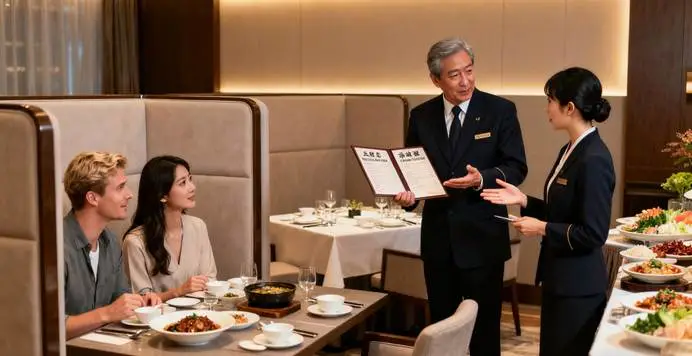
For example, when handling complaints from international customers, hotel management professionals must adhere to the hotel’s service principles while respecting the customers’ cultural customs and resolve conflicts through flexible communication methods; when managing foreign employees, they need to understand their work habits and incentive methods (e.g., Western employees value recognition of personal values and require frequent positive feedback) to enhance team cohesion. Such cross-cultural communication skills often require hotel management professionals to have overseas life or work experience or receive systematic cross-cultural management training, which is an important reason why international talents have an advantage in the hotel management profession.
Digital and Data Analysis Capabilities: Essential Skills for the Hotel Management Profession in the New Era
With the in-depth application of digital technology in the hotel industry, five-star international chain hotels have generally introduced tools such as AI intelligent customer service, intelligent room control systems, and big data customer analysis platforms. This has made digital and data analysis capabilities a new requirement for the hotel management profession. Hotel management professionals need to be able to operate the global digital systems of international chain hotels (such as Marriott’s “Marriott Bonvoy” membership system and Hilton’s “Digital Key” system), understand customer preferences through data analysis (e.g., customers’ check-in times, room type choices, and catering consumption habits), and optimize service strategies accordingly (such as providing personalized welcome gifts for frequent guests and adjusting catering promotion activities based on customer consumption data). At the same time, they must also use data to monitor hotel operational efficiency (such as room occupancy rates, catering table turnover rates, and the proportion of labor costs) and promptly identify problems and propose improvement plans. For example, Hyatt Hotels Corporation provides customer behavior analysis reports to the hotel management teams of its hotels in China through its global data center. Hotel management professionals can adjust room pricing strategies based on these reports—launching “family packages” for family customer groups during peak tourism seasons and “long-stay discounts” for corporate customers during peak business seasons. In this process, hotel management professionals with data analysis capabilities can more accurately grasp market demand and improve the hotel’s revenue and customer satisfaction.

Talent Gap in China’s Hotel Management Profession: Why There Is an Urgent Need for International Talents
Disconnection Between Domestic Hotel Management Education and International Practice
Although more than 200 universities in China offer hotel management programs and train over 100,000 graduates in hotel management-related majors each year, there is still a significant gap in hotel management professionals who meet the requirements of five-star international chain hotels. The core reason for this gap is the disconnection between domestic hotel management education and international practice. Hotel management programs in domestic universities focus more on theoretical knowledge (such as hotel management principles and tourism economics), with relatively weak practical teaching links and a lack of in-depth cooperation with international chain hotel brands. As a result, students have little access to the operational standards, management systems, and service processes of international hotels on campus, and require 1-2 years of training after graduation to be competent for basic management positions. In contrast, international talents (such as those with degrees from overseas hotel management institutions or work experience in international hotels) become familiar with the brand standards (e.g., Marriott’s “Service Standards” and InterContinental’s “IOC”), management tools (such as Opera PMS and hotel revenue management systems), and work models of international chain hotels during their studies or work. They can quickly adapt to the work pace of five-star international chain hotels and reduce the company’s training costs. For example, the Director of Human Resources of an InterContinental Hotel in China stated that the average adaptation period for hotel management professionals recruited from overseas is 1 month, while that for graduates from domestic universities is more than 3 months. This gap makes international talents an important choice for five-star international chain hotels to fill their talent shortages.
Challenges Faced by the Hotel Management Profession in Serving International Customers Amidst the Recovery of Inbound Tourism
Since 2023, China’s inbound tourism market has gradually recovered. According to data from the Ministry of Culture and Tourism of China, the number of inbound overnight tourists received by China in the first half of 2024 has recovered to 85% of the 2019 level, with a significant increase in the proportion of high-end tourists from Europe, America, Japan, South Korea, and Southeast Asia. These international customers have higher international requirements for the services of five-star hotels. For instance, European and American tourists pay more attention to hotels’ sustainable development initiatives (such as energy conservation, emission reduction, and the use of environmentally friendly materials) and accessible facilities (e.g., wheelchair ramps and braille signs), while Japanese and Korean tourists have strict requirements for room hygiene standards and the refinement of catering services. However, some domestic hotel management professionals lack experience in serving international customers, often resulting in inadequacies when meeting these requirements: for example, they are not familiar with internationally recognized sustainable development certification standards (such as LEED green building certification and ISO 14001 environmental management system) and cannot clearly introduce the hotel’s environmental initiatives to customers; or they do not understand the dietary taboos of Japanese and Korean customers, leading to service errors. In contrast, talents with international hotel management experience have long served international customers, enabling them to accurately grasp the needs of customers from different countries and provide more professional and thoughtful services. This is another important reason why five-star international chain hotels urgently need international talents.
Requirements for International Experience in the Hotel Management Profession to Implement Global Brand Standards
One of the core competencies of five-star international chain hotels lies in their globally unified brand standards—whether it is service processes, hardware facilities, or brand culture communication, they must strictly comply with the regulations of the headquarters to ensure consistent experiences for customers worldwide. However, these brand standards are often developed in international markets, and when implemented in the Chinese market, the hotel management team needs to make flexible adjustments based on local realities. They must ensure that the standards are not compromised while adapting to the habits and needs of Chinese consumers. This process places high demands on the international experience of hotel management professionals. For example, Marriott International’s “Ritz-Carlton Service Standards” emphasize “personalization and exclusivity.” In European and American markets, this standard is implemented through methods such as “remembering customers’ names and preferences” and “providing customized itinerary recommendations”; in the Chinese market, the hotel management team needs to adjust it to more localized service forms, such as “remembering customers’ tea preferences” and “recommending local cultural experience activities.” Hotel management professionals with international experience understand the core logic of brand standards and international implementation cases, allowing them to more accurately grasp the extent of standard adjustments and avoid problems such as “loss of brand tone due to excessive localization” or “customer discomfort due to rigidly copying international standards.” In addition, the hotel management teams of international chain hotels also need to communicate and collaborate regularly with the global headquarters and hotels in other countries (such as participating in global marketing activities and sharing customer data). Talents with international experience can communicate more smoothly across countries and departments, ensuring the efficient implementation of brand strategies.
Competitive Advantages of International Talents in the Hotel Management Profession of Five-Star Chain Hotels
Promotion of Overseas Hotel Management Experience to Career Advancement
In the career advancement system of five-star international chain hotels, overseas hotel management experience is an important bonus and even a prerequisite for mid-to-senior management positions. This is because hotel management professionals with overseas experience are not only familiar with the operational models and brand standards of international hotels but also possess the ability to cope with complex market environments. For example, talents who have worked in European and American markets have experienced fierce competition in mature markets and mastered methods for refined operations (such as cost-effective labor allocation and efficient space utilization) and innovative services (e.g., experiential catering and immersive room design); talents who have worked in Southeast Asian markets understand the characteristics of cross-border tourism customers and can better connect tourism market resources between China and Southeast Asia. These experiences enable them to propose more innovative strategies in the management of domestic hotels and drive improvements in hotel performance. Take the General Manager of a Marriott hotel in China as an example: he once served as an Operations Manager at Marriott’s U.S. headquarters, where he became familiar with the development and implementation processes of global brand strategies. After taking office, he combined the “customer loyalty improvement program” from the U.S. market with the “membership system” in the Chinese market and launched “Exclusive Benefits for Marriott Bonvoy Chinese Members,” which increased the hotel’s member repurchase rate by 25% within one year and earned him the title of “Manager of the Year” from the group. Such career development cases demonstrate that overseas hotel management experience can provide strong impetus for the career advancement of hotel management professionals, making them the core talents sought after by five-star international chain hotels.
Service Advantages Brought by Multilingual Skills to the Hotel Management Profession
Multilingual skills are another major advantage of international talents in the hotel management profession. The customers of five-star international chain hotels come from all over the world, and the demand for languages other than English—such as Japanese, Korean, French, and Spanish—is growing. For example, in five-star hotels in Sanya, a large number of Russian tourists check in every winter, and Russian language service capabilities have become an important factor affecting customer satisfaction; in business-oriented five-star hotels in Shanghai, there are many corporate customers from Germany and France, and German and French services can significantly improve the convenience of business cooperation. Hotel management professionals with multilingual skills can communicate directly with international customers, avoiding service misunderstandings caused by language barriers and enhancing customers’ sense of experience and trust. In addition, multilingual skills also help the hotel management team communicate better with the international headquarters and foreign employees. For instance, when a hotel needs to report the operational data of the Chinese market to the headquarters, bilingual talents can accurately translate data reports to ensure the accuracy of information transmission; when managing a team of foreign chefs, they can communicate directly about the needs of dish development, improving work efficiency. The Director of Food and Beverage at a Hilton hotel is an international talent proficient in English and Japanese. Not only can he directly receive high-end Japanese customers, but he has also established cooperative relationships with Japanese catering suppliers, introduced authentic Japanese ingredients, and launched a “Japanese Kaiseki Cuisine Experience Day” event. This has attracted a large number of Japanese tourists and local high-end customers, increasing the hotel’s catering revenue by 30%.
Support of International Perspective for the Hotel Management Profession in Responding to Global Market Changes
Currently, the global hotel industry is facing numerous changes: sustainable development has become an industry consensus (such as reducing disposable plastic products and promoting green energy), digital technology continues to innovate (e.g., metaverse hotel experiences and AI intelligent service robots), and consumer demand is becoming more personalized (such as niche themed hotels and customized travel packages). Hotel management professionals with an international perspective can more keenly capture these global trends and transform them into development opportunities for domestic hotels. For example, in the field of sustainable development, international talents are familiar with the environmental standards and practical cases of the global hotel industry (such as the “zero-waste” operation model of European hotels and the “renewable energy utilization program” of American hotels), enabling them to help domestic hotels promote sustainable development more efficiently. Take the Director of Operations of an InterContinental Hotel as an example: he once worked in the UK and introduced the “carbon footprint tracking system” used by British hotels. Through this system, he monitored the hotel’s energy consumption, water usage, and waste discharge data in real time and formulated an “energy conservation and emission reduction action plan” based on the data. This reduced the hotel’s carbon emissions by 20% within one year, and by promoting the hotel’s sustainable development initiatives, it also attracted a large number of corporate customers and high-end tourists who value environmental protection. In the field of digitalization, international talents understand cutting-edge cases of digital innovation in the global hotel industry (such as Marriott’s “virtual front desk” and Hyatt’s “AI itinerary planner”) and can promote the digital transformation of domestic hotels. The Director of Sales and Marketing at a Hyatt hotel, who is from the United States, led the introduction of an “AI customer portrait system.” By analyzing customers’ historical consumption data, the system recommends personalized services and products to customers, increasing the hotel’s cross-selling rate by 20%. These cases prove that an international perspective can help hotel management professionals stand at the height of global industry development and formulate more forward-looking strategies for the long-term development of hotels, which is a key reason why five-star international chain hotels value international talents.
Strategies for Five-Star International Chain Hotels to Attract International Talents and Development Support for the Hotel Management Profession
Customized Career Development Paths: International Chain Hotels’ Management Trainee Programs
To attract international talents to join the hotel management profession, five-star international chain hotels have launched customized career development paths, with the “International Management Trainee Program” being the most representative. Such programs usually cooperate with well-known overseas hotel management institutions (such as the Ecole hôtelière de Lausanne in Switzerland and the School of Hotel Administration at Cornell University in the United States) to select outstanding international graduates or talents with overseas work experience. Through a model of “job rotation + mentorship + global training,” these programs accelerate the growth of talents in the hotel management profession. Take Marriott International’s “Global Management Associate Program” as an example: selected international talents complete rotations in multiple departments (including rooms, food and beverage, sales and marketing, and finance) within 2 years. During each rotation phase, a hotel executive is assigned as a mentor to guide their work and career planning. At the same time, they also have the opportunity to participate in a 3-month overseas exchange training program at hotels in other regions of Marriott’s global network to learn hotel management experiences in different markets. After the program, outstanding management trainees are directly promoted to department managers, becoming the backbone of the middle management in the hotel management profession. This customized career development path not only provides international talents with a clear direction for advancement but also allows them to accumulate comprehensive hotel management experience in a short period, making it an important initiative to attract international talents to join the hotel management profession in China.
Cross-Border Training and Certification: Enhancing the International Competitiveness of the Hotel Management Profession
Five-star international chain hotels also help international talents enhance their competitiveness in the hotel management profession by providing cross-border training and international certifications. For example, InterContinental Hotels Group provides the “InterContinental Global Training Platform” for hotel management professionals in China. The platform offers more than 500 online courses covering hotel operations, customer service, leadership, and other fields. Some of these courses are taught by experts from InterContinental’s global headquarters, and participants can obtain internationally recognized training certificates upon completion. Hilton Hotels Corporation collaborates with the American Hotel & Lodging Educational Institute (AHLEI) to provide international certification training (such as Certified Hotel Manager (CHM) and Certified Restaurant Manager (CRM)) for hotel management professionals in China, helping them obtain professional qualifications recognized by the global hotel industry. These cross-border training programs and certifications not only improve the professional skills of international talents but also enhance their professional credentials in the hotel management profession. Talents with international certifications are more competitive in career advancement or job changes and may even have the opportunity to be transferred to work at international chain hotels in other parts of the world. For example, the Director of Rooms at a Hilton hotel obtained the “CHM certification” through the group’s training program and was later transferred to Hilton Singapore Hotel as the Director of Operations, achieving cross-border career development. This model of “training + certification + cross-border development” has greatly enhanced the attractiveness of the hotel management profession in China to international talents.
Compensation and Benefits & Cultural Integration: Keys to Retaining International Hotel Management Talents
To retain international hotel management talents, five-star international chain hotels have also taken a series of measures in terms of compensation and benefits and cultural integration. In terms of compensation, the salaries of international talents are usually 20%-30% higher than those of domestic talents in the same positions. They also enjoy a globally unified welfare system, including supplementary commercial insurance, paid annual leave (usually 15-20 days), and global hotel employee discounts (allowing discounted stays at international chain hotel properties worldwide). Some hotels also provide housing subsidies and children’s education subsidies (such as reimbursement of international school tuition fees) for international talents to address their concerns about living in China. In terms of cultural integration, hotels regularly organize cross-cultural exchange activities, such as “International Cultural Festivals” and “Chinese Traditional Festival Experiences,” to help international talents understand Chinese culture and integrate into local life. At the same time, hotels also establish “International Talent Support Groups,” where senior Chinese employees provide life guidance (such as housing rental, medical care, and transportation) for international talents to help them quickly adapt to the living environment in China. For example, a Marriott hotel organized a “Chinese Tea Culture Experience Day” for international talents, inviting professional tea artists to explain Chinese tea knowledge and guide them in making and tasting tea. The hotel also assigned “life mentors” to international talents to help them apply for bank cards, mobile phone cards, and familiarize themselves with surrounding living facilities. These measures not only make international talents feel the hotel’s care but also enable them to better integrate into Chinese society, thereby developing more stably in the hotel management profession.
Future Trends of the Hotel Management Profession in China: Internationalized Digital Transformation
Application of AI and Intelligent Systems in the Hotel Management Profession and the Adaptability of International Talents
In the future, AI and intelligent systems will become core tools in the hotel management profession, and international talents have a natural adaptability in this field. On the one hand, the global intelligent systems of international chain hotels (such as Marriott’s “Marriott Digital Platform” and InterContinental’s “InterContinental Intelligent Hub”) are mostly developed by overseas teams. Hotel management professionals with international experience are more familiar with the operational logic and functional characteristics of these systems, enabling them to master the use of the systems more quickly and guide domestic teams in their operation.
On the other hand, international talents understand cutting-edge cases of AI application in the global hotel industry (such as AI intelligent customer service robots and AI room cleaning inspection systems) and can promote the innovative application of AI technology in the hotel management profession in line with the needs of the Chinese market. For example, the IT Director of a Hyatt hotel, who is from the United States, is familiar with Hyatt’s global AI customer service system. When promoting the system in China, he integrated the AI customer service into the WeChat official account based on the preference of Chinese customers for using WeChat, realizing “24/7 response from WeChat AI customer service.” This increased the resolution rate of customer inquiries by 40% while reducing the workload of the front desk. With the continuous development of AI technology, hotel management professionals with an international background will play an even more important role in promoting the digital transformation of the hotel management profession in China.
New Requirements for the Hotel Management Profession Under the Global Hotel Industry’s Sustainable Development Strategy
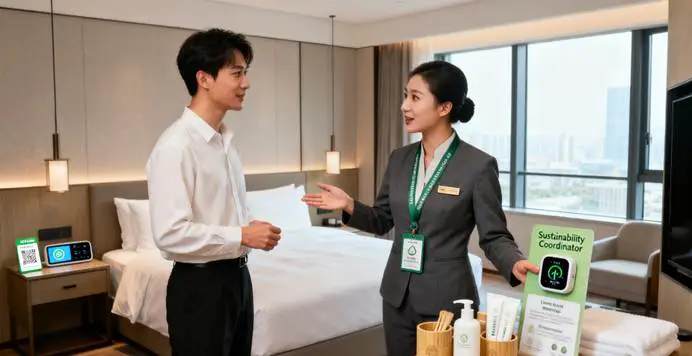
Sustainable development has become a core strategy of the global hotel industry, and international chain hotels have formulated clear sustainable development goals (such as Marriott’s plan to achieve global operational carbon neutrality by 2050 and Hilton’s plan to reduce carbon emissions by 50% by 2030). Against this strategic background, hotel management professionals need to possess sustainable development management capabilities, such as formulating hotel environmental protection plans, monitoring energy consumption and carbon emission data, and promoting green services (e.g., encouraging customers to reduce the frequency of linen changes and using biodegradable toiletries). Hotel management professionals with international experience are familiar with the sustainable development standards and practical cases of the global hotel industry (such as the “zero-waste” operation model of European hotels and the “renewable energy utilization program” of American hotels), enabling them to help Chinese hotels promote sustainable development more efficiently. For example, the Sustainable Development Manager of an InterContinental Hotel, who once worked in the UK, introduced the “carbon footprint tracking system” used by British hotels. Through this system, he monitored the hotel’s energy consumption, water usage, and waste discharge data in real time and formulated an “energy conservation and emission reduction action plan” based on the data. This reduced the hotel’s carbon emissions by 20% within one year, and by promoting the hotel’s sustainable development initiatives, it also attracted a large number of corporate customers and high-end tourists who value environmental protection. In the future, with the in-depth advancement of the global sustainable development strategy, hotel management professionals with international sustainable development management experience will become highly sought-after talents in China’s five-star international chain hotels.
Conclusion: Joining Hands with International Talents to Build a Brilliant Future for the Hotel Management Profession in China’s Five-Star International Chain Hotels
The development of China’s five-star international chain hotels is in a critical stage of transitioning from “scale expansion” to “quality improvement.” As the core support for the development of the industry, the quality of talents in the hotel management profession directly determines the competitiveness of the hotel industry. Currently, the hotel management profession in China faces challenges such as the disconnection between domestic talents and international practice, insufficient capabilities in serving international customers, and difficulties in implementing global brand standards. These challenges make international talents with an international perspective, international experience, and cross-cultural capabilities the core resources urgently needed by five-star international chain hotels. International talents can not only bring professional operational capabilities, multilingual service advantages, and global market insight to the hotel management profession but also promote the integration of China’s hotel management profession with international standards, supporting the industry’s digital transformation and sustainable development.
To attract and retain international talents, five-star international chain hotels have provided solid support for the development of international talents in the hotel management profession through customized career development paths, cross-border training and certification, and comprehensive compensation and benefits as well as cultural integration measures. In the future, with the further recovery of China’s inbound tourism market and the in-depth advancement of the global hotel industry’s digitalization and sustainable development strategies, the demand for international talents in China’s hotel management profession will continue to grow, and at the same time, it will provide broader career development space for international talents.
We firmly believe that through the cooperation between international talents and domestic hotel management professionals in China, China’s five-star international chain hotels will be able to establish a higher brand image in the global hotel industry, promote the hotel management profession in China to a new level of internationalization, professionalism, and high-quality development, and contribute Chinese strength to the development of the global hotel industry.