
Comprehensive step-by-step guide on how to find a job and legally work in China in 2025. Learn about visa procedures (Z-Visa), in-demand skills, contract negotiation, and cultural adaptation for foreign professionals.
For ambitious professionals around the globe, the prospect of finding a job and working in China remains immensely attractive. As the world’s second-largest economy, China offers an unparalleled platform to engage with cutting-edge technology, a massive market, and a rapidly evolving business landscape. However, successfully securing a desirable position and relocating for work in China requires a carefully orchestrated, methodical plan. This comprehensive guide is designed to be your ultimate roadmap for navigating the journey to working in China in 2025, breaking down the process from preparation to settling in.

Introduction: Why Consider Working in China in 2025?
Before diving into the “how,” it’s crucial to understand the “why.” Despite shifts in the global landscape, China’s position as an economic powerhouse is secure. Choosing to pursue a career and work in China in 2025 means you will:
- Gain Exposure to Leading-Edge Industries: China is a global leader in sectors like artificial intelligence, fintech, renewable energy, biotechnology, and electric vehicles. Finding a job and working in China within these fields places you at the forefront of innovation.
- Receive Competitive Compensation Packages: Many companies offer attractive remuneration packages for expatriates, often including housing allowances, transportation subsidies, international school tuition for children, and annual flight home, making working in China financially rewarding.
- Experience Unparalleled Career Growth: The scale and complexity of the Chinese market provide a fantastic training ground. The experience gained here will be a highlight on your resume, significantly boosting your long-term career value.
- Immerse Yourself in a Rich Culture: Living and working in China is a profound cultural immersion, offering daily learning opportunities from ancient historical sites to vibrant modern urban life.
However, obtaining a legal opportunity for work in China involves navigating bureaucratic hurdles and significant competition. This guide will break this complex process into actionable steps.
Step 1: Self-Assessment and Market Research (6-12 Months in Advance)
The critical first step, before you send out a single resume, is honest self-assessment and deep market research.
Qualifications and Skills Audit
Not every foreigner can easily find a job and work in China. The Chinese government prioritizes the intake of highly skilled talent. Ask yourself:
- Educational Background: Do you hold a Bachelor’s degree or higher? This is a mandatory requirement for most work visa applications.
- Relevant Work Experience: Do you have at least two years of professional experience relevant to your target role? This significantly increases your competitiveness.
- Specialized Skills: Do you possess skills that are in high demand within the Chinese market but short in local supply? Examples include high-end R&D, senior management, and specialized consulting.
- Language Ability: While there are many English-teaching and international company roles, basic Mandarin Chinese skills are a huge advantage, opening more doors for working in China, especially in non-tier-one cities.
Target Industry and City Research
China is vast, and job opportunities vary dramatically between cities and regions.
- Hot Industries for 2025: Focus on digital economy, green energy, life sciences, artificial intelligence, and high-end manufacturing. These are sectors supported by national strategy, offering more opportunities for work in China.
- Top City Choices:
- Shanghai: China’s financial and commercial hub, home to countless multinational headquarters, and the most international city.
- Beijing: The political and cultural center, ideal for technology, media, research, and government-related work in China.
- Shenzhen: China’s “Silicon Valley,” a hotbed for tech startups, hardware, and innovation.
- Guangzhou: A major trade and manufacturing powerhouse, home to the Canton Fair.
- Hangzhou/Chengdu: Emerging tech hubs (e.g., Alibaba in Hangzhou) with a lower cost of living and high quality of life.
Keywords: expats working in China, China job market, China work visa requirements, in-demand skills in China.

Step 2: Job Hunting and Networking
Once you have a direction, you can begin actively searching for opportunities.
Utilize Professional Job Platforms
- LinkedIn: This is the most active platform for recruiters and HR in China. Optimize your profile, clearly state “Seeking opportunities for working in China,” and proactively connect with recruiters from your target companies.
- Zhaopin and 51job: These are the two leading local recruitment websites. Even with a Chinese interface, it’s worth using translation tools to create a profile and browse positions. Many jobs for foreigners aiming to work in China are posted here.
- eChinacities: A platform specifically geared towards foreigners, offering job listings and life information.
Work with Recruiters (Headhunters)
Recruitment agencies specializing in placing foreign talent are an effective way to find high-quality opportunities for work in China. They understand the visa process and can match you with reputable employers.
Direct Applications and Networking
- Company Websites: Check the career pages of your target multinational corporations and large Chinese enterprises directly.
- Industry Events: Attend online or in-person industry conferences and seminars to network with Chinese peers.
- Alumni Network: Contact people from your university’s alumni association in China; they may provide valuable internal referrals.
Step 3: Understanding and Obtaining the Chinese Work Visa (Z-Visa)
This is the most critical and complex part of the process. China’s visa policies have become more systematic since 2020. You need to obtain a work-type residence permit, and the first step is to apply for a Z-Visa to enter the country.
Types of Visas
- Z-Visa (Work Visa): This is the entry visa issued to those who have been employed by a Chinese entity for the purpose of applying for a work-type residence permit after entry.
- R-Visa (Talent Visa): Issued to high-level talents urgently needed by the country. The eligibility bar is very high, but the process is streamlined.
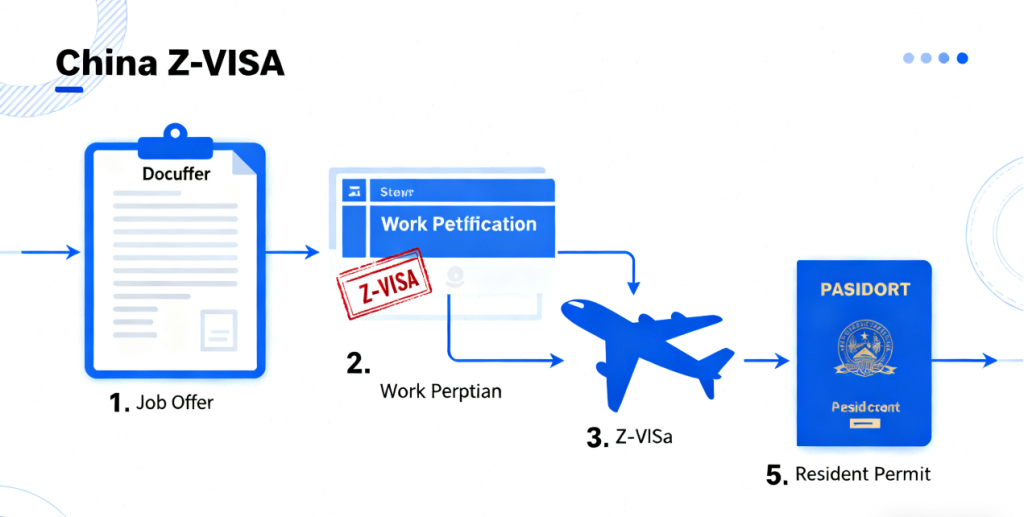
For most people, the path is: Receive a job offer -> Employer applies for the Work Permit Notification -> You use the notification to apply for a Z-Visa at a Chinese embassy/consulate in your home country -> Enter China -> Convert the Z-Visa into a 1-2 year Work-type Residence Permit within 30 days of arrival.
The Employer’s Crucial Role
Your employer is the main driver of the visa process. They must:
- Prove that the position cannot be filled by a local candidate.
- Apply for your Foreigner’s Work Permit with the local State Administration of Foreign Experts Affairs (SAFEA) or science and technology bureau (names may vary by city).
- Obtain the Work Permit Notification and send it to you.
Documents You Need to Prepare
- Passport: Valid for at least another 6 months with blank visa pages.
- Visa Application Form and Photo.
- Original Work Permit Notification.
- Health Examination Certificate: Usually from a designated medical institution in your home country.
- Criminal Record Check (Non-Criminal Certificate): Requires notarization and authentication.
- Academic and Professional Qualification Certificates: Also require notarization and authentication.
Keywords: China Z-Visa, Foreigner’s Work Permit, Work Permit Notification, China Residence Permit, work visa process.
Step 4: Negotiating Your Chinese Work Contract
Once you receive a job offer, scrutinizing the contract terms is essential. A high-quality contract for working in China should include:
- Salary Structure: Clearly defined base salary, performance bonus, year-end bonus, etc. Clarify if the salary is quoted before or after tax.
- Benefits Package: This is the core of an expat package. Ensure it includes:
- Housing Allowance: Or company-provided accommodation.
- Round-trip Airfare: Typically for you and your family, 1-2 times per year.
- International School Tuition Subsidy: If you have accompanying children.
- Health Insurance: Ensure it is a comprehensive plan covering private and international hospitals.
- Transportation and Meal Allowances.
- Contract Term and Probation Period: Standard contract periods are 1-3 years. The probation period is usually 1-3 months.
- Termination Clauses: Clearly state the conditions under which either party can terminate the contract, along with the required notice period and compensation.
- Responsibilities and Title: Ensure the job description in the contract matches what was discussed during interviews.
It is advisable to consult with a lawyer familiar with Chinese labor law before signing, if necessary.
Step 5: Arrival in China and Settling In
After successfully obtaining your Z-Visa and entering China, your journey to working in China is just beginning. The top priorities are completing legal formalities and settling down.
Legal Formalities
- Temporary Residence Registration: Within 24 hours of arrival, you must register at the local police station (Pai Chu Suo) with your passport and rental contract.
- Health Check (Again): You will likely need to undergo a supplementary health check at a designated hospital in China.
- Apply for the Work-type Residence Permit: Within 30 days of entry, you must go to the local Exit-Entry Administration Bureau to apply for the formal residence permit, presenting your Z-Visa, Work Permit Notification, health check report, and other documents.
Setting Up Your Life

- Open a Bank Account: You will need a local bank card for payments and receiving your salary.
- Get a Local SIM Card: This is a prerequisite for registering all local apps (like WeChat and Alipay).
- Download Essential Apps:
- WeChat: The all-in-one app for communication, payments, shopping, and life.
- Alipay: The primary mobile payment platform.
- Didi Chuxing: The Chinese ride-hailing app.
- Meituan/Ele.me: For food delivery and local services.
- Find Housing: Use platforms like Lianjia or Ziroom to find an apartment, often with the help of an agent.
Step 6: Succeeding in the Chinese Workplace and Cultural Integration
Securing a job is one thing; thriving in your new role and life while working in China is another.
- Understand Business Culture: Hierarchical relationships, building trust (guanxi), saving face, and building consensus before decisions are key concepts.
- Learn Basic Mandarin: Even learning a few words a day can dramatically improve your daily life and relationships with colleagues.
- Practice Patience and Keep an Open Mind: You will experience culture shock and frustration. View it as part of the growth process and adapt positively.
- Build Your Professional Network: Attend industry events and use platforms like Meetup to connect with other expats and local professionals.
Potential Challenges and Considerations for 2025
- Increased Competition: The quality of local Chinese talent is rising rapidly, meaning you must justify your position with unique skills and value.
- Political and Regulatory Environment: Stay informed about regulatory changes relevant to your industry.
- Digital Environment: Familiarize yourself with the Chinese internet ecosystem (Baidu, Weibo, etc.), as opposed to Google, Facebook, etc.
Conclusion
Finding and successfully securing a position for working in China in 2025 is a significant undertaking that requires strategic planning, patience, and meticulous execution. From assessing your skills and navigating the complex visa process to finally integrating culturally and professionally, each step is crucial. While challenges exist, the rewards for prepared professionals are immense—be it in career advancement, financial gain, or personal growth. By following this step-by-step guide, you can dramatically increase your chances of realizing your dream to work in China and launching a new chapter in one of the world’s most dynamic economies.
Remember, the key to successfully finding a job and working in China lies in planning ahead, choosing the right employer, and maintaining an open mind toward new experiences. Good luck with your journey to working in China in 2025!