
Explore in-demand career paths for foreign engineers in China’s booming NEV and high-end manufacturing sectors. Learn about opportunities, challenges, and success stories for foreign engineers seeking growth.

Introduction: China’s Rise as a Global Technology and Manufacturing Hub
China has transformed from the “world’s factory” into a hub for technological innovation, particularly in the fields of New Energy Vehicles (NEVs) and high-end manufacturing. This shift has generated immense demand for international talent, with foreign engineers playing a crucial role. Driven by national strategies like “Made in China 2025,” China is actively attracting global technical experts to fuel industrial upgrading. This article provides an in-depth exploration of the career development paths for foreign engineers within China’s NEV and high-end manufacturing sectors, analyzing opportunities, challenges, and future trends. For foreign engineers, understanding the dynamics of these industries is vital, as they offer not only professional growth but also the chance to contribute to global sustainable development. The scale of the Chinese market, coupled with policy support and an innovative ecosystem, provides a unique platform for foreign engineers. From R&D to management, foreign engineers can engage in all segments of the value chain, shaping their personal careers while contributing to China’s technological leap. This article will dissect this journey, offering a practical guide for foreign engineers aspiring to build their future in China.
Overview of China’s New Energy Vehicle Sector – Opportunities and Innovation
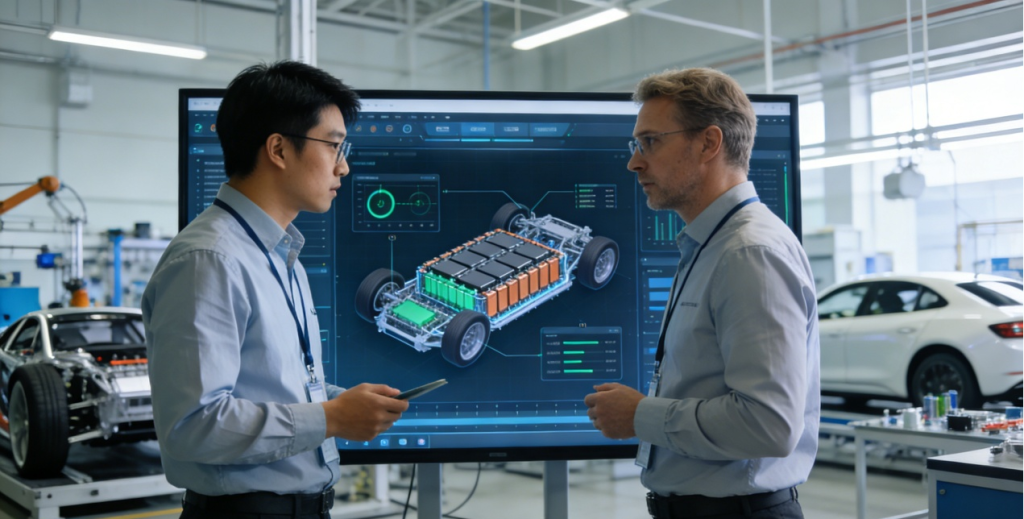
The New Energy Vehicle (NEV) industry in China has experienced explosive growth, positioning the country as the global leader in the electric vehicle market. Industry data shows China accounts for over half of worldwide EV sales, fueled by government subsidies, infrastructure investment, and environmental initiatives. NEVs encompass battery electric vehicles (BEVs), plug-in hybrid electric vehicles (PHEVs), and fuel cell vehicles, with companies like BYD, NIO, XPeng, and Tesla China at the forefront. This expansion drives demand for high-end technical talent, where foreign engineers are highly sought after for their international experience and specialized knowledge. Foreign engineers play significant roles in battery technology, motor control systems, autonomous driving algorithms, and charging infrastructure. In battery R&D, for instance, foreign engineers bring advanced materials science expertise to enhance energy density and safety. Furthermore, Chinese NEV policies, such as the “dual-credit” system, encourage corporate innovation, creating more positions for foreign engineers. In this sector, foreign engineers are involved not only in technical development but also in project management, quality control, and standard setting. With the rise of intelligent connected vehicles (ICVs), the skills of foreign engineers in software-defined vehicles and AI integration are particularly valuable. In summary, China’s NEV industry offers a vast stage for foreign engineers, with opportunities ranging from startups to multinational giants.
Overview of China’s High-End Manufacturing Sector – Transformation in Technology-Intensive Fields
High-end manufacturing is central to China’s economic upgrade, covering high-tech fields like aerospace, robotics, semiconductors, precision instruments, and biotechnology. Unlike labor-intensive manufacturing, high-end manufacturing emphasizes innovation, automation, and digitalization—key focuses of the “Made in China 2025” strategy. This transformation aims to position China as a global manufacturing powerhouse, reducing dependence on imported technology. Foreign engineers are indispensable in this process, bringing international best practices, advanced R&D methodologies, and cross-cultural perspectives.
Core Areas for Foreign Engineers
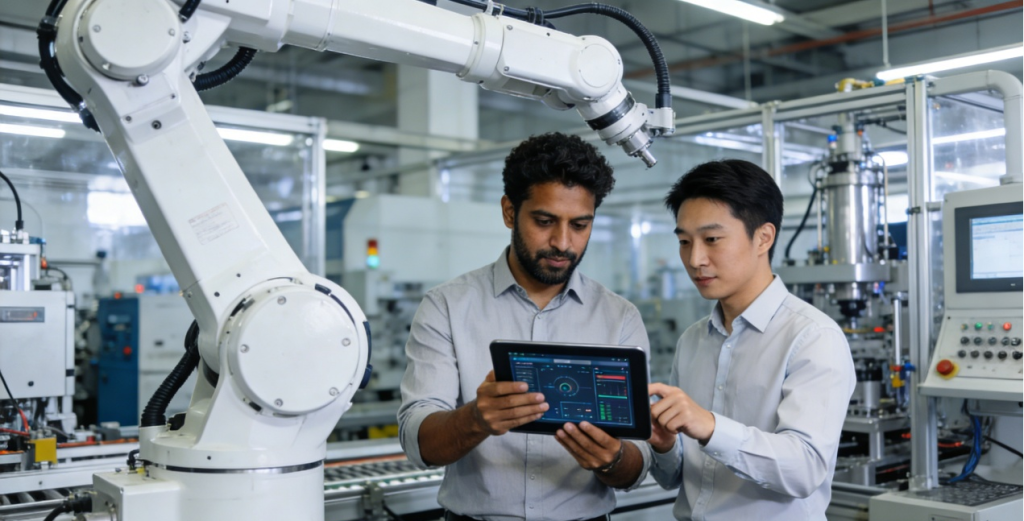
In high-end manufacturing, foreign engineers are commonly found in roles such as design engineering, smart manufacturing, supply chain optimization, and sustainable production. For example, in industrial robotics, foreign engineers help develop adaptive control systems; in the semiconductor industry, they participate in chip design and manufacturing process optimization.
Government Support and Work Environment
The Chinese government’s support for high-end manufacturing includes tax incentives, R&D funding, and talent recruitment programs, creating a favorable environment for foreign engineers. The career development of foreign engineers in this sector often involves multidisciplinary collaboration with local teams to solve complex technical challenges. With the advancement of Industry 4.0, the experience of foreign engineers in applying IoT, big data analytics, and digital twin technology is in high demand. For foreign engineers, high-end manufacturing offers not only stable careers but also the chance to work on cutting-edge projects that drive global technological progress.
Opportunity Analysis for Foreign Engineers in China’s NEV and High-End Manufacturing Sectors
Foreign engineers face a wealth of opportunities in China’s NEV and high-end manufacturing sectors, with demand continuously growing.
In-Demand Roles and Employers
In the NEV field, hot positions include Battery Systems Engineer, Electric Powertrain Specialist, Autonomous Driving Software Engineer, and Charging Network Architect. Foreign engineers are typically hired by R&D centers, production plants, and consulting firms, bringing global standards and technological innovation. In high-end manufacturing, foreign engineers are in high demand for robotics integration, advanced materials development, smart manufacturing systems, and quality control.
Compensation and Benefits
Regarding compensation, foreign engineers in China often enjoy competitive salary packages, including housing allowances, education subsidies, and tax benefits, especially in first-tier cities like Shanghai, Beijing, Shenzhen, and Guangzhou. Surveys indicate that senior foreign engineers can earn annual salaries ranging from ¥500,000 to ¥1.5 million RMB, depending on experience and specialty. The work environment for foreign engineers in China is diverse, spanning local giants like Huawei and BYD, multinational corporations like Bosch and Siemens, and tech startups. These employers value the cross-cultural communication skills and international project experience of foreign engineers. In their careers, foreign engineers can also participate in policy formulation and industry standard development, enhancing their influence. As China pushes for technological self-sufficiency, foreign engineers play a key role in knowledge transfer and team training. Overall, opportunities for foreign engineers in China’s NEV and high-end manufacturing extend beyond technical roles to management, entrepreneurship, and consultancy, forming a diverse professional ecosystem.
Career Development Pathways for Foreign Engineers in NEV and High-End Manufacturing
The career development path for foreign engineers in China’s NEV and high-end manufacturing sectors can be systematically planned from entry to senior levels.
Entry-Level: Foundation and Entry Points
At the entry-level, foreign engineers typically need a relevant engineering degree (e.g., mechanical, electrical, or software engineering), industry certifications (e.g., PE license), and basic Chinese language skills. Common entry points into the Chinese market include international recruitment platforms, talent introduction programs, and professional networking. For example, foreign engineers can find positions via LinkedIn or local job sites like Zhaopin, or participate in government schemes like the “Foreign High-Level Talent Visa.”
Mid-Career: Skill Deepening and Advancement
Upon employment, foreign engineers should start as technical specialists, accumulating local experience and adapting to Chinese work culture. At the mid-career stage, foreign engineers should focus on skill deepening, such as learning about battery management systems for NEVs or automation protocols for high-end manufacturing. Obtaining certifications like Project Management Professional (PMP) or Six Sigma Black Belt can enhance competitiveness. At this stage, foreign engineers may advance to team lead or project manager roles, responsible for cross-departmental collaboration.
Senior-Level: Leadership and Entrepreneurship
At the senior level, foreign engineers can target executive positions like Technical Director, Chief Innovation Officer, or Plant Manager, or even start their own tech companies. Continuous learning is crucial; foreign engineers should attend industry conferences, online courses (e.g., modules on Chinese technology via Coursera), and professional associations (e.g., Society of Automotive Engineers of China). Career development for foreign engineers also benefits from mentorship and cross-cultural training. By collaborating with Chinese peers, foreign engineers can build long-term relationships and expand their professional network. In summary, the path for foreign engineers in China’s NEV and high-end manufacturing is progressive, combining technical expertise, cultural adaptation, and strategic planning for sustainable growth.
Challenges for Foreign Engineers in China and Coping Strategies
Despite abundant opportunities, foreign engineers in China’s NEV and high-end manufacturing sectors face challenges that require effective strategies.
Navigating Cultural and Language Barriers
Cultural differences are a primary hurdle, including communication styles, decision-making processes, and workplace etiquette. Foreign engineers may find the Chinese work environment more hierarchical and relationship-focused. It is advisable to study Chinese culture in advance, participate in cross-cultural training, and maintain an open mind. While language barriers are common, learning basic Chinese can significantly improve daily communication and work efficiency. Foreign engineers can use language apps like Duolingo or local classes and seek assistance from bilingual colleagues.
Managing Visa, Legal, and Family Logistics
Visa and legal matters are complex; foreign engineers need a Z work visa, which requires employer sponsorship and qualification proof. Long-term residence is possible through the “Chinese Green Card” (permanent residence permit), available to high-level talent. Foreign engineers should consult immigration lawyers and keep documents updated. Family relocation challenges include finding housing, international schools, and social integration. Choosing expatriate communities or using relocation services can ease the pressure.
Overcoming Professional and Technical Hurdles
Professionally, foreign engineers may encounter differences in technical standards or intellectual property issues. It is recommended to familiarize oneself with Chinese regulations and collaborate with legal advisors. Furthermore, foreign engineers need to adapt to rapidly changing industry dynamics, maintaining technical relevance through continuous education. Facing competition, foreign engineers should highlight unique skills, such as international project experience or innovative thinking. Mental health support is also important; foreign engineers can join expat communities to share experiences. In summary, through proactive planning and resource utilization, foreign engineers can overcome challenges and thrive in China’s NEV and high-end manufacturing sectors.
Success Stories – Case Studies of Foreign Engineers in China

Many foreign engineers have achieved remarkable success in China’s NEV and high-end manufacturing sectors, their stories offering valuable insights.
- Case Study 1: The Battery Technology Specialist
A German mechanical engineer specializing in battery technology joined BYD in 2018. As a foreign engineer, he led a team developing high-energy-density batteries, improving EV range. By adapting to Chinese team collaboration styles, he was promoted to Senior R&D Manager and participated in international standard setting. His success stemmed from technical expertise and cross-cultural adaptability, setting an example for other foreign engineers. - Case Study 2: The Autonomous Driving Algorithm Expert
An American software engineer, skilled in autonomous driving algorithms, was hired by NIO. As a foreign engineer, he introduced advanced perception systems, enhancing vehicle safety. By learning Chinese and engaging with the local tech community, he built an extensive network and now serves as a Chief Technology Consultant. - Case Study 3: The Robotics and Automation Engineer
A Japanese robotics engineer, working in China’s high-end manufacturing, designed industrial automation solutions for a Shenzhen-based company. As a foreign engineer, he integrated Japanese precision engineering with Chinese manufacturing efficiency, driving production line upgrades.
These cases demonstrate that the success of foreign engineers in China’s NEV and high-end manufacturing relies on technical contribution, cultural integration, and continuous learning. By embracing the local innovation ecosystem, these foreign engineers achieved career leaps and advanced their industries. These experiences encourage more foreign engineers to explore opportunities in China, combining global vision with local practice.
Future Trends – The Outlook for Foreign Engineers in China’s NEV and High-End Manufacturing
In the coming years, the prospects for foreign engineers in China’s NEV and high-end manufacturing will be even brighter, driven by technological and policy trends.
Technological Frontiers and Evolving Roles
In the NEV sector, trends like Intelligent Connected Vehicles (ICVs), Vehicle-to-Everything (V2X) communication, and hydrogen fuel cell technology will rise, increasing demand for foreign engineers in software development and systems integration. Policy-wise, China’s carbon neutrality commitment and strengthened NEV promotion will create more R&D and consultancy roles for foreign engineers. In high-end manufacturing, Industry 4.0, AI, and sustainability will be focal points, making foreign engineers indispensable in digital transformation and green manufacturing.
Policy Support and the Evolving Workplace
With intensifying global competition, China is attracting more international experts through initiatives like the “Foreign Talent Introduction Program,” simplifying visa processes. Foreign engineers will participate in more international collaborative projects, enhancing their global impact. However, automation may change certain job functions, requiring foreign engineers to upskill and focus on innovation and strategic planning. The trend toward remote work also offers flexibility for foreign engineers, enabling cross-border collaboration. Overall, the future for foreign engineers in China’s NEV and high-end manufacturing is dynamic, emphasizing adaptability and lifelong learning. As China’s technology ecosystem matures, foreign engineers will serve as bridges, connecting global expertise with Chinese innovation and shaping industry standards.
Recommendations and Resources – How Foreign Engineers Can Start in China’s NEV and High-End Manufacturing
For foreign engineers interested in developing their careers in China‘s NEV and high-end manufacturing, the following recommendations and resources can provide a starting point.
Conducting Research and Building Skills
First, research industry trends through reports like the “China New Energy Vehicle Industry Development Blue Book” or “High-End Manufacturing Insights.” Second, enhance technical skills by taking online courses (e.g., modules on Chinese technology via edX) or obtaining certifications (e.g., for autonomous driving engineering). Learning Chinese is crucial; use apps like HelloChinese or enroll in local classes.
Networking, Job Searching, and Settlement
Build your network through platforms like LinkedIn or industry events such as the China International Automotive Exhibition. For job hunting, target recruitment websites like 51job or expat-focused platforms. Consider government programs like the “High-Level Overseas Talent Recruitment” program, which offers support benefits. For settlement, choose expat-friendly cities like Shanghai or Suzhou and utilize relocation services.
Long-Term Career Planning and Key Resources
Foreign engineers should cultivate cultural intelligence by reading Chinese business books or joining associations like SAFEA (State Administration of Foreign Experts Affairs). Long-term career planning involves goal setting, finding a mentor, and continually assessing progress. Recommended resources include the Society of Automotive Engineers of China (SAE-China), the Smart Manufacturing Alliance website, and expatriate communities like “Foreign Engineers in China” groups. Through systematic preparation, foreign engineers can successfully integrate into China’s NEV and high-end manufacturing sectors, realizing their professional aspirations.
Conclusion: Embracing Opportunity, Shaping the Future
The career development path for foreign engineers in China’s New Energy Vehicle and high-end manufacturing sectors is full of potential, combining global technology with local innovation. With industry expansion and policy support, foreign engineers will play a key role in driving technological progress and sustainable growth. By overcoming challenges, acquiring skills, and integrating culturally, foreign engineers can build rewarding careers. China is not just a work destination but a crucible for collaboration and innovation. Foreign engineers should take proactive steps to explore this dynamic market and contribute to the global transformation of manufacturing. In the future, the footprint of foreign engineers in China’s NEV and high-end manufacturing will continue to expand, shaping both individual and industry futures.