
Automotive engineers: Is your profile in demand? Discover how international experience, cross-domain skills, and global vision define the most sought-after talent in the competitive intelligent EV landscape.
Introduction
Today, as human mobility undergoes a transformation unseen in a century, the intelligent electric vehicle (IEV) is no longer a futuristic concept but the main battlefield of global automotive industry competition. In this profound technological revolution and industrial restructuring, the value of one key group has been dramatically amplified, and its scarcity is increasingly prominent: automotive engineers. However, not all automotive engineers can easily navigate this change. The industry is loudly calling for and fiercely competing for a special type of professional talent—those automotive engineers who are not only proficient in traditional mechanical and electrical engineering but also possess international experience. These are versatile professionals who can transcend technical and cultural boundaries and operate effectively within a global R&D system. Such talent is rapidly becoming the “scarcest resource” that determines the survival and innovative height of enterprises.
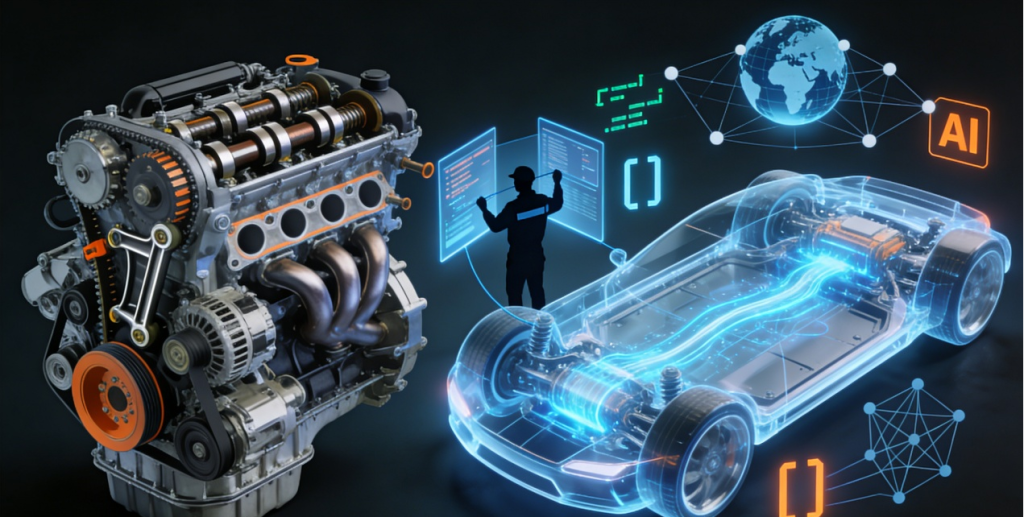
The Intelligent EV Revolution Drives a Paradigm Shift in Talent Demand
The traditional automotive industry centered on mechanical precision, powertrain efficiency, and mass manufacturing. At that time, the core skills of an excellent automotive engineer were largely focused on internal combustion engines, transmission systems, and chassis tuning. However, as the industry races toward the “new four modernizations” (electrification, intelligence, connectivity, and sharing), its technological core has fundamentally changed.
The essence of an intelligent electric vehicle is an electrically powered mobile space equipped with a “supercomputer on wheels.” This means the core value of the vehicle has shifted from being a mere means of transport to an intelligent ecosystem terminal integrating energy, data, software, and services. This shift poses disruptive new requirements for the knowledge structure and skill set of the automotive engineer:
The Rise of Software-Defined Vehicles (SDV): A vehicle’s value is increasingly defined by software rather than hardware. This requires automotive engineers to deeply understand embedded systems, autonomous driving algorithms, telematics protocols, OTA (Over-The-Air) update architectures, and the application of artificial intelligence in perception and decision-making. The ability for software-hardware co-design has become paramount.
Three-Electric Systems as the New Heart: Replacing the internal combustion engine are complex battery management systems (BMS), efficient electric motors, and power electronics. This demands automotive engineers to possess profound knowledge in power electronics, electrochemistry, thermal management, and energy flow optimization.
Soaring Complexity in Cross-Domain Fusion and System Integration: Traditionally separate domains like intelligent cockpits, Advanced Driver-Assistance Systems (ADAS), chassis-by-wire, and cloud platforms must now be seamlessly integrated. Automotive engineers need systems engineering thinking to handle interactions and data flows between different domain controllers.
In this context, an automotive engineer proficient only in a single field, with a vision limited to one market or a single-cultural R&D environment, struggles to cope with the globalized, fast-iterating competition of intelligent electric vehicles.
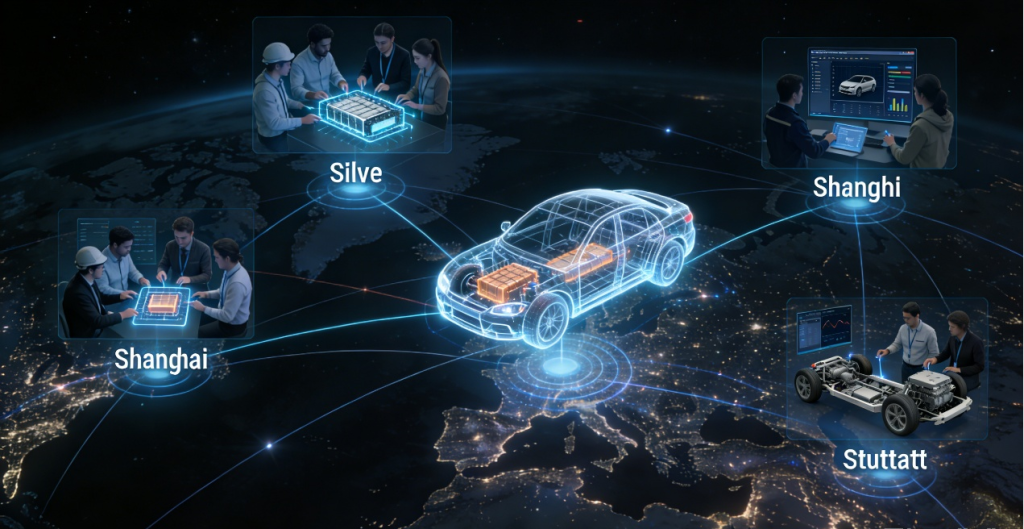
Why “International Experience” is the Critical Value Multiplier
Why has “international experience” become so critical? It stems from several intrinsic characteristics of the IEV industry itself:
Firstly, the globalization of technology sources and innovation networks. No single country or region currently monopolizes all core IEV technologies. China leads in battery manufacturing and supply chain integration, the U.S. holds advantages in autonomous driving algorithms, chip design, and software ecosystems, Europe has deep heritage in premium vehicle engineering, system integration, and sustainable materials, while Japan and South Korea possess unique expertise in power semiconductors and hydrogen technology. An automotive engineer with international experience might have worked on core autonomous driving algorithms at a Silicon Valley tech firm, led chassis integration for a high-end electric platform in Stuttgart or Munich, and gained deep insight into localized battery supply chains and user data applications in Shanghai. This experience across top-tier technology clusters enables the identification, transfer, and re-innovation of best practices, bringing an irreplaceable perspective and solution set to their employer.
Secondly, fragmented markets and standards. Major global automotive markets (China, North America, Europe) differ significantly in IEV regulations, standards, charging infrastructure, data security laws (like GDPR and China’s Data Security Law), and user preferences. A successful global vehicle must flexibly adapt to these differences. An automotive engineer with international experience not only understands the technical aspects of localization (e.g., specific safety strategies for Euro NCAP vs. China’s C-NCAP) but also grasps how to collaborate with local teams and understand unique user needs for cockpit interaction within different cultural contexts, thereby ensuring global market success.
Thirdly, globalized R&D collaboration is now the norm. To accelerate development, reduce costs, and leverage global talent, mainstream automakers and tech companies have universally established 24/7 “follow-the-sun” R&D systems. A single project might involve initial architecture design by a German team, software development and hardware integration by a Chinese team, and AI training/validation by a U.S. team. In this model, the automotive engineer who is fluent in multiple working languages (especially English), skilled in cross-cultural communication, and knows how to bridge different work styles and management models becomes the essential “lubricant” and “accelerator” for project efficiency. They effectively reduce communication costs and project delays caused by cultural misunderstandings and procedural differences.
Fourthly, deeply globalized and geopolitically sensitive supply chains. The IEV supply chain, from minerals like lithium and cobalt to power chips and LiDAR sensors, is distributed worldwide. Supply chain security and resilience are lifelines. Automotive engineers with international experience often have a more intuitive understanding of the characteristics and potential risks of major global supply chain clusters. They can design for supply chain diversification and resilience from the outset and quickly propose globally-informed alternative solutions during disruption risks.
The Scarcity Gap: A Vast Chasm Between Supply and Demand
This type of automotive engineer, who combines deep technical expertise with broad international perspective, is currently in extremely short supply, creating a significant supply-demand imbalance:
- Slow Growth on the Supply Side: Traditional engineering education systems, whether China’s “Outstanding Engineer” training plan or Germany’s dual education system, can produce excellent technical specialists. However, systematically cultivating “international experience” takes time. Gaining such experience requires real-world project work and cross-cultural teamwork, which cannot be quickly replicated on campus. While overseas returnees and expatriates from multinational corporations are key sources, their numbers fall far short of the industry’s explosive demand.
- Explosive Growth on the Demand Side: It’s not just traditional transnational automakers (like Volkswagen, Toyota, GM) in full transformation, needing large numbers of such talents to drive their global electrification and intelligence projects. Chinese EV startups (like NIO, Li Auto, XPeng) and tech giants (like Huawei, Xiaomi, Baidu) expanding overseas are even more thirsty for talent, urgently needing technical leaders who can help them penetrate international markets and understand global rules. Furthermore, global Tier-1 suppliers (like Bosch, Continental, CATL) and autonomous driving startups are also scouring the globe for such professionals.
- White-Hot Competition: This talent war has evolved into a global “arms race.” Companies offer not only highly competitive compensation packages (including high salaries, stock options, international relocation) but also focus on career development platforms, project challenges, corporate vision, and cultural openness. Top-tier automotive engineers with successful international project experience are constantly pursued by headhunters.
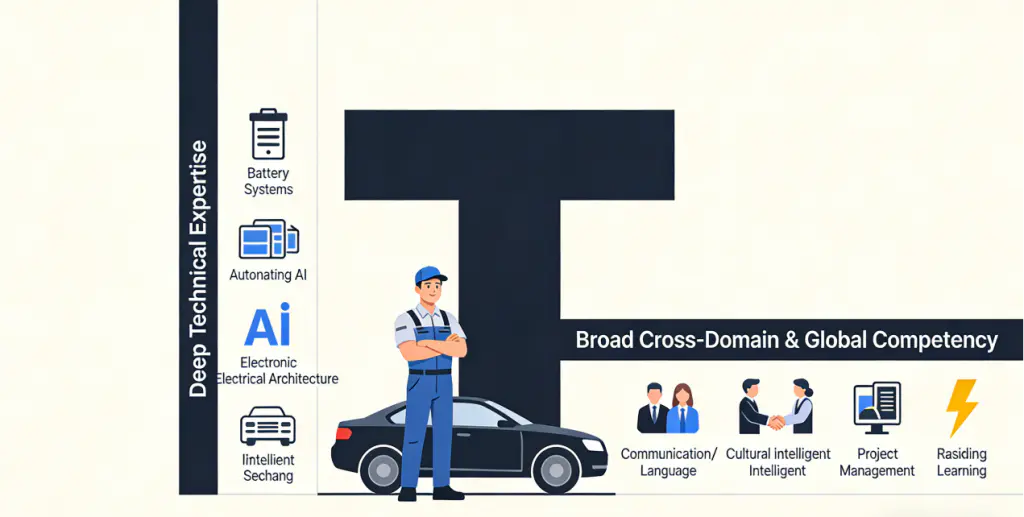
Core Skills Profile: The Makeup of the New Era’s Scarce Automotive Engineer
To become a highly sought-after, internationally experienced, and scarce automotive engineer, one typically needs a multidimensional skills profile:
T-Shaped Deep Technical Expertise: The vertical bar represents extreme depth in one core domain. This could be:
- Battery Systems Engineering: Expertise in cell chemistry, module & pack design, BMS algorithms, thermal runaway protection, and lifespan prediction.
- Autonomous Driving Software: Deep mastery of perception (computer vision, LiDAR point cloud processing), localization, planning, and control algorithms, with familiarity with frameworks like ROS.
- Electronics/Electrical Architecture: Deep understanding of the evolution from distributed to domain-centralized to zone-oriented E/E architectures, and proficiency in SOA (Service-Oriented Architecture) design.
- Intelligent Cockpit Experience: Fusion of HMI design, voice interaction, multi-screen coordination, application ecosystems, and underlying operating systems.
Broad Cross-Disciplinary Knowledge: The horizontal bar represents wide-ranging associated knowledge. For example, a battery engineer needs to know about thermal management, structural safety, and big data analytics; an autonomous driving engineer needs to understand vehicle dynamics, sensor characteristics, and relevant regulations/ethics.
Proficient Global Work Competency:
- Language: Proficient English (as a working language) is fundamental. A second language (e.g., German, Chinese, Japanese) is a major plus.
- Cultural Intelligence (CQ): The ability to sensitively perceive and adapt to the communication styles, decision-making habits, and feedback styles of colleagues from different cultures, building trust.
- Collaboration Tools & Processes: Familiarity with global project management and collaboration tools like Jira and Confluence, and adaptability to practices like Agile and SAFe across different cultural environments.
Innovative Mindset & Rapid Learning Ability: IEV technology evolves daily. The ability to continuously track global tech trends (via arXiv, SAE papers, top international conferences) and rapidly translate cutting-edge knowledge into engineering practice or innovative ideas is crucial.
How Companies Can Acquire and Cultivate This Scarce Resource
Facing this talent shortage, leading companies are adopting multi-pronged strategies:
Global Precision Recruitment: Expanding recruitment horizons truly globally, focusing not only on traditional automotive powerhouses but also on emerging tech hubs. Providing comprehensive international relocation and settlement support for key talent.
Establishing Global R&D Centers & Rotation Programs: Setting up R&D centers in technology highlands (like Silicon Valley, Shanghai, Munich, Stuttgart, Tel Aviv) and instituting systematic international rotation programs to allow promising local automotive engineers to accumulate international project experience in practice.
Internal “Internationalization” Enablement: Even without physically relocating, employees can enhance their international collaboration skills and broaden their horizons by participating in global virtual teams, taking responsibility for technical liaison for a specific regional market, or attending international standards organization meetings.
Building an Ecosystem that Attracts Global Talent: Creating an open, inclusive, technology-driven corporate culture, offering world-class technical challenges and clear global career paths to become a “destination” coveted by top global engineering talent.
Deepening International Industry-Academia-Research Collaboration: Establishing joint labs with top global universities and research institutes, endowing chaired professorships, and co-training PhD students to lock in future talent at the source.
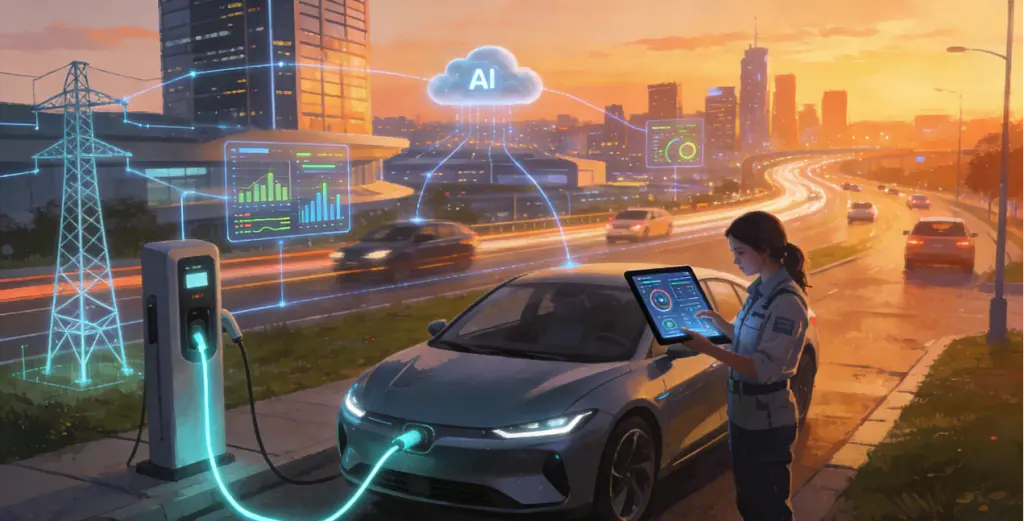
Future Outlook: Scarcity Will Intensify and Evolve
As the intelligent electric vehicle (EV) competition enters its second half—shifting from electrification penetration to intelligence supremacy, and from domestic market battles to global market rivalry—the demand for versatile automotive engineers with international experience will only grow stronger. Their role will further evolve from technical implementers to technology strategists, cross-cultural team leaders, and innovation integrators.
Simultaneously, technology convergence will spawn newer interdisciplinary fields, such as the combination of “automotive engineer” and “energy grid expert“ (for V2G technology), or “automotive engineer” and “smart city infrastructure expert.” At that stage, the automotive engineer who understands vehicle technology and the smart transportation planning of different global cities, and can dialogue with governments and public utilities, will become the next wave of scarce resource.
In summary, in the vast new blue ocean of intelligent electric vehicles, while “ships” equipped with advanced technology are important, the “captains” and “navigators” who can harness the waves and are proficient in global navigation—that is, those top automotive engineers with international experience—are the most fundamental and scarcest guarantee for leading a company to success. For nations, industries, and enterprises, how to systematically identify, attract, cultivate, and retain this strategic talent will be a core proposition for competitiveness in the coming decade. For every automotive engineer aspiring to this, actively embracing internationalization, broadening technical horizons, and enhancing cross-cultural leadership is undoubtedly the wisest investment for achieving exceptional career returns in this era of monumental change.