
Explore how U.S. restrictive policies are reshaping global high-tech talent flow and why China is emerging as a compelling alternative. This analysis covers China’s strategies, opportunities, and challenges in attracting high-tech talent, offering insights into the future of global talent competition.
Introduction
In the era of globalization, the mobility of high-tech talent has always been a core indicator of national competitiveness. In recent years, the United States has significantly altered the global landscape of high-tech talent flow through a series of visa restrictions, export controls, and academic scrutiny policies. These policies have not only affected Chinese researchers and professionals but have also prompted global high-tech talent to reassess their career development locations.
Against this backdrop, China is gradually transforming from a former “source country of talent” into an attractive “destination for talent.” This article will delve into the specific impacts of U.S. policies, China’s advantages and strategies for attracting high-tech talent, the challenges faced, and the possible evolution of the future global talent landscape.
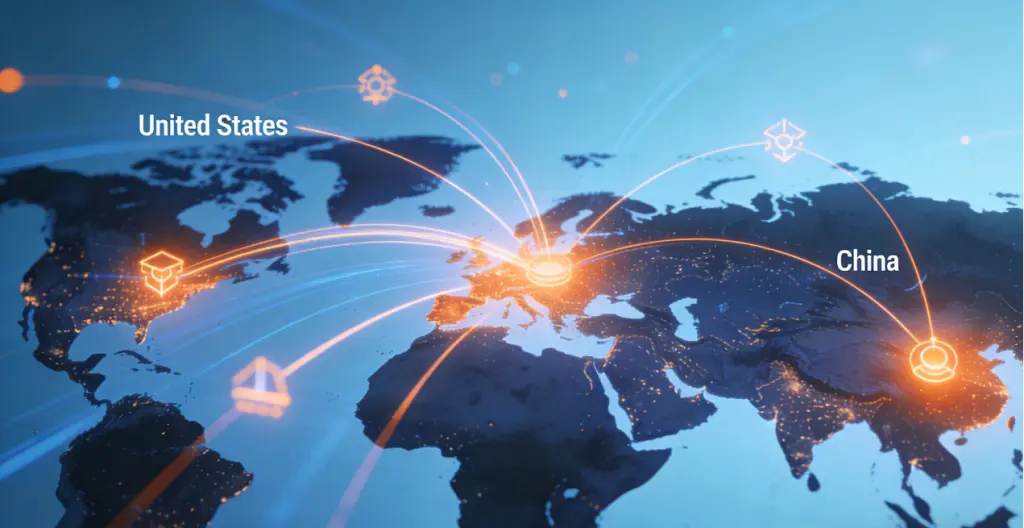
The Specifics and Impact of U.S. Policies Restricting High-Tech Talent
Since 2018, the United States has implemented a series of laws and administrative measures designed to protect its technological edge and national security. Among the most influential are the “China Initiative” (though renamed, its effects persist), tightened visa reviews for STEM (Science, Technology, Engineering, and Mathematics) fields, study restrictions on graduates from specific Chinese universities, and export controls targeting key sectors such as semiconductors, artificial intelligence, and biotechnology. The core objective of these policies is to limit technology transfer and prevent U.S. cutting-edge technology from being acquired by China.
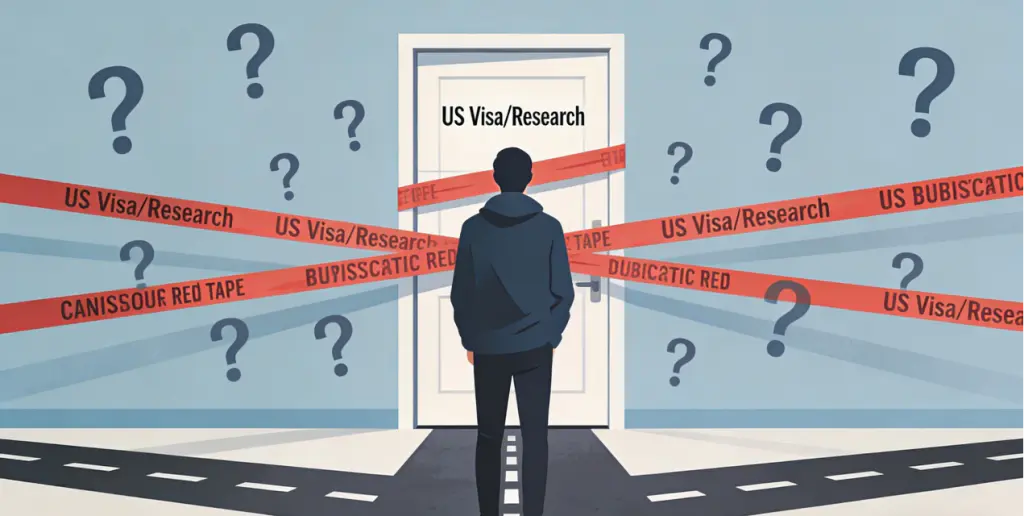
The direct impact of these policies has been the creation of a “chilling effect.” Many Chinese scientists, postdoctoral researchers, and engineers working at U.S. universities and research institutions feel an increasingly unwelcoming environment, facing visa delays, intensified project scrutiny, and even unwarranted investigations. Data from the U.S. National Science Foundation (NSF) shows that since 2020, the proportion of key research grants awarded to Chinese scholars in the U.S. has declined. Simultaneously, the process for U.S. companies to apply for H-1B visas for foreign high-tech talent has become more protracted and uncertain.
The deeper impact lies in its alteration of the psychological map for global high-tech talent. For many top talents choosing where to develop their careers—whether Chinese nationals or those of other nationalities—the openness and predictability of the United States were once its primary attractions. Now, this appeal is diminishing due to policy uncertainty and a potential atmosphere of exclusion. This prompts talent to seriously consider other options, with China emerging as a increasingly prominent alternative.
The Rise of China in Attracting High-Tech Talent: Strategies, Advantages, and Opportunities
In response to changes in the global landscape, China has proactively launched a series of ambitious national strategies aimed at building domestic innovation capacity and attracting global high-tech talent. These efforts did not begin today but have gained new urgency and attractiveness in the current international environment.
National Strategies and Policy Support
The “National Medium and Long-Term Talent Development Plan” and the “National Innovation-Driven Development Strategy” form the top-level design of China’s talent policy. Specific measures include:
- The “Thousand Talents Plan” and Subsequent Programs: Although the “Thousand Talents Plan” sparked international controversy and has been optimized and adjusted, it initiated China’s systematic approach to attracting top overseas talent. Currently, various regions in China have introduced more diverse and market-oriented talent recruitment programs, such as the “Chang Jiang Scholars Program,” the “National Science Fund for Distinguished Young Scholars,” and provincial-level talent plans, offering competitive start-up research funding, salaries, and housing subsidies for overseas returnees.
- Visa and Residence Permit Facilitation: China has implemented a more open “Foreign Talent Visa” (R-visa) system, providing eligible high-level talents with visas or residence permits valid for up to 10 years, with corresponding conveniences for their family members. This greatly simplifies the administrative procedures for high-tech talent coming to work in China.
- Major Science Projects and Infrastructure: China has established several comprehensive national science centers in Shenzhen, Shanghai, Beijing, Hefei, and elsewhere, investing heavily in major scientific installations such as the “China Sky Eye” (FAST) and spallation neutron sources. These world-class research platforms hold strong appeal for scientists pursuing cutting-edge research.
A Thriving Market and Industrial Ecosystem
China possesses the world’s most complete and dynamic industrial chain and a huge consumer market. For high-tech talent focusing on fields like artificial intelligence, new energy vehicles, fintech, and biomedicine, China offers unparalleled opportunities for technology industrialization and real-world application scenarios.
- Corporate R&D Investment: Tech giants like Huawei, Tencent, Alibaba, ByteDance, and BYD invest tens of billions of RMB annually in R&D, establishing research institutes comparable to those of top global companies, attracting a large number of top-tier domestic and international engineers and scientists.
- Fertile Ground for Entrepreneurship: China’s active venture capital market and comprehensive supply chain facilitate a shorter path from technology to product. This is highly attractive to high-tech talents with an entrepreneurial spirit.
The Trend of Talent “Return” and “Circulation”
There is now a significant “wave of return” among Chinese high-tech talent who studied abroad and previously worked in Europe and America. Data from China’s Ministry of Education shows that in 2023, over 80% of overseas students chose to return to China for development, a record high. This group possesses international perspectives, advanced technical experience, and cross-cultural communication skills, serving as a key force in enhancing China’s innovation capability. They bring back not only technology but also management and operational experience, further elevating the internationalization level of China’s innovation ecosystem.

Challenges and Shortcomings: The Other Side of China as a Talent Destination
Despite the strong momentum, for China to become a primary destination for global high-tech talent universally, rather than just an “alternative answer” for ethnic Chinese talent, it still faces numerous challenges.
Research Culture and Academic Environment
Compared to top international research centers, Chinese universities and research institutions still have gaps in academic freedom, the rationality of evaluation systems (such as the tendency to “focus solely on publications”), and the cultural atmosphere encouraging originality and disruptive innovation. Issues like relatively high administrative interference and an underdeveloped peer-review system may make international talent accustomed to Western academic environments feel uncomfortable.
Cost of Living and Quality of Life
The cost of housing and living in first-tier cities like Beijing, Shanghai, and Shenzhen is close to or even exceeds that of many international metropolises. However, aspects such as air quality, availability and quality of international educational resources, and the international standard of healthcare services still require improvement. These are critical factors for high-level talent and their families when deciding where to locate.
International Competition and Geopolitical Risk
China’s efforts to attract talent occur within a complex international geopolitical context. The United States and its allies are increasing their own efforts to attract and retain high-tech talent. Simultaneously, excessive “securitization” thinking may also breed within China, leading to unnecessary scrutiny that affects an open environment for scientific research cooperation. Striking a balance between safeguarding national security and maintaining open innovation is a significant test.
Intellectual Property Protection
Although China has made significant strides in intellectual property legislation and protection, challenges remain at the enforcement level. For international talent and companies engaged in core R&D, a robust, transparent, and predictable intellectual property protection system is a primary concern.
Future Outlook: Towards a Multipolar Global Talent Landscape
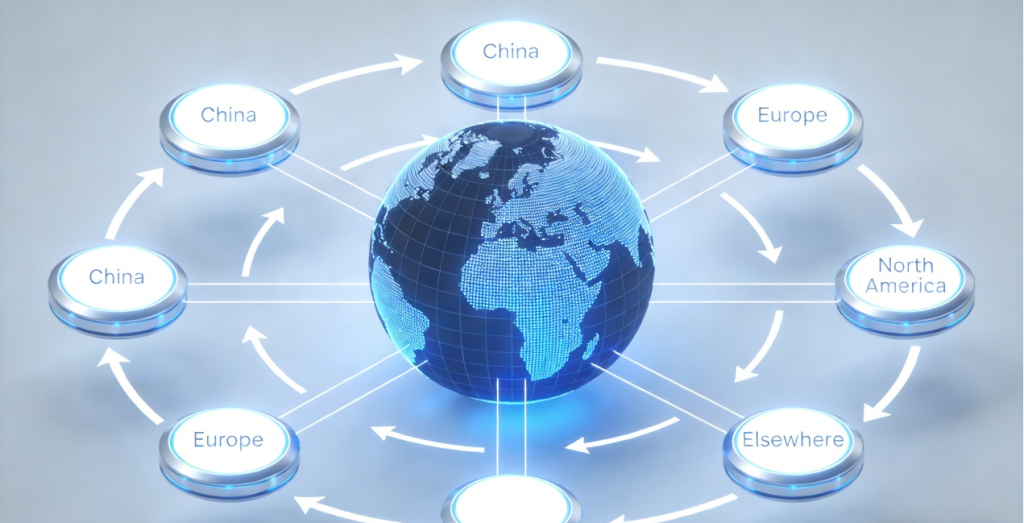
U.S. restrictive policies and China’s proactive attraction efforts are together accelerating the shift of the global high-tech talent landscape from a “unipolar” (U.S.-centric) model to a “multipolar” one. In the future, we may see the following trends:
- Diversification of Talent Flow: The flow of high-tech talent will become more dispersed, with China, the European Union (especially Germany, the UK), Canada, Singapore, Israel, and others all becoming important destinations. Talent will make more refined choices based on their professional field, career stage, and personal preferences.
- “Talent Circulation” Becomes the Norm: Rather than simple “brain drain” or “brain gain,” many talents may move between different countries at various stages of their careers, leveraging the advantages of each location to build a global professional network.
- Corporate-Led Talent Competition: Multinational corporations and tech giants will allocate their R&D forces globally, and their layout will greatly influence talent flow. China’s vast market and complete industrial chain will continue to attract multinational companies to establish R&D centers, thereby driving the clustering of high-tech talent.
- Intensified “Talent Wars” in Key Fields: In areas that will determine national futures, such as artificial intelligence, quantum computing, semiconductors, and new energy, the competition for top high-tech talent among major nations will be exceptionally fierce.
Conclusion
The answer to the question, “Under U.S. restrictive policies, is China becoming the ‘alternative answer’ for high-tech talent?” is becoming increasingly clear. For a significant portion of global high-tech talent, particularly ethnic Chinese talent with connections to China, China is no longer merely an alternative but a mainstream option with strong practical appeal. Through strategic planning, market opportunities, and a continuously improving environment, China has successfully leveraged the window of opportunity created by changes in the international situation.
However, to transform from an “alternative” into a “primary choice,” China still needs to exert more effort on its soft environment: fostering a more open, free, and international atmosphere for scientific research and innovation, improving quality of life, and perfecting the rule of law. The essence of global talent competition is the competition of systems and ecosystems. Ultimately, the country that can build the ecosystem most conducive to the birth of innovation, the transformation (transformation) of achievements (achievements), and the realization of talent value will gain the initiative in the competition for high-tech talent.
This reconfiguration of global high-tech talent, triggered by adjustments in U.S. policy, is reshaping the geographical map of world innovation. China is actively participating in this process. Its performance will not only determine the upper limit of its own technological development but will also profoundly affect the balance of global technological power in the coming decades. For global high-tech talent, an era of greater diversity and more choices is arriving