
Explore the role of Chief Process Engineer in India with leading Chinese enterprises. This guide covers key responsibilities, required skills, career benefits, and application strategies for Indian engineering professionals. Learn more about this high-growth opportunity.
Introduction
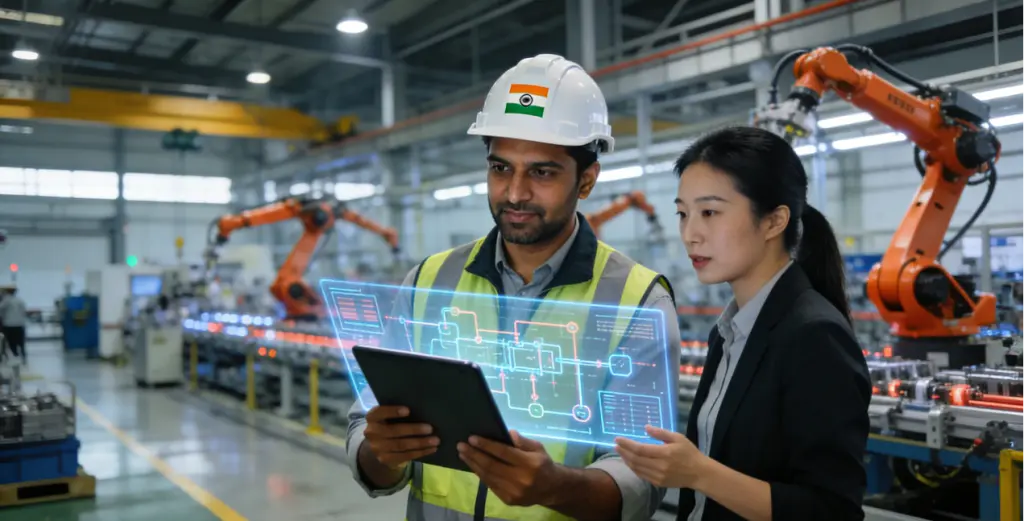
In today’s evolving global manufacturing landscape, Chinese enterprises are accelerating their expansion into overseas markets. India, as the world’s second-most populous country and a rapidly growing economy, boasts a vast pool of engineering talent and an increasingly mature manufacturing base. Consequently, many leading Chinese manufacturing firms are actively recruiting senior technical professionals in India, with the role of Process Engineer being particularly critical. This article provides an in-depth exploration of the current market, responsibilities, required skills, career opportunities, and application strategies related to the position of Chief Process Engineer with Chinese companies in India, serving as a comprehensive guide for Indian engineers aspiring to join these organizations.
The Indian Manufacturing Talent Market and the Role of Chinese Enterprises
India possesses one of the world’s largest engineering education systems, graduating hundreds of thousands of engineering students annually. This talent pool holds strong theoretical knowledge and growing practical experience in sectors such as automotive, pharmaceuticals, chemicals, electronics, and heavy machinery. With the progression of the “Make in India” initiative, the country’s manufacturing ecosystem continues to improve, attracting significant foreign direct investment.
Chinese enterprises, especially industry leaders in electronics, industrial machinery, renewable energy, automotive components, and infrastructure development, view India as a crucial strategic market. They are establishing not only sales and service centers but also localized production facilities, R&D centers, and regional headquarters. This deep localization strategy makes recruiting local high-end technical talent—particularly Chief Process Engineers—essential for Chinese companies operating in India.
The Chief Process Engineer: Role and Core Responsibilities
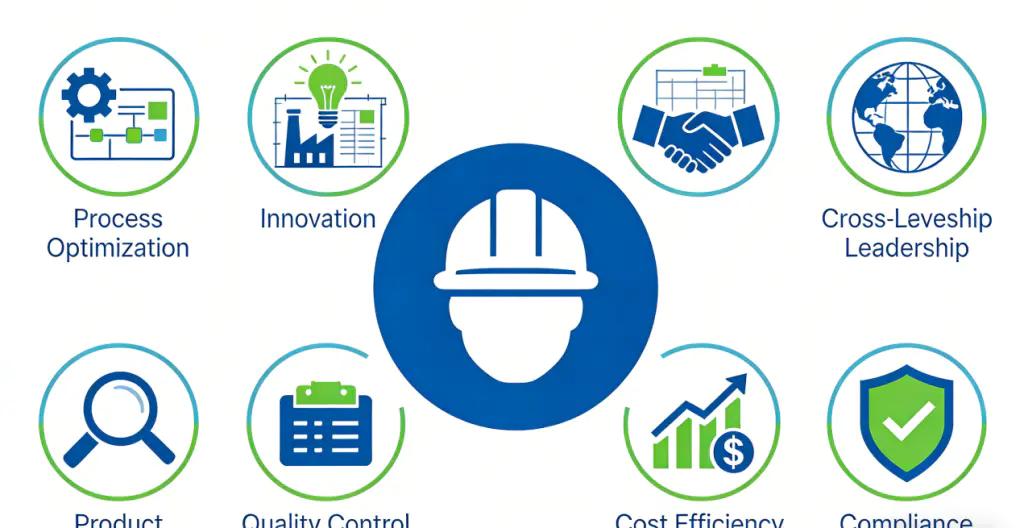
The Chief Process Engineer is a core leadership role within the technical team of a manufacturing enterprise. This position extends beyond daily production maintenance to focus on process optimization, technological innovation, and systemic enhancement. Key responsibilities include:
Process Design and Optimization
Analyzing existing production workflows to identify bottlenecks and inefficiencies. Implementing new technologies, methodologies, or process redesigns to increase capacity, reduce costs, and ensure the highest quality standards. The Process Engineer must employ tools like Lean Manufacturing and Six Sigma for continuous improvement.
New Product Introduction and Process Development
Collaborating closely with R&D to transition new products from design to full-scale manufacturing. The Chief Process Engineer is responsible for developing feasible production process routes, designing tools and fixtures, and establishing initial process parameters and control plans.
Technical Team Leadership and Knowledge Transfer
Leading a team of Process Engineers and technicians, managing their training, assignments, and performance. In a cross-cultural setting, the Chief Process Engineer also facilitates the exchange of technical knowledge and best practices between Chinese headquarters and the Indian team.
Quality Control and Problem-Solving
Establishing and maintaining rigorous process control standards, utilizing methods like Statistical Process Control (SPC) to monitor production stability. Leading root cause analysis and implementing permanent corrective actions for major quality deviations or technical issues.
Cost Control and Resource Efficiency
Reducing material consumption, energy usage, and scrap rates through process improvements, directly impacting product gross margins. The Process Engineer must balance the multiple objectives of quality, cost, and efficiency.
Compliance and Safety Standards Implementation
Ensuring all manufacturing processes comply with local Indian environmental, health, and safety regulations, while also adhering to corporate global standards.
For Chinese operations in India, the Chief Process Engineer also acts as a cultural bridge, understanding the headquarters’ technical strategy and adapting it to the local production environment.
Required Skills and Qualifications: What Indian Candidates Should Possess
Chinese enterprises typically seek Indian professionals with the following hard and soft skills for the role of Chief Process Engineer:
Hard Skills
- Education: A Bachelor’s or Master’s degree in Chemical Engineering, Mechanical Engineering, Industrial Engineering, Production Engineering, or a related field. Many top positions prefer candidates with a Master’s degree or an MBA.
- Professional Expertise: Minimum of 10-15 years of process engineering experience in a large-scale manufacturing environment, with at least 5 years in a leadership role. In-depth knowledge of industry-specific process technologies (e.g., lithium-ion batteries, semiconductors, automotive assembly, specialty chemicals).
- Technical Tool Proficiency: Advanced skills in CAD/CAM software, PLM systems, simulation tools, and data analytics platforms. Familiarity with automation and Industry 4.0 technologies like IoT, robotic process automation, and digital twins.
- Methodology Certification: Certifications such as Six Sigma Black Belt or Lean Expert are significant advantages, demonstrating systematic problem-solving capabilities.
Soft Skills
- Leadership and Cross-Cultural Communication: Ability to motivate multicultural teams and communicate complex technical concepts clearly to both Chinese management and local teams.
- Strategic Thinking and Problem-Solving: Capacity to view production systems from a macro perspective and develop long-term process improvement roadmaps.
- Adaptability and Flexibility: Ability to thrive in the fast-paced decision-making style and evolving business needs common in Chinese enterprises.
- Business Acumen: Understanding of how process decisions impact the company’s financial performance and market competitiveness.
Why Work for a Chinese Enterprise? Career Development Advantages

For experienced Indian Process Engineers, joining a Chinese company offers unique career growth opportunities:
Access to Advanced Technology and Large-Scale Manufacturing: Many Chinese firms are global technology leaders, especially in sectors like renewable energy, high-speed rail, telecom equipment, and consumer electronics. Employees gain exposure to world-class production facilities and R&D projects.
Rapid Career Progression Paths: As Chinese companies are often in an expansion phase in India, high-performing local technical talent can frequently achieve faster promotion to roles like Plant Technical Head or Regional Technical Director compared to more mature multinational corporations.
Global Perspective: Opportunities to participate in global projects and collaborate with engineering teams in China, Southeast Asia, Europe, etc., significantly broadening professional networks and technical horizons.
Competitive Compensation Packages: To attract top talent, Chinese enterprises in India typically offer compensation packages that are market-competitive or superior, often including performance bonuses, equity incentives, and comprehensive benefits.
Participation in Building Strategic Industries: Many Chinese investments in India are in strategically important sectors for the country’s development, such as renewable energy equipment manufacturing, EV supply chains, and electronics manufacturing services. Process Engineers can contribute directly to India’s industrialization journey.
Application Strategies for Indian Process Engineers Targeting Chinese Firms
In-Depth Research on Target Companies: Understand the business layout, product lines, corporate culture, and technical focus of Chinese enterprises in India. Pay attention to their commitment to sustainable manufacturing and digital transformation.
Highlight Quantifiable Achievements: Use specific metrics in your resume and interviews to showcase improvements driven as a Process Engineer. Examples: “Increased production line efficiency by 20% through process optimization,” “Reduced product defect rate by 35%,” or “Led team to successfully launch 3 new product lines, achieving annual output of 5 million units.”
Demonstrate Cross-Cultural Collaboration Skills: Prepare examples of how you have effectively worked with teams from diverse cultural backgrounds or adapted quickly to new work environments.
Prepare for Technical Assessments: The hiring process may include in-depth technical interviews involving case studies, real-time problem-solving, or software tests. As a Chief Process Engineer, you might be asked to critique production data or design a process improvement plan.
Understand Industry-Specific Trends: Demonstrate awareness of global technical trends in your sector, such as green chemistry in chemicals or micro-assembly advancements in electronics.
Language and Communication Preparation: While English is typically the working language, learning basic Chinese business or technical phrases can be a positive differentiator, showing commitment to integrating with the Chinese enterprise.
Challenges and Adaptation: Cultural Differences and Work Styles
Indian Process Engineers joining Chinese companies may face adaptation challenges, such as a more hierarchical decision-making process, high demands for execution speed, and different communication styles. However, many Chinese firms are actively localizing their management practices and granting greater autonomy to Indian technical teams. Successful candidates are often those who can adapt flexibly, communicate proactively, and consistently demonstrate their value.
For Process Engineers, the language of technology itself is universal, providing a solid foundation for cooperation. The key is building trust through excellent technical contributions and reliable project delivery, thereby earning the respect of Chinese colleagues and management.
Future Outlook: Opportunities in Sino-Indian Manufacturing

Collaboration
As global supply chains reconfigure, India’s strategic position in manufacturing continues to rise. The combination of Chinese capital and technology with Indian talent and market potential can create powerful synergies. In this process, senior technical professionals like Chief Process Engineers will serve as crucial links for value creation.
In the coming years, more Chinese enterprises are expected to establish R&D and innovation centers in India. This will require Process Engineers not only to optimize production but also to engage in upstream product and process innovation, offering an even broader platform for Indian engineers seeking technical challenges and career growth.
Conclusion
For senior Indian Process Engineers, the position of Chief Process Engineer with a Chinese enterprise in India represents a highly attractive career opportunity. It offers not only competitive compensation and rapid advancement but also the chance to engage with globally leading manufacturing projects, access advanced technologies, and influence the development of strategic industries.
To secure these roles successfully, candidates must convincingly demonstrate their technical expertise, leadership capabilities, quantifiable achievements, and adaptability for cross-cultural collaboration. By meticulously preparing application materials, thoroughly researching target companies, and actively engaging in the technical assessments during the hiring process, Indian engineers can significantly increase their chances of success.
With Sino-Indian economic cooperation deepening in the manufacturing sector, the role of the Chief Process Engineer will remain pivotal. They are the guardians of production excellence, the drivers of technological innovation, and the bridges connecting the industrial strengths of both nations. For Indian engineers eager to make their mark in a dynamic global manufacturing environment, now is an ideal time to explore the opportunities presented by Chinese enterprises.