
Explore the roadmap to becoming a top 3D designer within China’s booming game, film, and industrial design sectors. Discover the essential skills, industry trends, and unparalleled opportunities for 3D designers driving innovation in the digital era.
Introduction: The 3D Design Revolution Within China’s Innovation Wave
In today’s digital age, three-dimensional design has evolved far beyond a mere technical tool—it is now a core engine driving innovation. As one of the world’s most dynamic economies, China is advancing its digital transformation at an unprecedented pace, creating unparalleled opportunities for 3D designers. From the booming gaming industry and rising cinematic blockbusters to the industrial design revolution underpinned by the “Made in China 2025” initiative, professionals proficient in three-dimensional visual expression are becoming pivotal players in this wave of innovation. This article will provide an in-depth exploration of how to grow into a top-tier 3D designer within China’s innovation ecosystem, focusing on the game, film, and industrial design sectors. We will analyze industry trends, essential skills, and career development pathways, offering comprehensive guidance for aspiring professionals.
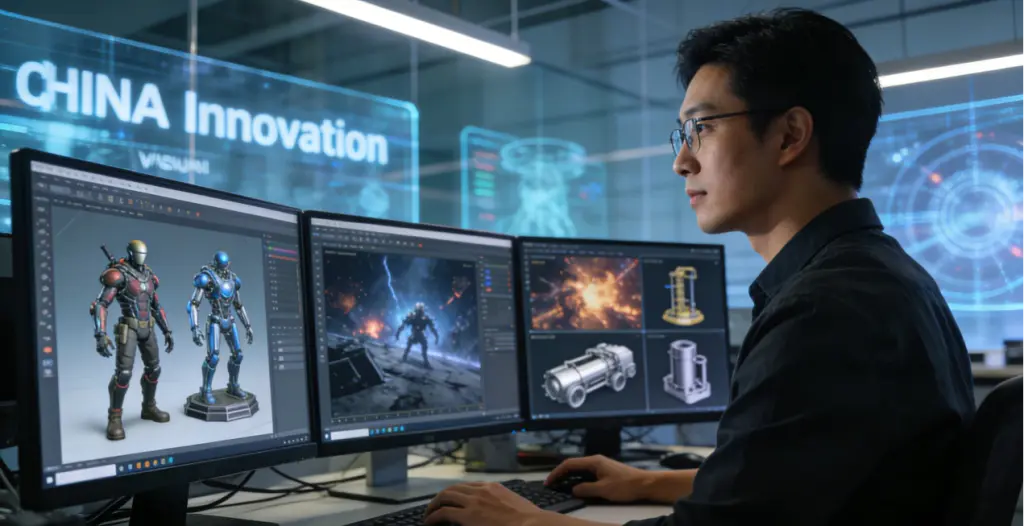
The Panoramic View of the 3D Design Industry Within China’s Innovation Context
National Strategy and Policy Support
China’s innovation strategy provides a robust policy framework for the digital creative industries. The “14th Five-Year Plan” explicitly lists the digital creative industry as a strategic emerging sector, with 3D design, being a core technology for digital content creation, directly benefiting from this directional policy. Various provinces and cities have established digital creative industry parks, offering 3D designers tax incentives, startup subsidies, and R&D support. Furthermore, the “Made in China 2025” strategy elevates industrial design to a national priority, emphasizing the enhancement of manufacturing value-added through 3D digital design, which has created a multitude of high-end positions for industrial 3D designers.
Market Scale and Growth Potential
China has become one of the world’s largest digital entertainment markets. The gaming industry generates annual revenues exceeding 300 billion RMB, requiring extensive involvement from 3D designers in character modeling, scene building, and special effects. The film and television industry is also experiencing rapid growth, with domestic sci-fi and animated films seeing a surge in demand for high-quality 3D visual effects. In industrial design, alongside the advancement of smart manufacturing and product innovation, corporate demand for designers with 3D modeling, rendering, and simulation capabilities is growing by over 20% annually. This market expansion provides 3D designers with stable career prospects and significant income potential.
Technological Innovation Ecosystem
China has made significant investments in technologies related to 3D design. Innovations such as AI-assisted design, real-time rendering engines, cloud-based collaboration platforms, and virtual reality (VR) creation tools are transforming how 3D designers work. Tech giants like Huawei, Tencent, and Alibaba are actively developing cloud rendering and 3D content creation platforms, lowering the technical barriers to high-quality 3D design. Simultaneously, domestic Chinese 3D software like CrownCAD is emerging, creating a landscape of both competition and cooperation with international vendors like Autodesk and Adobe, thereby offering 3D designers more tool choices.
The 3D Designer in the Gaming Industry—Crafting Immersive Experiences
3D Design Trends in the Gaming Sector
China’s gaming market is transitioning from mobile games towards cross-platform, high-quality experiences. Next-generation games demand greater realism and artistry in 3D visuals, directly elevating the importance of the 3D designer in projects. Current major trends include: Physically Based Rendering (PBR) workflows becoming the industry standard; procedural generation techniques aiding large-scale environment creation; real-time hair and cloth simulation enhancing character realism; and the revival of low-poly stylized design in indie games. Understanding these trends helps 3D designers develop targeted skills.
Core Skill Set for Game 3D Designers
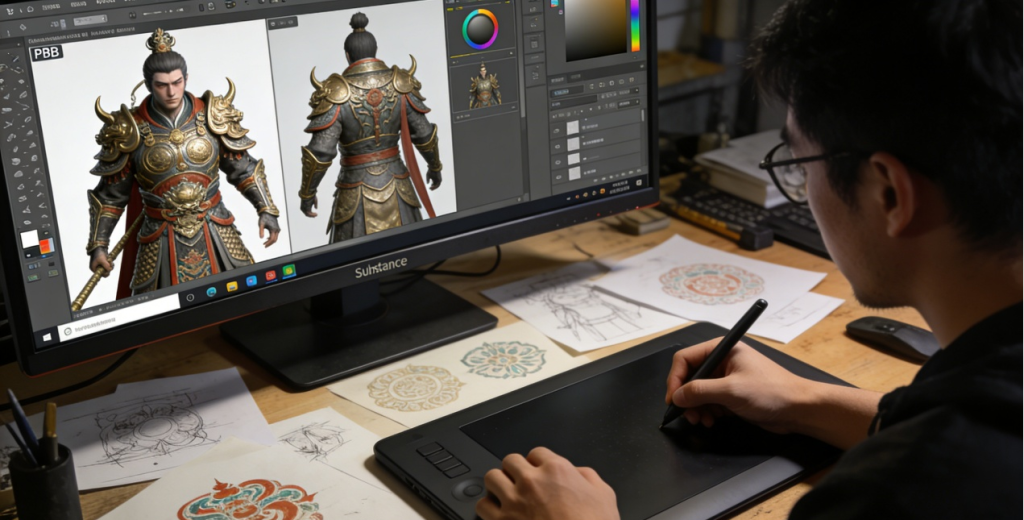
A top game 3D designer needs a multifaceted skill set. Modeling proficiency is foundational, encompassing high-poly sculpting and low-poly retopology. Texture and material creation require an understanding of PBR principles and mastery of tools like Substance Painter. Character rigging and animation demand knowledge of skeletal systems and deformers. A Technical Artist path requires programming skills to develop shaders and tool scripts. Additionally, the ability to interpret and modernize traditional Chinese cultural elements is becoming a unique advantage for domestic game 3D designers, such as integrating traditional architecture, costumes, and patterns into game visuals.
Success Stories and Career Pathways
3D designer teams at several domestic game companies have gained international recognition. The character and environment design in miHoYo’s Genshin Impact showcases the prowess of Chinese 3D designers on world-class projects. Career development typically starts as a Junior 3D Modeler, potentially branching into specializations like Character Artist, Environment Artist, Technical Artist, or Art Director. Continuous learning in emerging technologies like metaverse scene construction and real-time virtual human creation will open new career possibilities for game 3D designers.
The 3D Designer in the Film & TV Industry—Creator of Visual Narratives
The Rise of China’s Visual Effects Industry
With the success of films like The Wandering Earth series and Ne Zha, China’s visual effects sector is in a phase of rapid development. These works demonstrate that Chinese 3D designers can produce world-class visual effects. Demand for high-quality 3D content in films, series, and animation continues to grow, spanning character modeling, scene reconstruction, FX simulation, and digital matte painting. Competition in original content from streaming platforms further fuels the need for excellent 3D designers, particularly those who can blend Chinese aesthetics with modern technology.
Professional Requirements for Film-Quality 3D Design
Film 3D design shares similarities with but also differs from game development. Film-quality 3D models generally require higher polygon counts and finer detail. Materials and textures demand photorealistic quality. Lighting and rendering necessitate an understanding of cinematography principles. Dynamic simulations (fluids, cloth, hair) must adhere to physics. Moreover, film 3D designers must collaborate closely with directors, cinematographers, and post-production teams, understanding narrative needs to translate technical skills into visual language.
Tool and Workflow Innovations
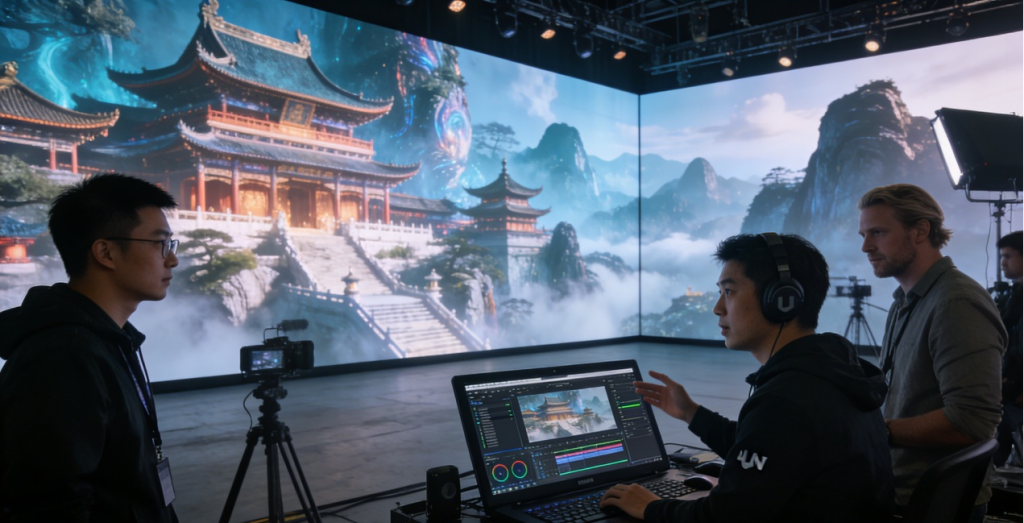
Chinese film production companies are actively adopting the latest 3D design tools and workflows. Real-time rendering engines like Unreal Engine and Unity are increasingly used for pre-visualization and virtual production. Cloud-based collaboration platforms enable efficient work for distributed 3D design teams. Scanning and photogrammetry accelerate the digitization of real-world objects. Simultaneously, AI tools are beginning to assist 3D designers with repetitive tasks, allowing designers to focus more on creative decisions.
The 3D Designer in Industrial Design—Bridging Aesthetics and Engineering
The Digital Transformation of Industrial Design
In the transition from “Made in China” to “Created in China,” industrial design plays a vital role. 3D design technology has become central to the product development cycle, enabling full-process digitalization from concept sketches to production-ready models. Industries like consumer goods, electronics, transportation, and medical devices extensively use 3D modeling for Appearance design, structural validation, and user testing. The rise of parametric and generative design allows 3D designers to explore forms and structures difficult to achieve with traditional methods, driving product innovation.
The Interdisciplinary Nature of Industrial 3D Design
An excellent industrial 3D designer must balance aesthetics, engineering, and user experience. They must understand manufacturing processes and material properties to ensure design feasibility. Mastery of ergonomic principles is needed to create comfortable, practical products. Within China’s innovation context, sustainable design is becoming increasingly important, requiring 3D designers to utilize simulation tools to optimize material usage and product lifecycle.
The Expanding Role of 3D Designers in Smart Manufacturing
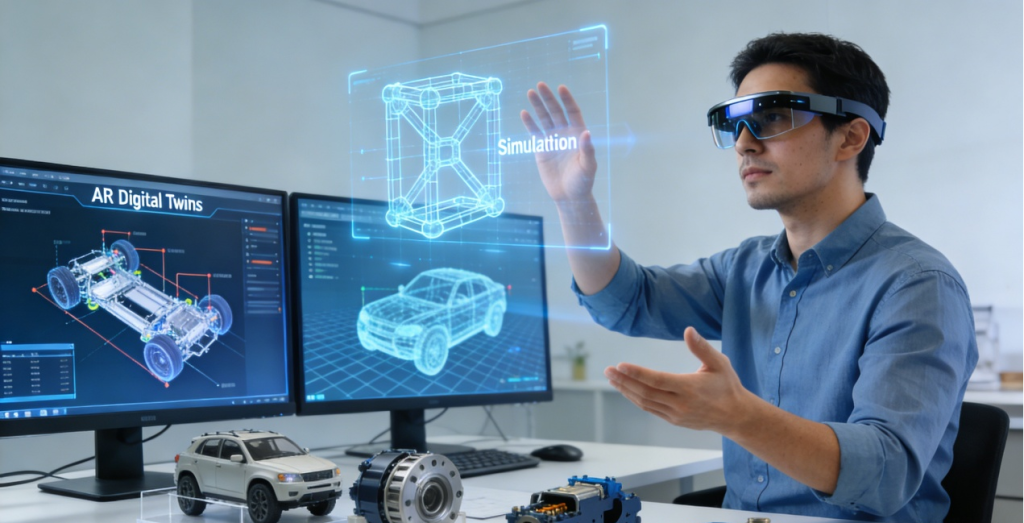
With the advancement of Industry 4.0 and smart manufacturing, the scope of a 3D designer’s work has expanded into digital twins, virtual assembly, and augmented reality (AR) applications. The 3D product models they create are not just for visual presentation but also serve as the foundation for digital twins, connecting the entire process from design and manufacturing to service. Under the trend of mass customization, 3D designers develop parametric model systems, enabling consumer participation in product personalization.
Technical Proficiency & Software Ecosystem—The 3D Designer’s Toolbox
Mastering and Choosing Core Software
A 3D designer’s software skills directly impact work efficiency and output quality. Industry-standard tools include: Autodesk Maya and 3ds Max for comprehensive modeling and animation; ZBrush for high-detail digital sculpting; the Substance suite for material creation; and Blender, whose functionality as an open-source alternative continues to improve. A top 3D designer should not be limited to a single application but should flexibly combine tools based on project needs.
Auxiliary Technologies and Skill Integration
Beyond core modeling software, modern 3D designers need command of various auxiliary technologies. Rendering engines like V-Ray, Arnold, and Redshift are crucial for final visual output. Real-time engines Unreal Engine and Unity are widely used in games, film/TV, and industrial visualization. Programming fundamentals enable designers to develop custom tools and automate workflows. Virtual reality creation tools offer novel 3D authoring interfaces.
Opportunities in China‘s Domestic Technology Ecosystem
Chinese tech companies are actively building technology ecosystems related to 3D design. These domestic platforms not only offer technical support but also provide opportunities for 3D designers to showcase their talent through developer programs, design competitions, and incubators. Participating in these innovation ecosystems helps 3D designers gain cutting-edge experience and industry resources.
Career Development Pathways and Opportunities within China’s Innovation
Education and Continuous Learning Systems
Becoming a top 3D designer requires systematic education and continuous learning. Chinese universities offer foundational training, but industry-specific skills are often acquired through specialized training and practical experience. Online learning platforms offer abundant 3D design courses. Industry certifications validate skill levels. Contributing to open-source projects and engaging with technical communities helps build professional networks for a 3D designer.
Portfolio Building and Personal Branding
In the competitive field of 3D design, a high-quality portfolio is key to career advancement. A portfolio should demonstrate technical ability, artistic sensibility, and problem-solving skills, tailored to target fields. Within the context of the Chinese market, showcasing an understanding of local culture and market demands is particularly important for a 3D designer. Sharing work on platforms like Zcool and ArtStation helps gradually build a personal professional brand.
Industry Networking and Innovation Communities
China hosts active 3D design communities and innovation networks. Industry conferences provide platforms for exchange. Professional organizations host seminars and workshops. Engaging with these communities not only provides industry insights but can also lead to collaboration opportunities and career referrals for a 3D designer.
Future Outlook—The Evolving Role of the 3D Designer in Digital China
Technological Convergence and Expansion into New Fields
In the coming years, the work of 3D designers will become deeply integrated into more sectors. Metaverse development requires massive 3D content creation. Digital twin city management relies on detailed 3D modeling. Virtual reality education and training need immersive scene design. These emerging fields offer 3D designers opportunities to branch into different industries, demanding they continuously expand their skill sets.
The Co-evolution of AI and 3D Design
Artificial Intelligence (AI) is transforming 3D design workflows. Generative AI can assist with concept design and basic modeling. Neural network rendering accelerates high-quality image generation. However, AI will not replace the 3D designer but rather become a powerful creative partner. Future top 3D designers will need to master the application of AI tools, dedicating more time to creative decisions and art direction.
The Distinctive Character of Chinese 3D Design within a Global Perspective
In the global digital content market, Chinese 3D designers are developing a unique style and competitive edge. They are integrating traditional cultural elements with modern design language to create visually distinctive works. As China’s cultural influence grows and Chinese brands internationalize, 3D designers who can blend Eastern and Western aesthetics and understand global markets will gain more international collaboration opportunities. China’s innovation environment provides a unique soil for the growth of 3D designers.
Conclusion: Launch Your 3D Design Career Journey
Driven by China’s innovation engine, the game, film, and industrial design sectors offer a vast stage for 3D designers. Becoming a top professional requires a combination of technical prowess, artistic literacy, industry awareness, and continuous learning. From mastering core software to understanding the demands of the Chinese market, each step deserves careful planning for an aspiring 3D designer. The construction of a digital China is accelerating, with three-dimensional visuals seeing their importance continually rise. Now is an optimal time to enter the field of 3D design, merge creativity with technology, and realize professional value within China’s innovation wave. Whether you are a beginner or an experienced professional, you can find your place in this vibrant ecosystem and create three-dimensional works that impact the world.